Pakistan tax
How to File Your Income Tax Return in Pakistan (Tax Year 2026)
Tax year 2026 returns are due by 15 October 2026. Here's who must file, what to gather and each step on IRIS, with the law behind every rule.
The IRIS screens are the easy part of Pakistan's annual tax return. The work is in the numbers: every box wants a figure from a certificate, a statement or your own July–June records. This guide covers both for tax year 2026, the return due now, citing the Income Tax Ordinance, 2001 for each rule.
| What | Tax year 2026 | Where it's set |
|---|---|---|
| Period covered | 1 July 2025 to 30 June 2026 | Section 74 |
| Due date in the law | 30 September 2026 | Section 118(3) |
| Extended due date | 15 October 2026 | FBR Circular No. 3 of 2026-27, under section 214A |
| How to file | Electronically on IRIS | Section 114(2A) |
| Filed with it | Wealth statement, proof of tax paid, and the foreign income and assets statement if it applies | Sections 114(2), 116(2) |
| Zero-tax band | First Rs 600,000 of an individual's taxable income | First Schedule, Part I, Division I |
| Filing late | Penalty; off the Active Taxpayers' List unless you pay a surcharge | Sections 182, 182A |
Not tax advice; rules change every June with the Finance Act; confirm with FBR or a registered tax practitioner.
Who is required to file an income tax return in Pakistan?
You must file for tax year 2026 if your taxable income was above Rs 600,000, or if you meet another section 114 test, whatever your income: you hold an NTN, own a vehicle above 1000cc or property above set sizes, were taxed in either of the last two years, or had any final-tax income.
The section 114(1) tests:
- Income: taxable income above Rs 600,000 for tax year 2026, or any income taxed as final tax, such as dividends.
- History: you were charged to tax for tax year 2024 or 2025, or you claim a loss carried forward.
- Property: land of 500 square yards or more, or any flat, in older municipal limits, a cantonment or Islamabad; in a rating area, the same land test or a flat of 2,000 square feet or more.
- A motor vehicle above 1000cc.
- Other tests: an NTN, a commercial or industrial electricity bill above Rs 500,000 a year, or, for residents, membership of a chamber, trade body or professional body.
- Abroad: as a resident, foreign income of US$10,000 or more, or foreign assets of US$100,000 or more, which also require the foreign income and assets statement (section 116A).
Section 114(1A) adds individuals with business income above Rs 300,000 and up to Rs 400,000. Widows, orphans under 25, disabled people and, for property, non-residents needn't file just because of the property or vehicle tests (section 115(3)). Salaried? Since 2013, your employer's annual statement no longer counts as your return; see filing as a salaried person.
I have an NTN but little or no income. Do I still file?
Yes. Section 114(1)(b)(vii) covers anyone who has obtained an NTN, which an individual does by registering with FBR; the CNIC number then serves as the NTN (section 181(4)). The return even lists "No Income" as a source. Here's how to become a filer in Pakistan.
What do you need before you start?
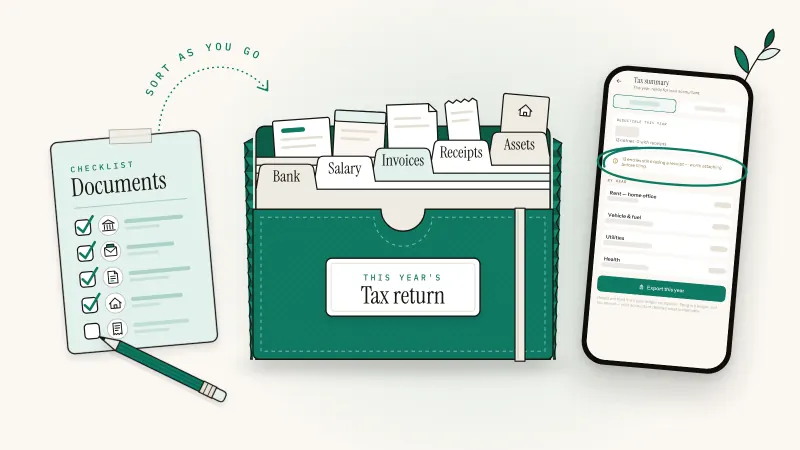
Gather your IRIS login, a certificate for every tax deducted from you, bank statements to 30 June 2026, records of income and costs, receipts for credits you'll claim, last year's wealth statement and your household's July–June spending. The table shows where each goes.
| Part of the return | Where the number comes from |
|---|---|
| Salary | Your employer's certificate of salary and tax deducted |
| Business or freelance income | Invoices, bank credits and your own record of sales and costs |
| Rent, profit, dividends | Tenancy agreements, bank and dividend certificates |
| Tax deducted or paid | Withholding certificates with CPRs (section 164), checked against IRIS's own summary |
| Allowances and credits | Zakat, school fee, donation and pension fund receipts |
| Assets and liabilities | Balances on 30 June 2026: bank accounts, property, vehicles, loans |
| Opening figures | Last year's wealth statement |
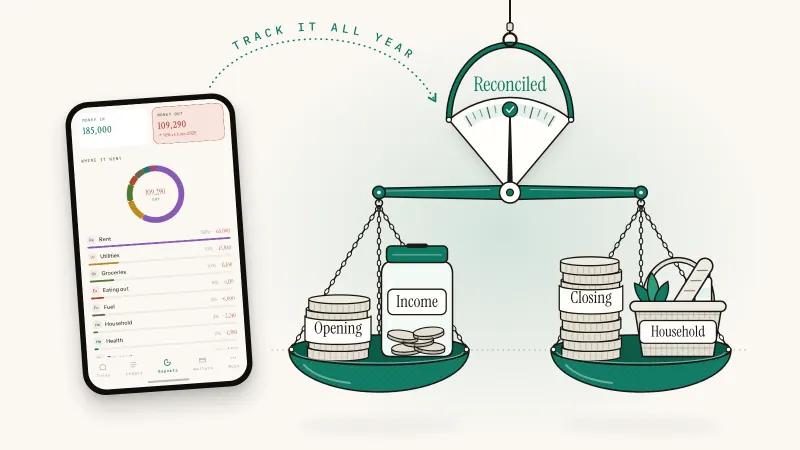
| Personal expenses | Your household's July–June spending, entered as Personal Expenses (code 7089) in the wealth reconciliation |
Two rows come from nobody's certificate: business totals and household spending. Books kept through the year make them a report; otherwise, rebuild them from bank statements first. If an accountant files for you, close your books before you file. For a checklist by profile, see the documents required for your return.
How do you file your income tax return online on IRIS?
Log in to IRIS with your CNIC and password, open the tax year 2026 return and tick your income sources. Check FBR's summary of tax withheld from you, enter income and tax deducted, claim credits, complete the wealth statement until it reconciles, pay any balance through a PSID, then submit.
- IRIS
- FBR's online filing portal, now titled IRIS 2.0.
- PSID and CPR
- The payment slip ID you pay against, and the Computerized Payment Receipt that proves you paid.
The steps follow the tax year 2026 individual return printed in SRO 1495(I)/2026 (2 September 2026); IRIS 2.0 labels can change.
- Register or log in. Individuals log in to IRIS with their 13-digit CNIC and a password. New filers register online with a SIM in their own name, a personal email and a scanned bank account certificate (FBR: registration); NTN holders without a password use e-Enrollment.
- Open the tax year 2026 return, "114(1) (Return of Income filed voluntarily for complete year)". Tick your income sources, or No Income, and answer the tax-residence question.
- Check the Summary of Economic Transactions. It shows the tax FBR has on record as withheld from you. FBR calls it indicative and says correct reporting is "primarily your own responsibility", so match it to your certificates.
- Declare income by head, gross. Tax deducted counts as part of your income (section 168(1)(a)). Paid from abroad? See freelancer tax in Pakistan. Shop or trade? See business tax for sole proprietors and shop owners.
- Claim tax deducted or paid under Tax Chargeable / Payments, from the certificates withholding agents must give you (section 164). Adjustable tax counts against your bill; final tax doesn't (section 168(3)). Since 1 July 2026, claiming more than was deducted and deposited carries a penalty equal to the excess (section 182, entry 36). More on tax already deducted from you.
- Claim allowances and credits, such as Zakat, tuition fees, donations and pension fund contributions (sections 60, 60D, 61 and 63); see the credits and allowances you can claim.
- Complete the wealth statement. FBR says it won't submit until your wealth has changed from last year's by exactly the amount your income exceeded, or fell short of, your expenses. Here's how to fill the wealth statement so it reconciles.
- Pay any balance. Press Calculate, then create a PSID through FBR's e-Payments service and pay it at a National Bank branch, an ATM or by internet banking. The CPR reaches IRIS within 24 hours, FBR says; claim it in the return's Payment tab, since a return needs proof of payment (section 114(2)(d)).
- Submit and confirm. FBR's undated help page says filing is confirmed when the return and the wealth statement have both moved from the Draft folder to Completed Task. Save copies.
What is the last date for the 2026 income tax return?
The last date for tax year 2026 returns is 15 October 2026. Section 118(3) of the Income Tax Ordinance sets 30 September for individuals and other non-company persons, and FBR Circular No. 3 of 2026-27, issued on 30 September 2026 under section 214A, extended it for everyone who was due that day.
For tax year 2026, the Federal Board of Revenue extended the return deadline to 15 October 2026. As of 3 October 2026, it had announced no further extension; check fbr.gov.pk before relying on a later date.
Need longer yourself? Apply in writing to your Commissioner by the due date (section 119). Absence from Pakistan, illness or another reasonable cause normally earns up to 15 days, and if the Commissioner doesn't grant one, the Chief Commissioner can give up to 15 days. A Commissioner's extension doesn't move the date your tax is due for default surcharge (section 119(6)).
How do you revise an income tax return?
Under section 114(6), you can file a revised return to correct an omission or wrong statement, with your reasons in writing. You don't need the Commissioner's approval if you revise within 60 days of filing, and approval is deemed given if the Commissioner makes no order within 60 days of your request.
On IRIS, FBR's guidance is to apply for revision first, then file the revised return. Revise voluntarily, paying any shortfall with default surcharge before an audit or section 122(9) notice, and no penalty is recovered (section 114(6A)). A wealth statement can be revised before a section 122(9) notice, within five years of the return's due date (section 116(3)).
What happens after you file?
A complete return counts as an assessment order (section 120(1)), though the Commissioner can still amend it (section 122). Then:
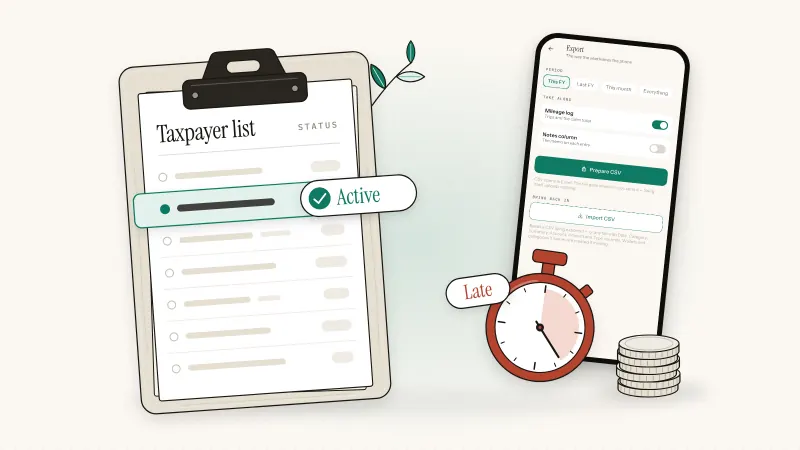
- Filer status. Filing on time puts you on the Active Taxpayers' List, updated daily since SRO 1638(I)/2024. Check by texting ATL, a space and your CNIC to 9966 (FBR).
- Refunds. Excess adjustable tax is refundable under section 170; here's how to claim a refund from FBR.
- Records. Keep them six years after the tax year ends (section 174(3)), so tax year 2026's until 30 June 2032. See how long to keep business records.
What if you miss the deadline?
File anyway, and soon. Section 182 sets a penalty of Rs 1,000 or 0.1% of the tax payable a day, whichever is higher, with a minimum of Rs 10,000 if 75% or more of your income is salary and Rs 50,000 otherwise, cut by 75%, 50% or 25% if you file within one, two or three months. You're also left off the Active Taxpayers' List, with no refund while you're off it, unless you pay the section 182A surcharge. The Finance Act 2026 raised that from Rs 1,000 to Rs 25,000 for individuals, but FBR hasn't confirmed which applies to late tax year 2026 returns. Here's what late filing costs.
How do you get the numbers ready, this year and next?
Records kept through the July–June year end the October guesswork.
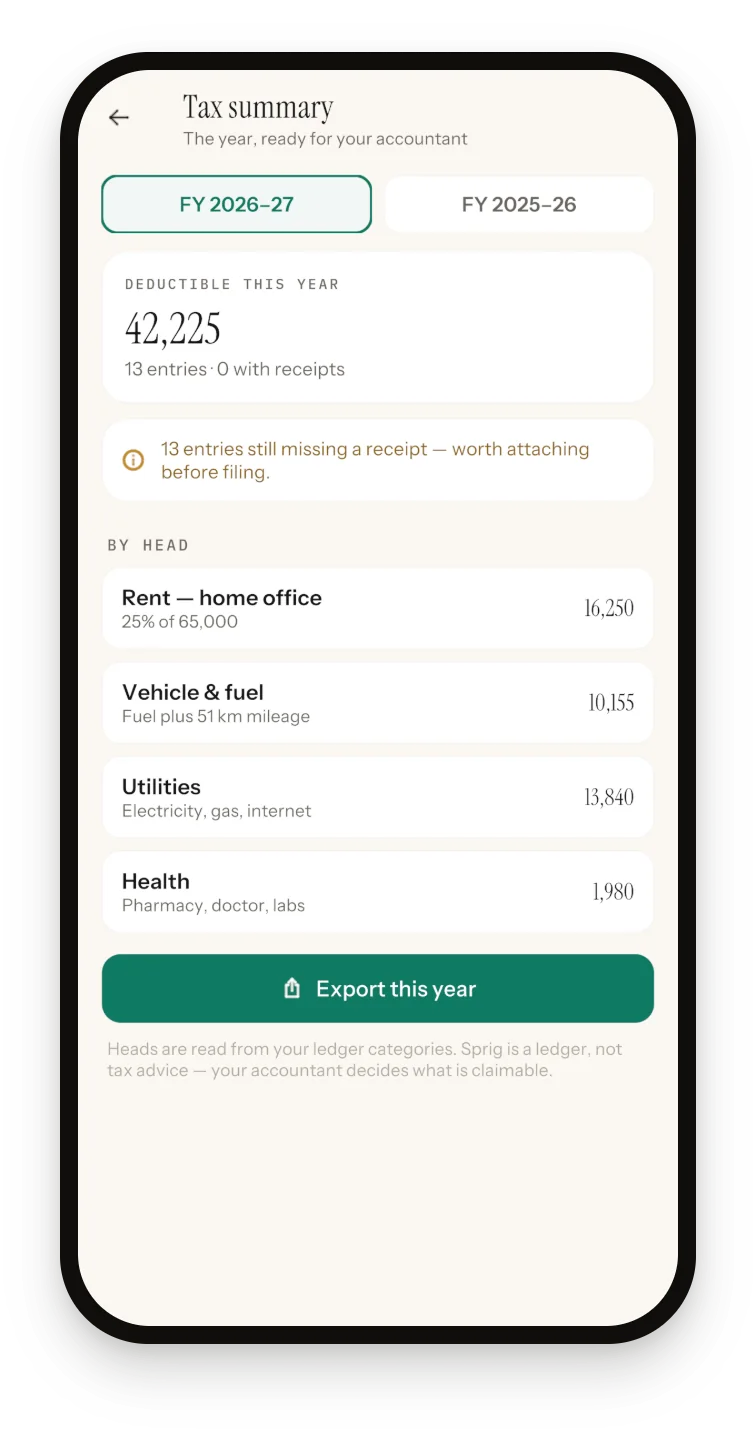
Sprig is a private, offline double-entry bookkeeping app for iPhone and Android, made by Secundum Reality. Its tax summary follows Pakistan's July–June tax year. It has no account, no bank link and no cloud, and it doesn't calculate tax or file returns.
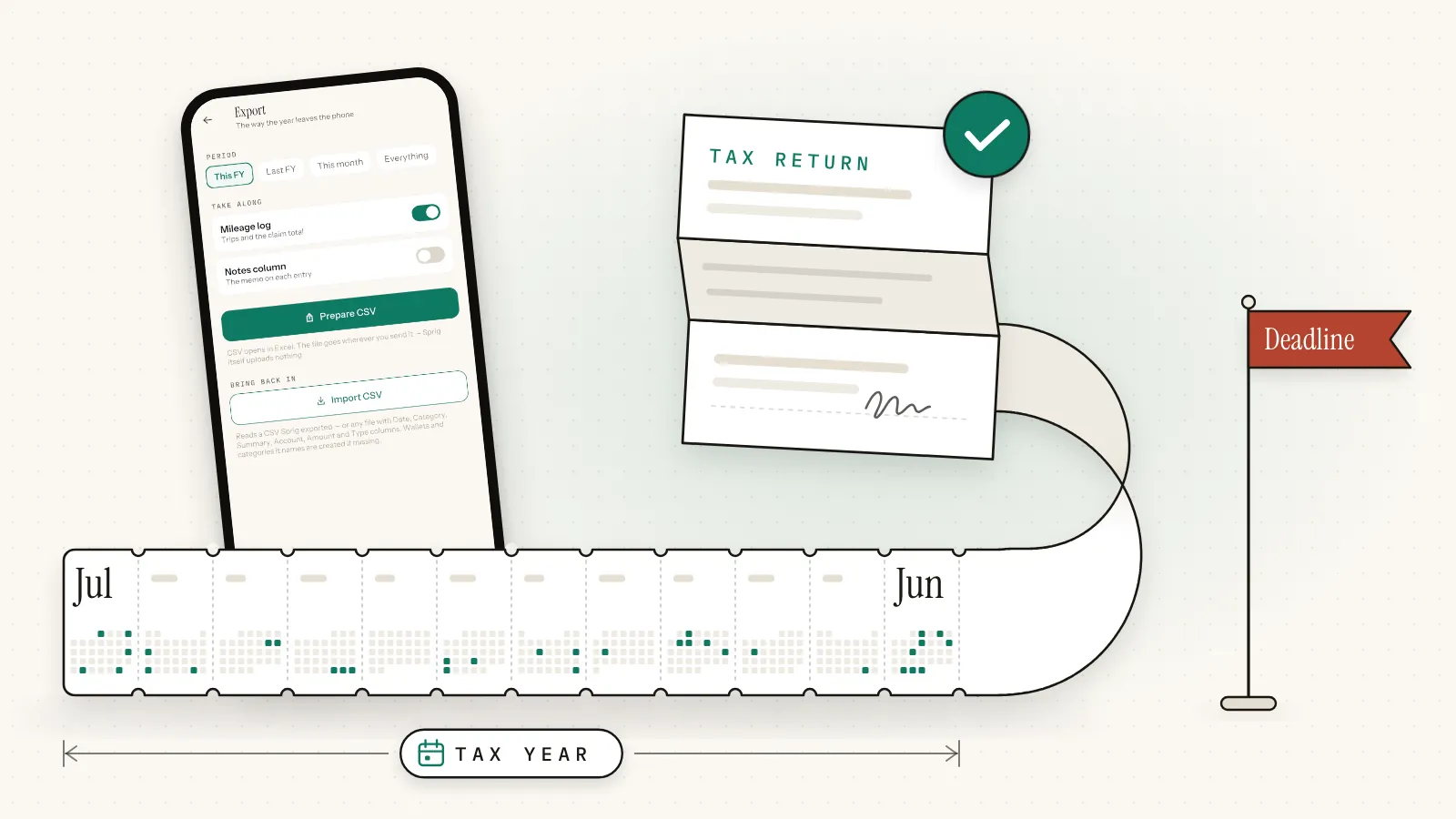
Sprig's FY 2025–26 is FBR's tax year 2026. In October 2026, Export → Last FY gives it as a CSV of the open book, and a custom range in Reports, 1 July 2025 to 30 June 2026, gives category totals that expand into per-item totals. Use the Personal book for household money and Side business for freelance or shop money.
How Sprig helps
Records first, so the totals are ready when IRIS asks.
- Household spending: Personal book category totals, ready to sort into IRIS's expense heads. Transfers between your wallets never count as spending.
- Freelance income: marking an invoice paid writes a Freelance income entry for the invoice amount into the book's first wallet; edit it in the Ledger to what actually arrived.
- Tax deducted: categories you add, such as Tax deducted or Zakat, show in Reports and the CSV, though not in the tax summary.
- Proof: the tax summary counts expense entries with no receipt photo. Logging an expense from Receipts attaches the photo and uses its date.
- Last year: typed entries take the day you save them, so import a CSV with Date, Category, Account and Amount columns. Sprig previews it and skips duplicates.
What Sprig won't do: know FBR's rules, connect to IRIS or check ATL status. Its five tax-summary heads (25% of Rent as home office; Fuel, Transport and business kilometers; Utilities; Health; Education) are its own groupings, not deductions under the Ordinance. Keep tax records in PKR wallets, since totals don't convert currencies, and don't expect an Urdu interface. See Sprig, an offline bookkeeping app.
Sprig for iPhone and Android
Keep your books in four taps.
Private, offline double-entry bookkeeping. No account, no bank login, no cloud. Free to start with 50 entries.
Frequently asked questions
Can I file my income tax return myself, without a consultant?
Yes. Individuals file on IRIS with their CNIC and password, and FBR's Tax Asaan app advertises wizard-based salaried and normal returns. Doing it yourself suits salary, bank profit and simple rent. Business accounts, foreign income or assets, a property sale or a wealth statement that won't reconcile are reasons to use a registered tax practitioner.
Do I have to file a return if my employer already deducts my tax?
Yes, if section 114 applies, for example because your tax year 2026 taxable income was above Rs 600,000 or you hold an NTN. Since 2013, your employer's annual statement no longer counts as your return. The tax deducted is credited in your own return, filed with a wealth statement. See filing as a salaried person.
Is a wealth statement compulsory with the income tax return?
For resident individuals, yes. Section 116(2) requires every resident individual who files a return to submit a wealth statement and reconciliation. It covers assets and liabilities, including foreign ones, for you, a dependent spouse, minor children and other dependents, plus household spending. IRIS won't accept it until the change in net assets matches income minus expenses.
What is the last date to file income tax returns for tax year 2026?
15 October 2026 for tax year 2026 returns. Section 118(3) sets 30 September for individuals, and FBR Circular No. 3 of 2026-27, dated 30 September 2026, extended it under section 214A. No further extension had been announced as of 3 October 2026.
Can I change my income tax return after I submit it?
Yes, with a revised return under section 114(6) giving your reasons. FBR's help page says to apply for revision in IRIS first. Within 60 days of filing you don't need the Commissioner's approval, and approval is deemed given if no order comes within 60 days of your request.
Does Sprig file my tax return or connect to IRIS?
No. Sprig is an offline bookkeeping app with no account, bank link or cloud; it doesn't calculate tax, file returns or check ATL status. Its FY 2025–26 matches tax year 2026, so you can export a CSV or read Reports totals, then enter figures on IRIS or give them to your tax practitioner.
Sources and further reading
- FBR: Circular No. 3 of 2026-27, extension in date of filing of income tax returns for tax year 2026
- FBR: Income Tax Ordinance, 2001 (amended up to 30 June 2026), sections 74, 114 to 120, 122, 164, 168, 170, 174, 181, 182, 182A and 214A
- FBR: SRO 1495(I)/2026, income tax return forms for tax year 2026
- FBR: Completing Income Tax Return (IRIS submission and wealth reconciliation)
- FBR: e-Payments, creating a PSID to pay income tax
- FBR: Check your Active Taxpayer List status
Published 3 October 2026. Feature details were checked against Sprig 1.1 for iPhone and Android. This article is general information, not tax or legal advice; rules differ by country, so confirm anything you file with your accountant or tax authority.