Pakistan tax
Wealth Statement in Pakistan: How to Fill It and Make It Reconcile
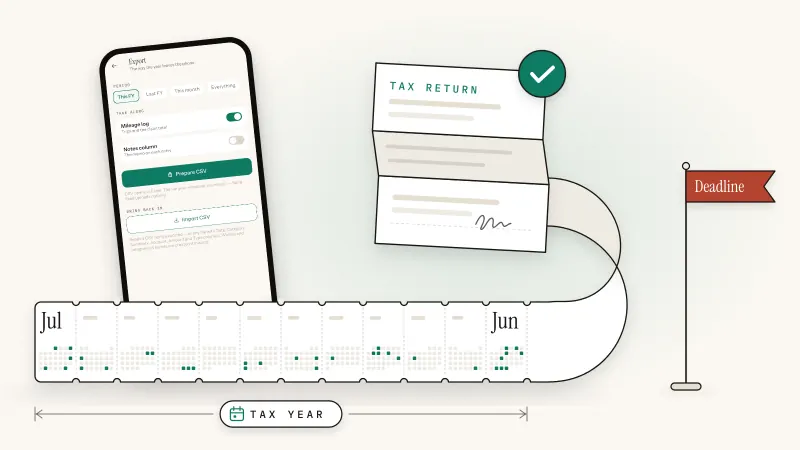
IRIS won't take your return until the wealth statement reconciles. Here are the tax year 2026 lines, a worked example, and how to build the spending figure from records.
If you're a resident individual, your income tax return on IRIS comes with a second form: the wealth statement. It lists what you and your dependents owned and owed on 30 June and checks the change since last year against your income and spending. If the two don't agree, IRIS shows an "unreconciled amount" and won't let you submit.
| Question | Rule | Source |
|---|---|---|
| Who files it | Every resident individual who files a return; members of an association of persons (AOP), with its return | Section 116(2) |
| What it covers | Assets and liabilities, including foreign ones, of you and your dependents; assets transferred; total spending; a reconciliation | Section 116(1) |
| Snapshot date | 30 June 2026, the end of tax year 2026 | Section 74 |
| Deadline | With the return, by 15 October 2026 | Section 118(3); FBR Circular No. 3 of 2026-27 |
| The test | Net assets must change by exactly inflows minus outflows | FBR filing help |
| Revising it | Until a section 122(9) notice arrives; never more than five years after the return's due date | Section 116(3) |
| Not filing it | 0.1% of taxable income per week or Rs 100,000, whichever is higher | Section 182 |
Not tax advice: rules change every June with the Finance Act, so confirm anything you file with FBR or a registered tax practitioner.
What is a wealth statement in Pakistan, and who has to file one?
A wealth statement is the record of your assets, liabilities and household spending that section 116 of the Income Tax Ordinance, 2001 requires with your return. Every resident individual who files a return must submit one, with a wealth reconciliation, even if their only income is a salary taxed at source.
Section 114(2)(e) of the Ordinance says the return must be accompanied by it. Salaried people aren't exempt; see our guide to the income tax return for salaried persons. Not sure you need to file? Start with how to file your income tax return in Pakistan.
It matters beyond this year: next year's opening figure starts from this one, and under section 111 an asset, investment or expense whose source you can't explain can be taxed as "Income from Other Sources".
What goes into a wealth statement?
Four things: everything you own, including assets abroad; everything you owe; any asset you gave away or sold during the year, with what you received for it; and the year's total spending by you and your family. A reconciliation then links last year's net assets to this year's.
The tax year 2026 return forms, notified in SRO 1495(I)/2026, split it into three IRIS screens: 116A – Foreign Assets/Liabilities; Personal Assets / Liabilities, from property, bank accounts and cash to vehicles and loans; and Reconciliation of Net Assets. FBR's 2019 form instructions (SRO 1160(I)/2019), not repeated in the 2026 SRO, ask for assets at cost, including ancillary expenses, and a hire-purchase asset at its full price, with the unpaid balance as a liability.
Whose assets and spending count?
- Yours, in Pakistan and abroad, plus those of your minor children and other dependents.
- Your spouse's assets, only if your spouse is dependent, under an Explanation the Finance Act, 2024 added to section 116(1). A spouse who files a return submits their own statement; the 2026 form has a line for assets held in others' names, including a non-filer spouse.
- Everyone's spending. Section 116(1)(d) asks for the total expenditure of you, your spouse, minor children and other dependents.
How does the wealth reconciliation work?
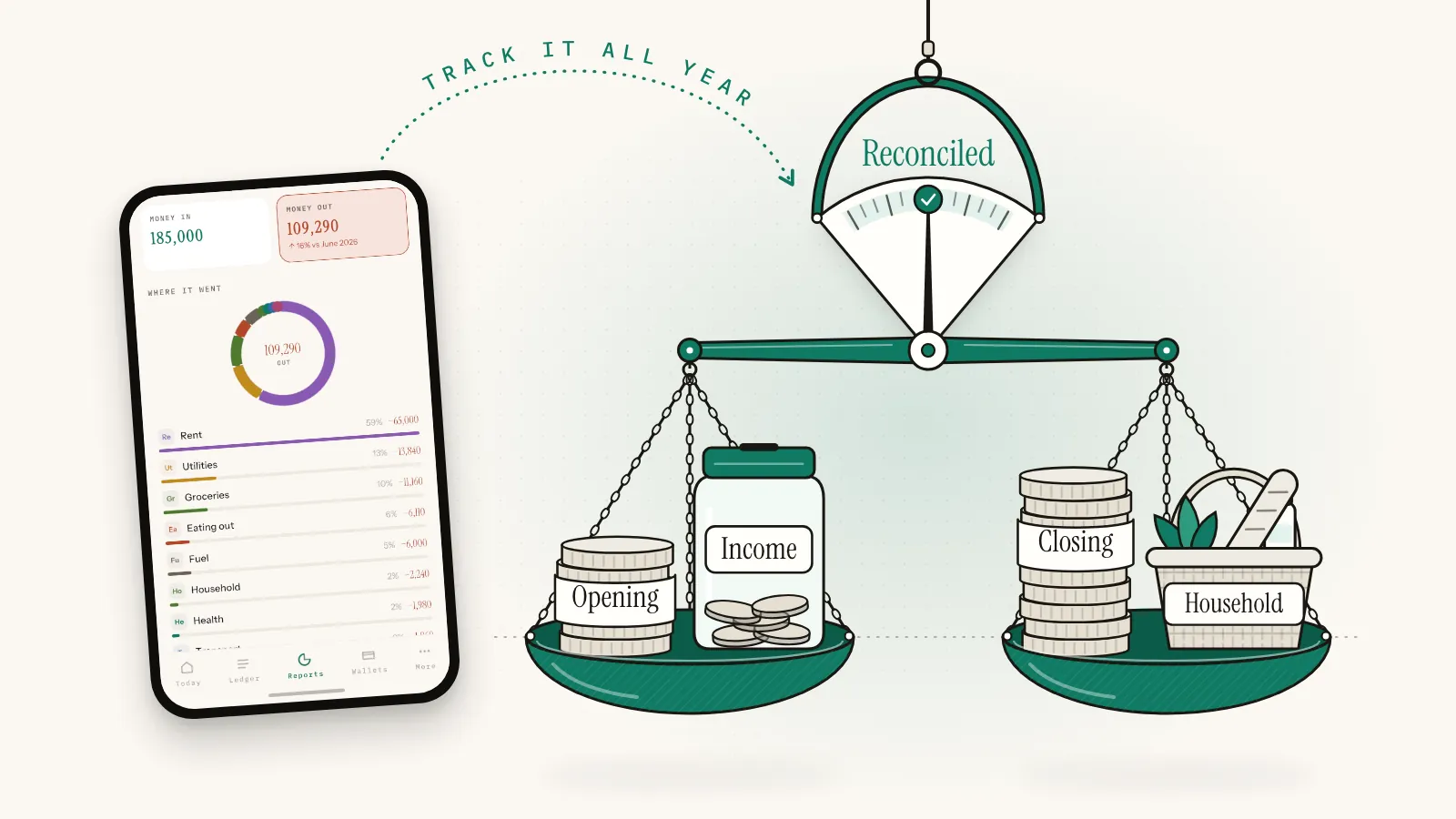
The reconciliation checks one equation: this year's net assets minus last year's must equal the year's inflows minus its outflows. Inflows are your declared income plus gifts, inheritance and remittances received; outflows are personal expenses and gifts you made. Any difference shows as an "unreconciled amount", and IRIS won't submit until it's zero.
- Net assets
- Total assets at cost minus total liabilities on 30 June.
- Inflows
- Income declared in the return (taxed normally, exempt, or under final or fixed tax), foreign remittance, inheritance, gifts received, family members' contributions to household expenses, and adjustments.
- Outflows
- Personal expenses, gifts you made, and adjustments.
- Unreconciled amount
- The gap left over; it must be zero.
It's the same balancing idea as double entry: every rupee that came in is still with you or went out.
A worked example (hypothetical)
For example, a salaried filer closed last year at net assets of Rs 3,000,000. For tax year 2026 the return declares a salary of Rs 2,400,000, the employer deducted Rs 162,000 of tax, and household spending was Rs 1,700,000. On 30 June 2026 the filer has a car that cost Rs 2,200,000, Rs 1,698,000 in the bank and Rs 40,000 in cash.
| Line on the form (code) | First try | Fixed |
|---|---|---|
| Total assets: car at cost, bank, cash (7019) | 3,938,000 | 3,938,000 |
| Total liabilities: personal loan (7029) | 0 | 200,000 |
| Net assets current year (703001) | 3,938,000 | 3,738,000 |
| Net assets previous year (703002) | 3,000,000 | 3,000,000 |
| Increase / decrease in assets (703003) | 938,000 | 738,000 |
| Income subject to normal tax: salary (7031) | 2,400,000 | 2,400,000 |
| Gift from a parent with an NTN, by bank transfer (7037) | 0 | 200,000 |
| Inflows (7049) | 2,400,000 | 2,600,000 |
| Personal expenses (7089) | 1,700,000 | 1,700,000 |
| Tax deducted from salary (see below) | 162,000 | 162,000 |
| Outflows (7099) | 1,862,000 | 1,862,000 |
| Unreconciled amount (703000) | 400,000 | 0 |
Two entries were missing: a Rs 200,000 gift from a parent, which is an inflow, and a Rs 200,000 personal loan still owed on 30 June. The borrowed money sits in the bank balance, so leaving the loan off the liabilities made net assets look bigger.
Tax deducted at source
Income is declared before tax, so the tax deducted from your salary must be counted once among the outflows. The 2026 form has no income-tax line: put it under a Personal Expenses head such as Rates / Taxes / Charge / Cess (7052) or in Adjustments in Outflows (7098), and confirm which with a registered tax practitioner.
What counts as personal expenses in the wealth statement?
Personal expenses are what your household spent on living from 1 July 2025 to 30 June 2026: rent, bills, transport, travel, medical, education, events, donations and daily shopping. Business costs stay out, and so do asset purchases and loan principal you repaid, because that money became an asset or reduced a liability.
Don't estimate this figure. Add it up from statements, bills and your own records, then sort it into the heads under Personal Expenses (7089) on the tax year 2026 form:
| What you spent on | Head on the form (code) |
|---|---|
| Rent | Rent (7051) |
| Electricity, gas and water bills | Electricity (7058), Gas (7060), Water (7059) |
| Phone and internet bills | Telephone (7061) |
| Fuel, car repairs and servicing | Vehicle Running / Maintenance (7055) |
| Rides, taxis and fares | Local Traveling (7056) |
| Trips abroad | Foreign Traveling (705601) |
| Doctor, pharmacy, lab tests | Medical (7070) |
| School and university fees | Educational (7071) |
| Club membership fees | Club (7072) |
| Weddings; other events and gatherings | Wedding Events (707302); Other Events / Functions / Gathering (707301) |
| Donations, Zakat, life insurance premiums, profit paid on loans | Donation, Zakat, Annuity, Profit on Debt, Life Insurance Premium, etc. (7076) |
| Car or home insurance, security guards | Asset Insurance / Security (7066) |
| Property tax, vehicle token tax | Rates / Taxes / Charge / Cess (7052) |
| Groceries, eating out, household items, clothes, subscriptions | Other Personal / Household Expenses (7087) |
| Money or assets you gave as gifts | Gift (7091), a separate outflow line |
Shared household? FBR's 2019 instructions say each filer declares the household total under each head, then deducts what other family members paid. On the 2026 form, their share is an inflow instead: Contribution in Expenses by Family Members (7088). Our list of documents required for your return covers the bills to keep.
Why won't my wealth statement reconcile?
An unreconciled amount means your net assets changed by more, or less, than inflows minus outflows explain. If wealth grew more, look for a missing inflow or an unlisted liability. If it grew less, look for missing spending, a missing outflow or a forgotten asset.
- Spending was guessed. Rebuild it from statements, head by head.
- Income taxed at source was left out, such as bank profit. It still belongs in the return and in inflows.
- A gift, inheritance or remittance is missing. Keep the bank record: section 39 can tax a gift from a non-relative, or a gift or loan not received by crossed cheque, banking channel or digital means from an NTN holder.
- A loan is missing. Money you borrowed is a liability; money you lent is an asset.
- A sale is missing. Remove the asset, add the proceeds and account for any gain or loss. The 2026 form has no gain-or-loss line, only adjustments, so confirm the treatment with a practitioner.
- The opening figure is off. Net assets previous year must equal last year's closing figure.
Don't plug a gap with a bigger cash-in-hand figure: cash is the hardest asset to prove, and wealth you can't explain is what section 111 taxes. If it won't close, take your statements to a registered tax practitioner.
Can you revise a wealth statement, and until when?
Yes. Under section 116(3) you can file a revised wealth statement, with a revised reconciliation and your reasons, any time before a notice under section 122(9) arrives for that year. It can't be revised more than five years after the return's due date, and a revision that isn't fixing a genuine mistake can be declared void.
On 30 September 2026 FBR reported that 85 taxpayers had revised statements for tax years 2014 to 2019 between March 2025 and June 2026, all well past the limit, inserting Rs 9.41 billion of cash, gold, prize bonds, property and business capital never declared before. It has opened 48 criminal inquiries and registered a money-laundering case.
Not filing a wealth statement at all draws a separate section 182 penalty (see the key facts above), and the return can't be submitted without it; see what late filing costs.
Do you also need a foreign income and assets statement?
Only if you're a resident individual with foreign income of USD 10,000 or more, or foreign assets worth USD 100,000 or more. Section 116A then requires a foreign income and assets statement, and needing one also obliges you to file a return. On the tax year 2026 return, it's the 116A screen inside the wealth statement.
It covers foreign assets, liabilities, transfers and income. Missing it costs 2% of the foreign income or assets for each year of default (section 182). Below the thresholds, foreign assets still belong in the wealth statement under section 116.
Building the household-spending figure in Sprig
Sprig is a private, offline double-entry bookkeeping app for iPhone and Android, made by Secundum Reality. Its tax summary follows Pakistan's July–June tax year. It has no account, no bank link and no cloud, and it doesn't calculate tax or file returns. If you logged your spending through the year, it gives you the hardest number on the form.
- Open the Personal book. Sprig has two books, Personal and Side business, so freelance or shop money stays out; here's why to keep household spending in its own book.
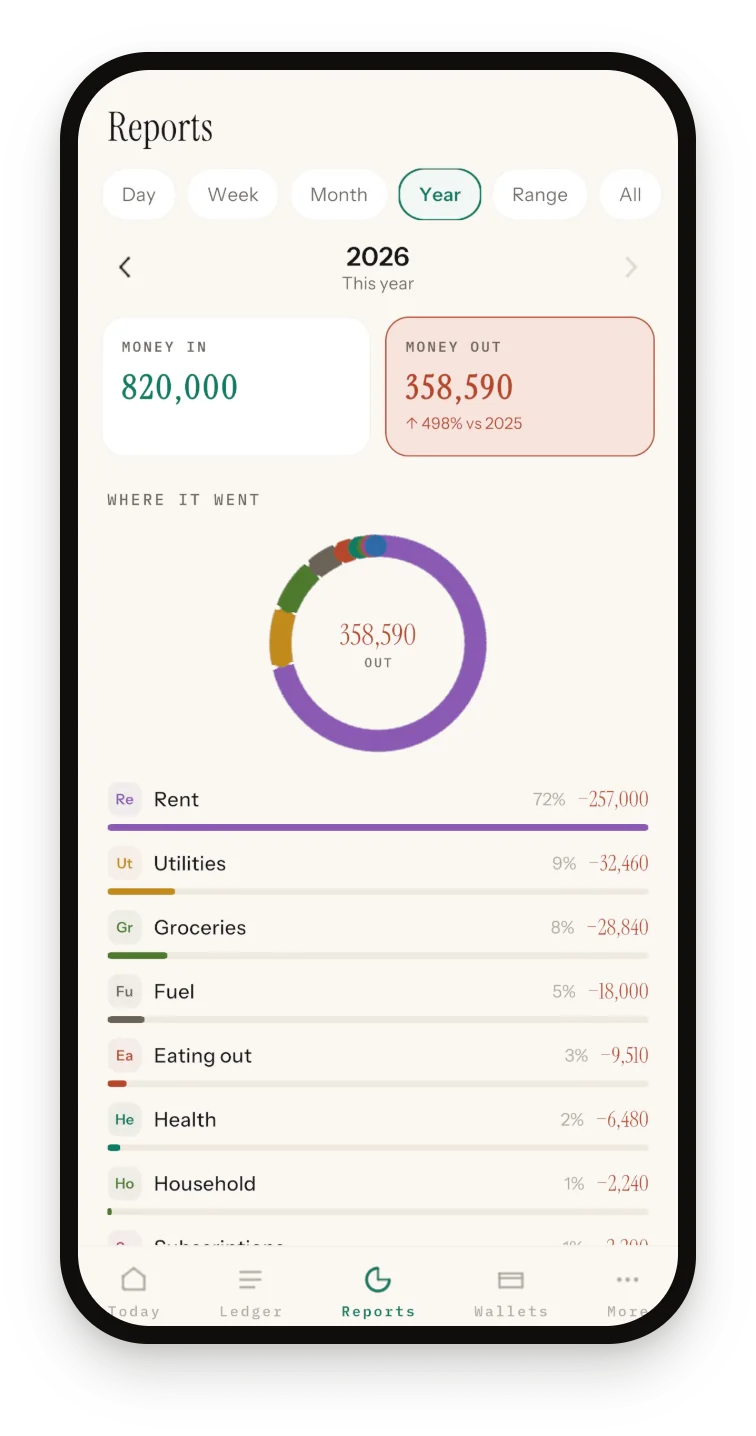
- Set the tax year. In Reports, tap Range and pick 1 July 2025 to 30 June 2026. Money out is the book's spending for tax year 2026.
- Sort it into heads. Tap a category bar to see its items, such as Electricity bill under Utilities, and map them with the table above.
- Take out non-expenses. Gifts you gave go on the Gift line; anything that bought an asset goes with your assets.
- Keep the working. Export, then Last FY, saves the year as a CSV.
How Sprig helps
Double entry keeps the total honest.
- No double counting: transfers between your own wallets, such as a cash withdrawal or a credit card payment, never count as spending.
- Heads the form lists separately: add custom categories such as Donations, Zakat or Weddings. They show in Reports and the CSV, though not in Sprig's tax summary.
- Proof for big bills: a receipt photo, filed with a category and amount, becomes an entry dated the photo's date; the photo stays on your phone.
What Sprig won't do. It doesn't produce the wealth statement or reconciliation, or connect to IRIS. Wallets show today's balances, not 30 June's, so take closing balances from bank statements. Reports add amounts without converting currencies, so keep tax-year spending in PKR wallets. The tax summary's heads are Sprig's own, not FBR's. Typed entries carry the day you save them; to rebuild last year, import a CSV with Date, Category, Account and Amount columns. See how Sprig, the offline bookkeeping app, works.
Sprig for iPhone and Android
Keep your books in four taps.
Private, offline double-entry bookkeeping. No account, no bank login, no cloud. Free to start with 50 entries.
Frequently asked questions
Do I declare assets at cost or market value in the wealth statement?
At cost, under the instructions FBR issued with its 2019 return forms (SRO 1160(I)/2019), including ancillary expenses; a hire-purchase asset goes in at its full price, with the unpaid balance as a liability. The 2026 forms don't repeat those notes, so keep the purchase papers behind each figure.
Do I include my wife's or husband's assets in my wealth statement?
Only if your spouse is dependent on you, under an Explanation the Finance Act, 2024 added to section 116(1). A spouse who files their own return submits their own wealth statement. Assets of your minor children and other dependents go in yours.
I'm filing for the first time. What goes in last year's net assets?
Your net assets on 30 June 2025: what you and your dependents owned, at cost, minus what you owed. FBR's 2019 form instructions asked first-time filers for a reconciliation for each previous year, so ask a registered tax practitioner how far back to go.
What is the penalty for not filing a wealth statement?
Section 182 sets it at 0.1% of taxable income per week or Rs 100,000, whichever is higher, for failing to file a wealth statement or reconciliation, imposed by written order after a hearing. IRIS also won't submit a return without a reconciled statement, so late-filing consequences follow.
Can Sprig fill in or file my wealth statement?
No. Sprig is a bookkeeping app with no connection to IRIS or FBR. It gives you the year's spending by category: in the Personal book, Reports with a 1 July 2025 to 30 June 2026 range shows Money out. Asset costs, loans and balances come from your documents.
Sources and further reading
- FBR: Income Tax Ordinance, 2001 (amended up to 30 June 2026), sections 39, 74, 111, 114, 116, 116A and 182
- FBR: SRO 1495(I)/2026, tax year 2026 electronic return forms, including the wealth statement and reconciliation screens
- FBR: SRO 1160(I)/2019, tax year 2019 return and wealth statement forms with filing instructions
- FBR: Completing Income Tax Return, including reconciliation of the wealth statement
- FBR press release, 30 September 2026: FBR busts Rs 9.41 billion wealth statement fraud
- FBR Circular No. 3 of 2026-27: tax year 2026 return deadline extended to 15 October 2026
Published 3 October 2026. Feature details were checked against Sprig 1.1 for iPhone and Android. This article is general information, not tax or legal advice; rules differ by country, so confirm anything you file with your accountant or tax authority.