Pakistan tax
How to Save Tax in Pakistan Legally: Credits and Allowances
Five reliefs in Pakistan's Income Tax Ordinance still cut an individual's tax: three credits and two allowances, each with its own conditions. Here's what each is worth, and which popular ones are gone.
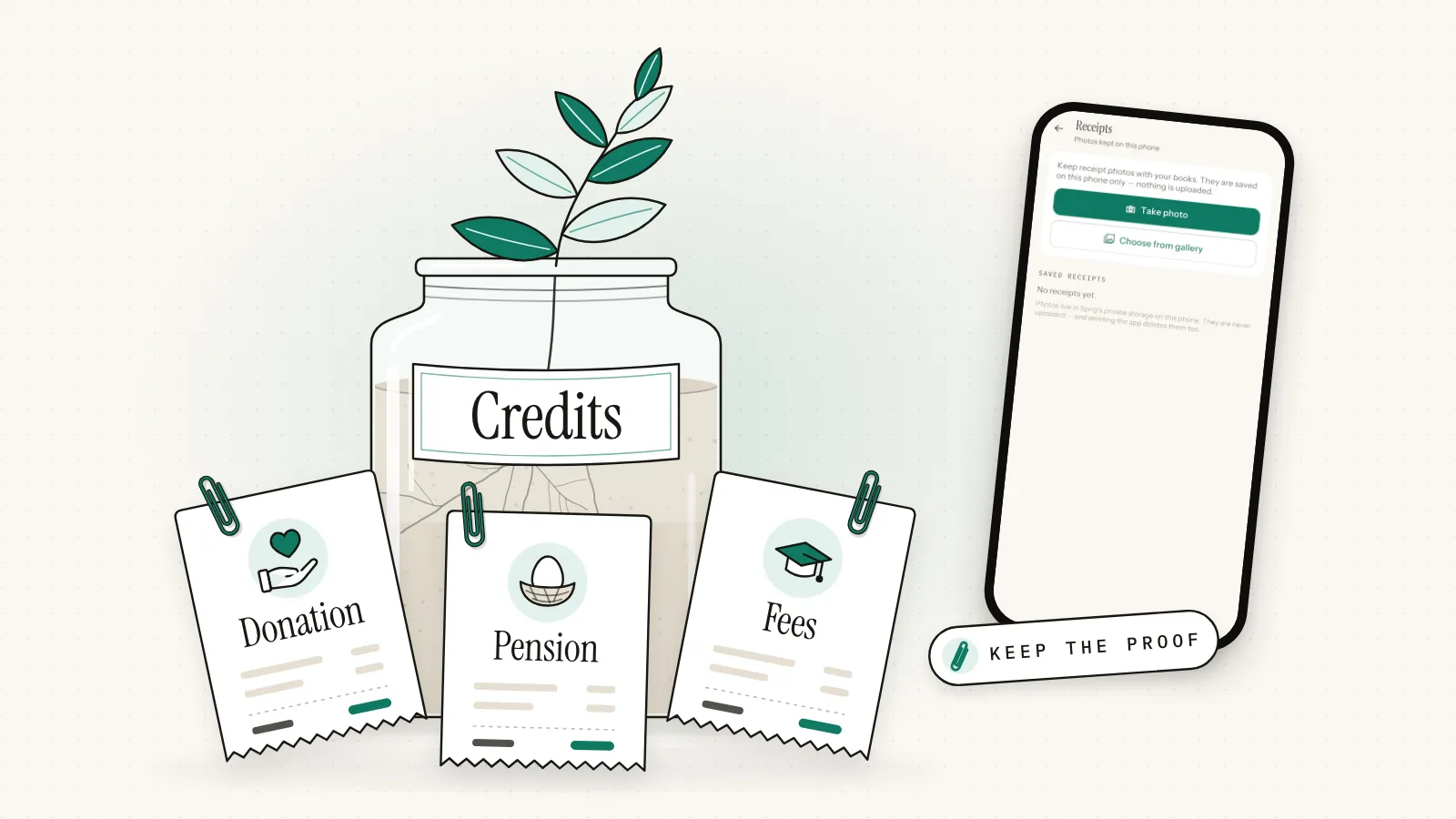
The main legal ways for individuals to cut income tax are five reliefs in the Income Tax Ordinance, 2001: three tax credits and two deductible allowances. As of October 2026, the law for tax year 2026 and FBR's current text read the same.
| Relief | Section | Type | Limit or condition |
|---|---|---|---|
| Donations to approved bodies | 61 | Credit | Up to 30% of taxable income (15% to an associate); cash only by crossed cheque |
| Approved VPS pension fund | 63 | Credit | Up to 20% of taxable income; salary or business income |
| Profit on a low-cost home loan | 63A | Credit | Up to 30% of taxable income; one house or flat |
| Zakat | 60 | Allowance | Paid under the Zakat and Ushr Ordinance, 1980; no cap |
| Children's tuition fees | 60D | Allowance | Lowest of 5% of fees, 25% of taxable income or Rs 60,000 per child; taxable income under Rs 1,500,000 |
| Shares, life and health insurance | 62, 62A | Removed | Omitted by the Finance Act 2022 |
Not tax advice; rules change every June with the Finance Act; confirm with FBR or a tax practitioner.
Credit or allowance: how does each save tax in Pakistan?
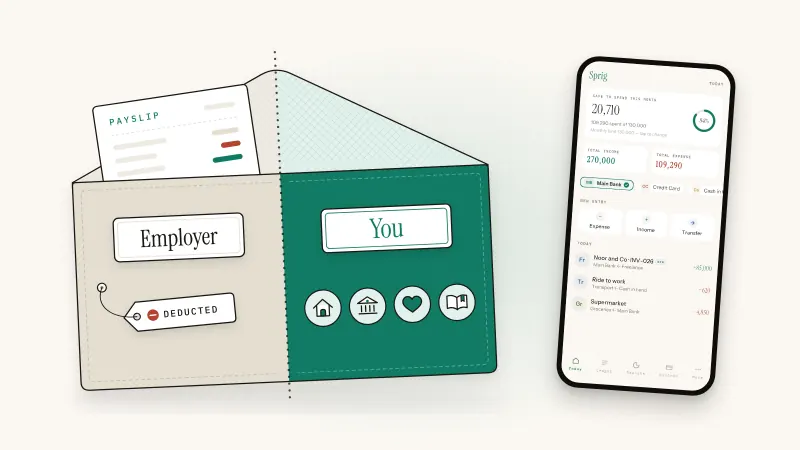
A tax credit comes off the tax you owe, at your average rate: sections 61, 63 and 63A all use the formula (A/B) × C. A deductible allowance comes off your income before tax is worked out, so it saves tax at your top slab rate, which is usually higher. Zakat and tuition fees are allowances.
- Tax credit
- Subtracted from tax (section 4(2)). A is your tax before credits, B your taxable income and C the eligible amount after the cap. Unused credit is lost (section 65(3)).
- Deductible allowance
- Subtracted from income to reach taxable income, but not below zero (section 9). An unused allowance is lost too.
For example, a salaried person with taxable income of Rs 2,000,000 owes Rs 94,000 before credits under both the tax year 2026 and 2027 tables (Rs 6,000 plus 11% of the income above Rs 1,200,000): an average rate of 4.7% and a top rate of 11%.
| Payment | How it works | Tax saved |
|---|---|---|
| Donation, VPS contribution or home-loan profit | Credit: 4.7% × Rs 50,000 | Rs 2,350 |
| Zakat deducted by your bank | Allowance: tax on Rs 1,950,000 is Rs 88,500 | Rs 5,500 |
| Children's tuition fees | No allowance above Rs 1,500,000 of taxable income | Rs 0 |
A non-salaried person with the same income owes Rs 290,000 before credits, an average rate of 14.5%, so the same donation saves Rs 7,250 and the Zakat Rs 15,000.
Freelancers
Credits and allowances only reduce tax on taxable income. Export proceeds taxed as a final tax under section 154A sit outside it (section 4(5)), so if that's all you earn, there's nothing to reduce.
How much tax do charitable donations save?
Under section 61, a donation earns a credit equal to your average tax rate times the amount, counting donations up to 30% of taxable income, or 15% if the recipient is an associate. It must go to an eligible recipient and be paid within the tax year, and cash counts only if paid by crossed cheque.
Only these recipients count:
- boards of education and universities set up by federal or provincial law;
- educational institutions, hospitals and relief funds set up or run by a federal, provincial or local government;
- non-profit organizations approved by the Commissioner under section 2(36), or eligible under section 100C;
- the bodies named in the Thirteenth Schedule.
Gifts to individuals or other organizations earn nothing. Property counts at its fair market value. Section 61(4) counts cash "only if it was paid by a crossed cheque drawn on a bank"; it doesn't mention online transfers, so if you give that way, keep the bank record and check with a practitioner.
Does a VPS pension contribution reduce your tax?
Yes, if you earn salary or business income. Section 63 gives a credit for contributions to a pension fund approved under the Voluntary Pension System Rules, 2005: your average tax rate times the contribution, counting up to 20% of taxable income. It isn't only for employees, but someone whose only income is rent can't claim it.
You must be a Pakistani individual with an NTN, CNIC or NICOP (section 2(19A)), and moving an employer-scheme balance into a VPS account earns no credit (section 63(3)).
Up to 50% of the balance withdrawn at retirement is tax-free; earlier withdrawals, or more than 50%, are taxed at your average rate over the previous three tax years (clause (23A), Part I, Second Schedule). This isn't investment advice: choose a fund on its merits, not for the credit alone.
Can you claim your children's school fees?
Only if your taxable income is under Rs 1,500,000. Section 60D then gives a deductible allowance equal to the lowest of 5% of the tuition fees you paid, 25% of your taxable income, or Rs 60,000 per child. The parent who pays the fee claims it, giving the school's NTN or name.
For example, a salaried parent with taxable income of Rs 1,400,000 pays Rs 500,000 in fees for two children. The allowance is the lowest of Rs 25,000 (5% of fees), Rs 350,000 (25% of income) and Rs 120,000 (two × Rs 60,000), so Rs 25,000. At 11%, tax falls by Rs 2,750; a non-salaried parent, taxed at 20% in that band, saves Rs 5,000.
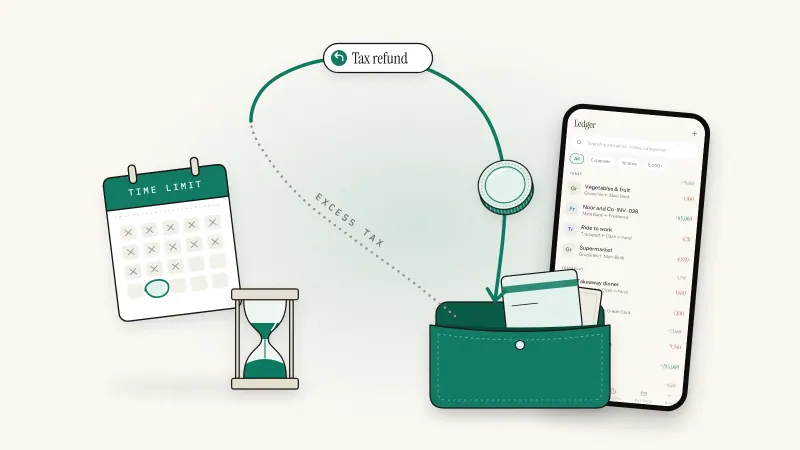
Your employer won't build this allowance into monthly salary tax (section 60D(5)), so claim it in your return, and if too much was deducted, claim a refund from FBR.
Is Zakat deductible from income tax?
Yes. Section 60 makes Zakat paid under the Zakat and Ushr Ordinance, 1980 a deductible allowance, so the full amount comes off your income before tax is worked out. That clearly covers Zakat your bank deducts at source and Zakat paid into an official Zakat fund. Any part you can't use that year isn't refunded or carried forward.
Under the Zakat and Ushr Ordinance, 1980, banks, post offices and National Savings Centres deduct 2.5% of a savings account's balance as it stood on 1 Ramazan, the first day of the Zakat year, if it exceeds a threshold the Administrator-General notifies. Zakat not deducted at source can be paid into an official Zakat fund or, under section 3(5), directly to people entitled to it.
Section 60 doesn't say whether direct payments count, and they're hard to prove, so ask a practitioner first. Zakat given to an approved charity may count as a section 61 donation instead; never claim one payment twice. Keep the bank statement or the fund's receipt.
Is there a tax credit for a home loan?
Yes, from tax year 2026. Section 63A, added by the Finance Act 2025, gives a credit for profit paid on a loan used to buy or build one personal house on up to 2,500 sq ft of land, or a flat of up to 2,000 sq ft. The eligible profit is capped at 30% of taxable income.
The lender must be a scheduled bank, an SECP-regulated institution, a government, a statutory body or a listed company, and the section also covers "share in rent or share in appreciation for value of house". You can't also deduct the profit against rent under section 15A, and after one claim there's no credit for another home for 15 tax years. In the salaried example, Rs 300,000 of profit is worth Rs 14,100.
What no longer saves tax?
Several reliefs still quoted online are gone. The Finance Act 2022 removed the credits for new shares, sukuks, ETF units and life insurance (section 62) and for health insurance (section 62A), plus the home-loan allowance (section 60C). The 25% rebate for full-time teachers and researchers ended after tax year 2025.
| Relief | Where it was | Status |
|---|---|---|
| New shares, sukuks, ETF units, life insurance | Section 62 | Omitted by the Finance Act 2022 |
| Health insurance premiums | Section 62A | Omitted by the Finance Act 2022 |
| Home-loan profit allowance | Section 60C | Omitted by the Finance Act 2022 |
| Home-loan profit credit | Section 64 | Omitted by the Finance Act 2015 |
| 25% rebate for full-time teachers and researchers | Second Schedule, Part III, clause (3A) | Tax years 2023 to 2025 only |
FBR's Circular No. 01 of 2025-26 confirms the teachers' rebate "will no longer be available for tax year 2026 and onwards".
What about medical bills?
There's no credit or deduction for your own medical bills or premiums. For employees, clause (139), Part I, Second Schedule exempts employer-provided treatment or reimbursement under the terms of employment if the hospital or clinic's NTN is given and the employer attests the bills; where the terms don't provide that, a medical allowance of up to 10% of basic salary is exempt instead.
When do you have to pay for it to count?
Within the tax year you claim for. Each relief counts amounts paid in the tax year, which runs from 1 July to 30 June. For the tax year 2026 return, that means payments made between 1 July 2025 and 30 June 2026. Anything paid after that counts toward tax year 2027.
For tax year 2026, the Federal Board of Revenue extended the return deadline to 15 October 2026 (Circular No. 3 of 2026-27). The tax year 2026 e-return lists Zakat and educational expenses under deductible allowances, and donations, pension contributions and home-loan profit under tax credits. Our guide to filing your income tax return on IRIS covers the rest.
Employees needn't wait: section 149(1) lets your employer adjust monthly salary tax for section 61 and 63 credits "after obtaining documentary evidence" (more in filing a return as a salaried person). Claim only what you paid and can prove, and keep the receipts for six years after the tax year ends (section 174(3)), with the other documents required for your return.
Keeping the proof with Sprig
Sprig is a private, offline double-entry bookkeeping app for iPhone and Android, made by Secundum Reality. Its tax summary follows Pakistan's July–June tax year. It has no account, no bank link and no cloud, and it doesn't calculate tax or file returns.
- Add categories. Start an expense, tap + New and create Donations, Zakat and Pension (VPS).
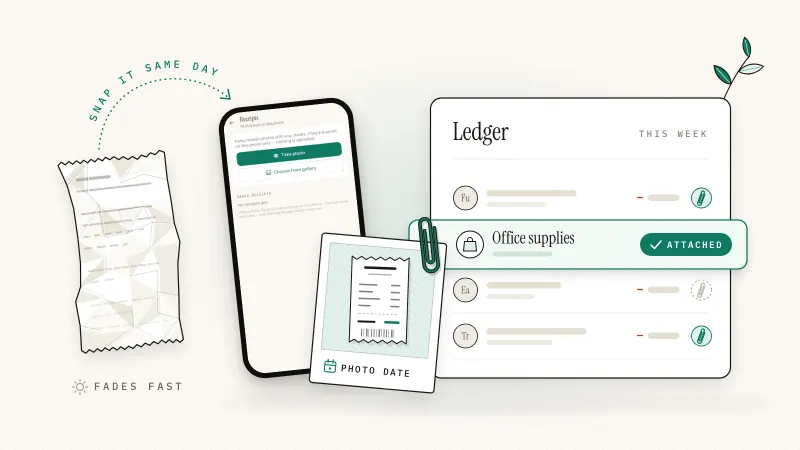
- Photograph the proof. In Receipts, take or choose a photo, set the date you paid so it lands in the right tax year, then file it under Expense with its category and amount. Save writes the entry with the photo attached.
- Total the year. In Reports, choose Range and set 1 July 2025 to 30 June 2026 to see each category's total.
- Hand it over. In Export, Last FY gives a CSV of tax year 2026 for the open book, custom categories included.

How Sprig helps
Your tax-year paperwork and totals, on your phone.
- July–June years: Sprig's FY 2025–26 is FBR's tax year 2026.
- Custom categories such as Donations and Zakat total up in Reports and the CSV.
- Receipt photos keep an editable date and stay on your phone.
The honest limits. Custom categories never reach the tax summary, whose built-in heads (25% of Rent as home office, Fuel and Transport plus business kilometers, Utilities, Health, Education) are Sprig's own grouping, not credits or allowances: fees logged under Education show in full, not as the section 60D figure. Sprig doesn't work out credits or connect to IRIS, and photos aren't in the CSV or backup.
Paper piling up? Here's a receipt system that sticks. Sprig is free for 50 entries, plus 20 per optional ad (up to four a day); Premium is yearly. See what else the offline bookkeeping app does.
Sprig for iPhone and Android
Keep your books in four taps.
Private, offline double-entry bookkeeping. No account, no bank login, no cloud. Free to start with 50 entries.
Frequently asked questions
What is the best legal way to save tax in Pakistan?
Claim what you already pay for: Zakat deducted by your bank or paid into a Zakat fund (section 60), donations to approved bodies by crossed cheque (section 61), approved VPS pension contributions (section 63), qualifying home-loan profit (section 63A) and, below Rs 1,500,000 of taxable income, children's tuition fees (section 60D). Each needs proof and must be paid within the tax year.
How much tax credit do I get for a donation in Pakistan?
Your average tax rate times the donation, counting donations up to 30% of taxable income (15% to an associate), under section 61. For example, a salaried person with taxable income of Rs 2,000,000 owes Rs 94,000, an average rate of 4.7%, so a Rs 100,000 donation saves Rs 4,700. Cash counts only if paid by crossed cheque.
Can business owners claim the VPS pension tax credit?
Yes. Section 63 covers eligible people with income under the head "Salary" or "Income from Business", so sole proprietors qualify, not just employees. The contribution must go to a pension fund approved under the Voluntary Pension System Rules, 2005, and the eligible amount is capped at 20% of taxable income. Someone whose only income is rent can't claim it.
Who can claim the tuition fee tax allowance?
The parent who paid the tuition fees, if their taxable income is under Rs 1,500,000, quoting the school's NTN or name (section 60D). The allowance is the lowest of 5% of fees paid, 25% of taxable income and Rs 60,000 per child. Employers don't apply it to monthly salary tax, so claim it in your return.
Are life and health insurance premiums still tax credits in Pakistan?
No. The Finance Act 2022 omitted section 62, which covered life insurance premiums, and section 62A, which covered health insurance. Employees can still receive employer-provided medical treatment or reimbursement tax-free, or, where their terms of employment don't provide it, a medical allowance of up to 10% of basic salary, under clause (139) of the Second Schedule, subject to its conditions.
Do I need receipts to claim tax credits and allowances?
Yes. Section 61 counts cash donations only if paid by crossed cheque, section 60D needs the school's NTN or name, and section 149 lets an employer apply donation and pension credits only "after obtaining documentary evidence". Claim only what you paid and can prove. Keep charity receipts, pension statements, the lender's statement of profit paid and Zakat records for six years after the tax year ends.
Sources and further reading
- FBR: Income Tax Ordinance, 2001, amended up to 30 June 2026 (sections 2, 4, 9, 15A, 60 to 65, 149 and 174; Second Schedule)
- FBR: Income Tax Ordinance, 2001, amended up to 31 July 2025 (the law for tax year 2026)
- FBR Circular No. 01 of 2025-26 (Income Tax): Finance Act 2025 explained, including the teachers' rebate
- FBR Circular No. 3 of 2026-27: tax year 2026 return date extended to 15 October 2026
- FBR: SRO 1495(I)/2026, tax year 2026 e-return forms (allowances and tax credits screens)
- Pakistan Code: The Zakat and Ushr Ordinance, 1980 (sections 3 and 7; First Schedule)
Published 3 October 2026. Feature details were checked against Sprig 1.1 for iPhone and Android. This article is general information, not tax or legal advice; rules differ by country, so confirm anything you file with your accountant or tax authority.