Pakistan tax
Withholding Tax in Pakistan: What's Deducted and How to Claim It
Banks, employers, phone companies and property registrars take income tax when you're paid or when you pay. Here's what each takes in 2026-27, why non-filers usually pay double, and how to claim it.
You probably pay income tax long before you file a return: off your salary, your savings, a mobile top-up, a car registration. Much of it counts toward your tax bill, but only if you find it and claim it.
| Fact | Figure |
|---|---|
| Not on the Active Taxpayers' List (ATL) | Most rates double; s.231B vehicle tax triples; property has its own table (Tenth Schedule, rule 1) |
| Bank profit, s.151 (tax years 2026 and 2027) | 20% ATL, 40% non-ATL |
| Cash withdrawals, s.231AB | 0.8%, non-ATL only, above Rs 50,000 a day |
| Property, tax year 2027 (s.236K, s.236C) | Buying 1.25% ATL, 10.5% to 18.5% non-ATL; selling 2.75% ATL, 11.5% non-ATL |
| Export of services, s.154A | 0.25% for PSEB-registered IT exporters, otherwise 1% |
| Social media revenue, s.154B (new in tax year 2027) | 5% ATL, 10% non-ATL |
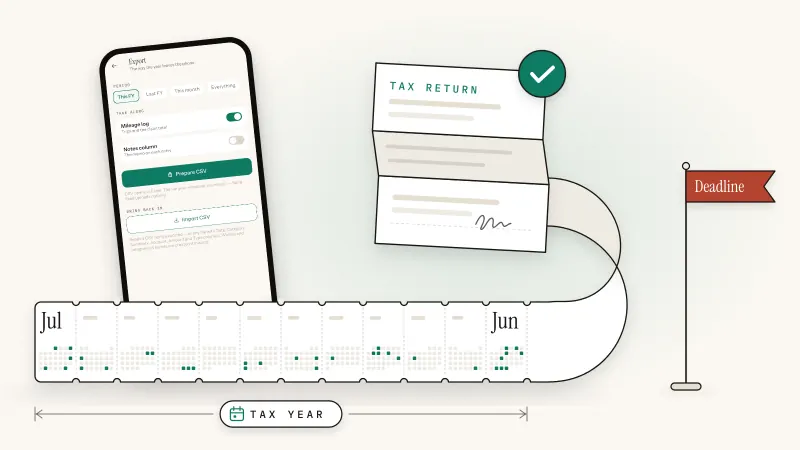
| Tax year 2026 return due | 15 October 2026 (FBR Circular No. 3 of 2026-27) |
Not tax advice; rules change every June with the Finance Act; confirm with FBR or a registered tax practitioner.
What is withholding tax in Pakistan?
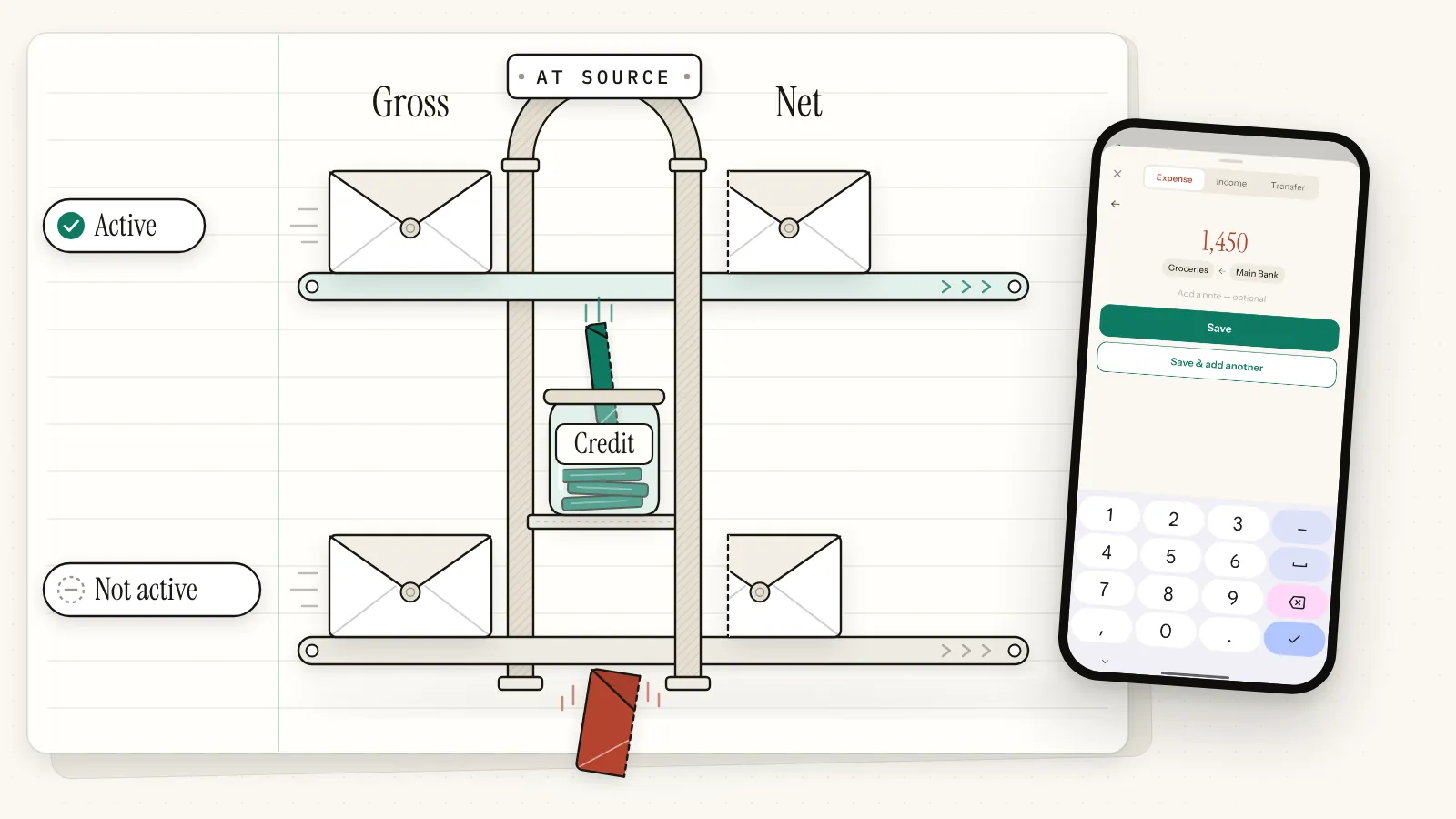
Withholding tax is income tax taken at source. An employer, bank, phone company, excise office or property registrar deducts or collects it and deposits it with the Federal Board of Revenue (FBR). Under section 168 of the Income Tax Ordinance, 2001, that money is treated as tax you've paid.
Some is deducted from money paid to you: salary, bank profit, rent, service fees, export proceeds. The rest is collected when you pay: phone and internet bills, vehicle and property transfers, card payments abroad and, off the ATL, cash withdrawals and home electricity. Each has a section in the Income Tax Ordinance, 2001, as amended up to 30 June 2026.
Whoever takes the tax is the withholding agent, and section 164 makes it give you a certificate with copies of the Computerized Payment Receipt (CPR) showing the deposit. Keep certificates for six years after the tax year ends.
How much more do non-filers pay?
Usually double. The Tenth Schedule to the Income Tax Ordinance raises withholding rates by 100% for anyone missing from FBR's Active Taxpayers' List when the tax is taken. Vehicle tax under section 231B is tripled, and property deals use their own higher table. Salary, export proceeds, electricity, and phone and internet tax are outside this rule.
A filer, in everyday speech, is anyone on the ATL. The ATL vs non-ATL withholding rates individuals meet most:
| What (section) | ATL | Non-ATL | In your return |
|---|---|---|---|
| Salary (s.149) | Average rate on your estimated salary | Same | Adjustable |
| Bank profit on accounts and deposits (s.151) | 20% | 40% | Final up to Rs 5 million of profit a year; minimum above that |
| Prize bonds (s.156) | 15% | 30% | Final |
| Rent from a company or other prescribed tenant (s.155) | Nil on the first Rs 300,000 a year, then 5% to 25% slabs | Double (FBR's card shows no figure) | Adjustable |
| Fees from a company or other prescribed payer (s.153) | 4% IT and IT-enabled services; mostly 7% to 15% otherwise | Double | Minimum (residents) |
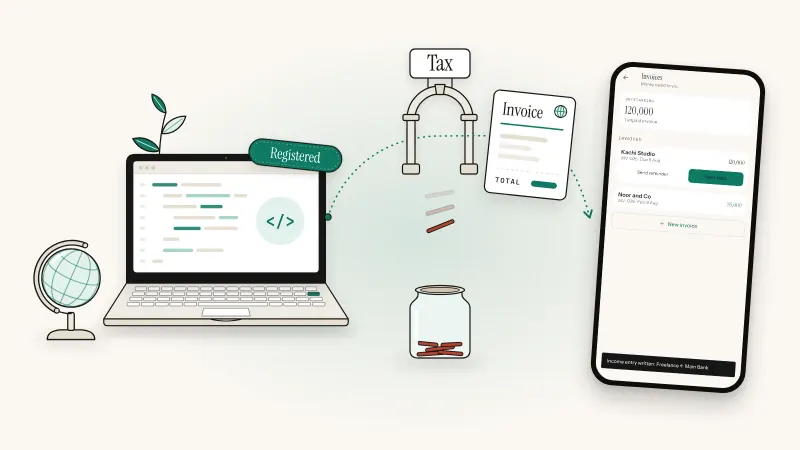
| Export of services, such as work for foreign clients (s.154A) | 0.25% PSEB-registered IT exporters; 1% otherwise | Same | Final if conditions are met |
| Social media platform revenue (s.154B) | 5% | 10% | Minimum (residents) |
| Cash withdrawals above Rs 50,000 a day (s.231AB) | None | 0.8% | Adjustable |
| Home electricity, bill of Rs 25,000 or more a month (s.235) | None | 7.5% | Minimum on bills up to Rs 360,000 a year; adjustable above Rs 30,000 a month |
| Mobile, internet and prepaid cards (s.236) | 15% | 15%, or 75% if named in an FBR general order | Adjustable |
| Card payments abroad (s.236Y) | 0.5% | 1% | Adjustable |
| Registering a new vehicle (s.231B) | 0.5% to 12% of value, by engine size | 1.5% to 36% | Adjustable |
| Annual vehicle tax (s.234) | Rs 800 to Rs 10,000, by engine size | Double | Adjustable |
| Buying property (s.236K) | 1.25% | 10.5%, 14.5% or 18.5%, by value | Adjustable |
| Selling property (s.236C) | 2.75% | 11.5% | Adjustable, with exceptions |
Rates are from FBR's Withholding Tax Rate Card for tax year 2027, checked against the Ordinance, which prevails in any conflict. Its non-ATL rent cell is blank, but the Tenth Schedule doubles rent too.
File the latest return by the due date and you join the list; late filers stay off for that year unless they pay a surcharge or, as individuals, give an undertaking (s.182A; see how to become a filer in Pakistan). Check your status by texting "ATL", a space and your 13-digit CNIC to 9966. Tax already taken at the higher rate counts toward your return if you file before FBR makes a provisional assessment, or within 45 days of receiving one (Tenth Schedule, rule 4).
Adjustable, final or minimum: what's the difference?
Adjustable tax is a credit against your total tax for the year, and any unused credit can be refunded. Final tax settles the tax on that income, which then stays out of your taxable income with no credit or refund. Minimum tax is a floor: you may owe more on that income, but the deduction isn't refunded.
- Adjustable
- Credited against the tax on your whole income for the year it was deducted, with unused credit refunded under s.170 (s.168). Salary, cash-withdrawal, vehicle, property, phone and card-abroad tax work this way.
- Final
- Taxed on its own: the income stays out of taxable income, no expenses come off it, and the tax offsets nothing else (s.8, s.168(3), s.169). Examples: bank profit up to Rs 5 million, dividends, prize bonds, and export proceeds meeting the s.154A conditions.
- Minimum
- The deduction is the least you'll pay on that income. Examples: residents' service fees (s.153(3)), resident creators' platform revenue (s.154B), bank profit above Rs 5 million (s.151(3)), and electricity tax on the first Rs 360,000 of bills a year (s.235(4)).
Tax on bank profit, worked through. For example, take Rs 100,000 of bank savings profit in tax year 2027. On the ATL, the bank deducts Rs 20,000 and that settles it: section 7B taxes an individual's bank profit separately at the same 20% when the year's total is Rs 5 million or less. Off the ATL, the bank deducts Rs 40,000; file before FBR makes a provisional assessment and the extra Rs 20,000 counts against your other tax (section 169(4) and Tenth Schedule, rule 4). Above Rs 5 million a year, section 7B stops applying and the deduction becomes a minimum tax (s.151(3)).
Which deductions can you claim in your return?
You claim adjustable deductions as tax already paid: salary tax, cash-withdrawal tax, vehicle and property advance tax, phone and internet tax, tax on card payments abroad, and the adjustable part of electricity tax. Final and minimum deductions are reported too, in their own blocks, where they settle or set a floor for their income.
IRIS keeps them apart: the tax year 2026 return screens in SRO 1495(I)/2026 have separate Adjustable, Final, Minimum and Average Tax blocks, with a row per section.
- Salary. Your employer's certificate gives the total. Show your employer evidence of tax withheld under other heads, such as vehicle tax, and section 149 has them adjust for it.
- Bank profit. Report the gross profit and the tax from the bank's certificate; IRIS lists that tax in the Adjustable block (64040002), where it's credited against the separate section 7B tax.
- Bills, vehicles and property. The tax shows on the bill or top-up, or on the receipt from the excise office or registering authority.
- Freelance income. Banks deduct s.154A tax when foreign payments are realized; see freelancer tax in Pakistan.
- Local clients. Tax withheld by customers who deduct tax from your invoices (s.153) is usually minimum tax for residents.
Declare the gross amount
Section 168(1)(a) counts tax deducted from a payment as the payee's income: if a client paid Rs 85,000 after deducting Rs 15,000, you report Rs 100,000 of income and Rs 15,000 of tax paid. Don't overclaim either: since 1 July 2026, claiming more credit than the agent deposited carries a penalty equal to the excess (s.182, table entry 36).
Which rate card applies to your 2026 return?
The return due 15 October 2026 covers tax year 2026 (1 July 2025 to 30 June 2026), so check deductions against FBR's card "updated up to 30-06-2025 as per Finance Act 2025". The 2026-27 card is for tax year 2027: deductions from 1 July 2026, which belong in next year's return.
Credit belongs to the year the tax was deducted (s.168(2)). As of October 2026, both cards are on FBR's withholding tax rate cards page. What changed for individuals:
| Withholding | Tax year 2026 | Tax year 2027 |
|---|---|---|
| Selling property (s.236C) | 4.5%, 5% or 5.5% by value | 2.75% flat |
| Buying property (s.236K) | 1.5%, 2% or 2.5% by value | 1.25% flat |
| Late-filer property rates (on the ATL, filed late) | 7.5% to 9.5% selling; 4.5% to 6.5% buying | Abolished |
| Card payments abroad (s.236Y) | 5% | 0.5% |
| Social media revenue (s.154B) | None | 5% |
| Fees for services (s.153) | 6% listed services; 15% others | 7% listed services; 14% others; 15% independent professionals |
Unchanged: bank profit (20% and 40%), the 0.8% cash-withdrawal tax, the 0.25% and 1% export-of-services rates, and the rent slabs.
Where do you find the tax deducted from you?
Start with certificates. Every withholding agent must give you one, with copies of the payment receipts, when it deducts or collects tax (s.164). Then compare them with the withholding summary IRIS shows when you start a return, which FBR calls indicative data; your certificates and records remain the proof.
- Collect certificates and receipts. Ask your employer and bank for them; keep utility bills, vehicle tax receipts and property transfer papers.
- Download the IRIS summary. A tax year 2026 return opens with a Summary of Economic Transactions, including a downloadable withholding summary, but FBR's note warns that "correct reporting of income and tax thereon is primarily your own responsibility".
- Reconcile. Match each IRIS line to a certificate and chase anything missing before you claim it.
What if more was deducted than you owe?
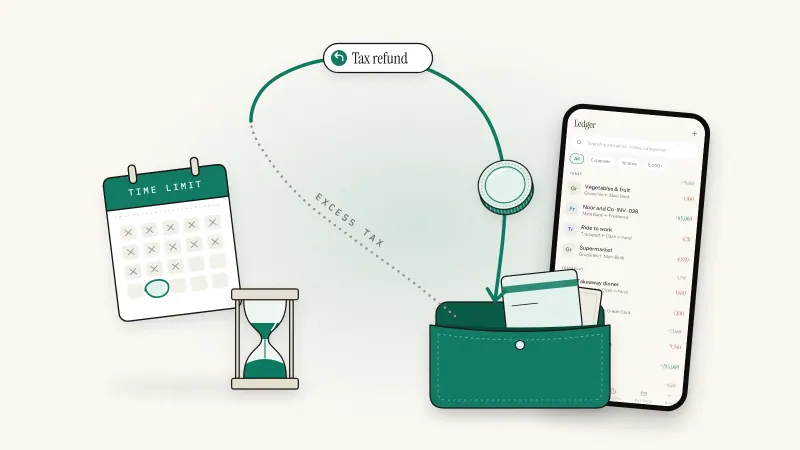
Adjustable tax above your liability can be refunded. FBR first sets it against other tax you owe, then pays the rest (s.170(3)). Apply within three years; the Commissioner must decide within 60 days (s.170). Since tax year 2021, FBR may also refund credit its system has verified without an application (s.170A).
Two catches: final and minimum taxes generally don't come back, and late filers get no refund while off the ATL (s.182A(1)(c)). See our guides to income tax refunds in Pakistan and how to file your income tax return in Pakistan.
Tracking withholding tax in Sprig
Sprig is a private, offline double-entry bookkeeping app for iPhone and Android, made by Secundum Reality. Its tax summary follows Pakistan's July–June tax year. It has no account, no bank link and no cloud, and it doesn't calculate tax or file returns.
It won't track withholding for you either: it knows no rates, can't see your bank's deductions, and doesn't connect to IRIS or check ATL status. It can keep a running total to check certificates against.
How Sprig helps
Set it up once, then log deductions as they happen.
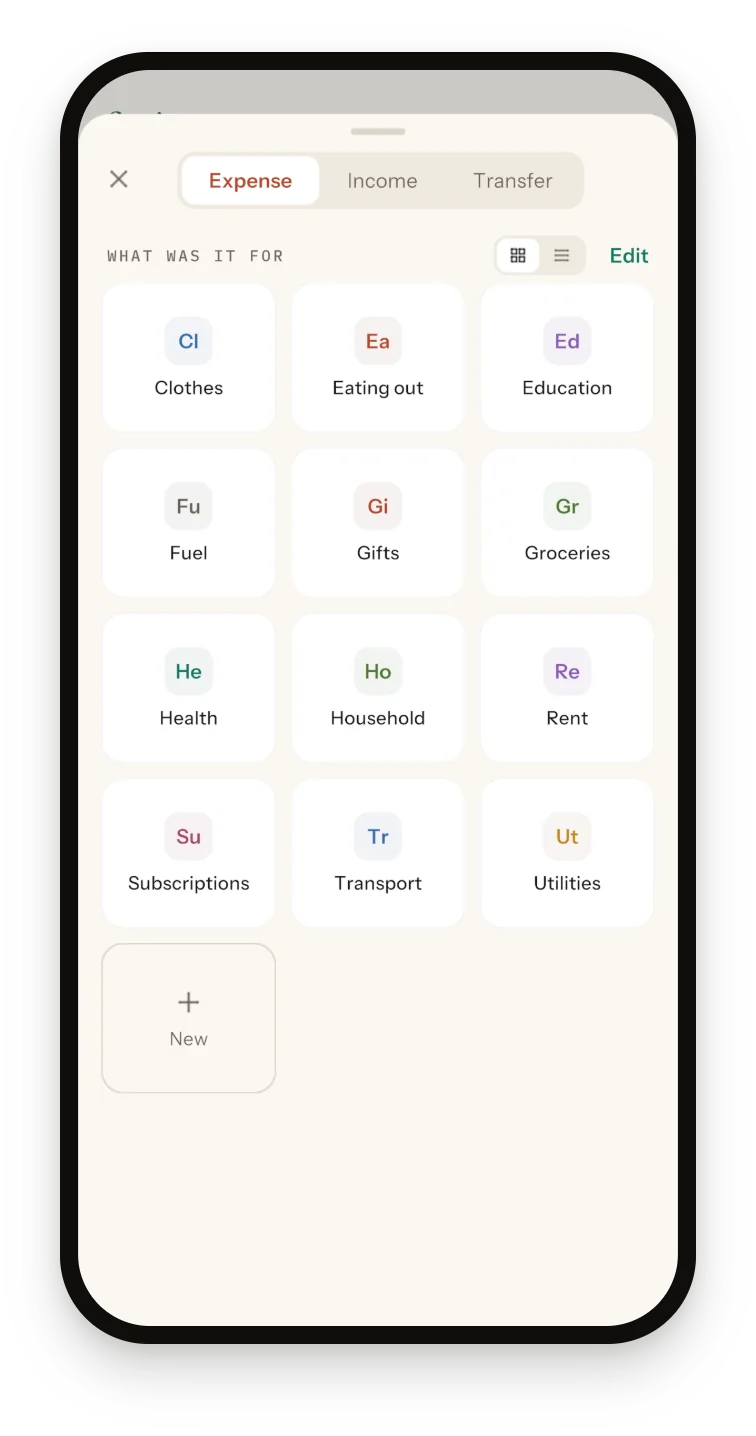
- Add a category. On the Expense tab, tap + New and create Tax deducted in each book you use.
- Log the gross, then the tax. Record bank profit in full under Interest income and the deduction as a Tax deducted expense, so the wallet matches the bank. Split a bill's tax line out the same way.
- Note the reference. Put the certificate number in the entry's note; notes are searchable in the Ledger and can be exported in the CSV.
- Total the year. Reports → Range, 1 July 2025 to 30 June 2026, shows the year's Tax deducted total, and its bar expands into per-item totals. Export → Last FY gives that year as a CSV.
Know the limits. Custom categories never count in Sprig's tax summary, and a Tax deducted expense also counts as money out in Reports and on Today. Typed entries are dated the day you save them; for last year's deductions, import a CSV (Date, Category, Account and Amount columns) or photograph the certificate and set the photo's date, up to two years back.
Sprig for iPhone and Android
Keep your books in four taps.
Private, offline double-entry bookkeeping. No account, no bank login, no cloud. Free to start with 50 entries.
Frequently asked questions
Is withholding tax refundable in Pakistan?
Mainly the adjustable kind. Tax withheld on salary, cash withdrawals, vehicles or property counts against your tax for the year, and any excess can be refunded under section 170. Final tax, such as prize-bond tax, settles that income and minimum tax sets a floor, so neither normally comes back. Late filers get no refund while off the Active Taxpayers' List.
Why did my bank deduct tax at double the rate?
Because you weren't on FBR's Active Taxpayers' List when the profit was paid. The Income Tax Ordinance's Tenth Schedule doubles most withholding rates for people off the list, so the bank took 40% instead of 20%. If you file before FBR makes a provisional assessment, or within 45 days of one, the extra counts against that year's tax (Tenth Schedule, rule 4).
How do I get a withholding tax certificate?
Ask the withholding agent. Section 164 of the Income Tax Ordinance requires anyone who deducts or collects tax to give you a certificate, with copies of the Computerized Payment Receipts showing the deposit, when it takes the tax. Your employer owes you one for salary tax and your bank one for profit and cash-withdrawal tax. Keep them for six years after the tax year ends.
Is tax on bank profit final or adjustable in Pakistan?
For individuals, it's final if the year's profit is Rs 5 million or less. Section 7B taxes that profit separately at 20% of the gross amount, the rate banks deduct from customers on the Active Taxpayers' List, so nothing more is due. Above Rs 5 million, the bank's deduction is a minimum tax instead (s.151(3)). This holds for tax years 2026 and 2027.
Do filers pay tax on cash withdrawals in Pakistan?
No. Section 231AB applies only to people not on the Active Taxpayers' List. Banks deduct 0.8% from them once the day's cash withdrawals total more than Rs 50,000. The Finance Act 2025 raised the rate from 0.6%; it's the same in tax years 2026 and 2027. It's advance adjustable tax, claimable against that year's tax once they file.
Sources and further reading
- FBR: Withholding Tax Rate Card for Tax Year 2027 (updated to 30 June 2026, Finance Act 2026)
- FBR: Withholding tax rate cards, including the tax year 2026 card (updated to 30 June 2025)
- FBR: Income Tax Ordinance, 2001, amended up to 30 June 2026 (ss.7B, 149 to 156, 164, 168 to 170, 182A, 231AB to 236Y; Tenth Schedule)
- FBR: SRO 1495(I)/2026, electronic return forms for tax year 2026
- FBR: Circular No. 3 of 2026-27, tax year 2026 return date extended to 15 October 2026
- FBR: Check Active Taxpayer List (ATL) status
Published 3 October 2026. Feature details were checked against Sprig 1.1 for iPhone and Android. This article is general information, not tax or legal advice; rules differ by country, so confirm anything you file with your accountant or tax authority.