Budgeting & saving
How Much Emergency Fund Do You Need? A US and UK Guide
The CFPB says it depends on your situation; MoneyHelper suggests three to six months of essential costs. Here's how to find your number, build it and keep it protected in the US and UK.
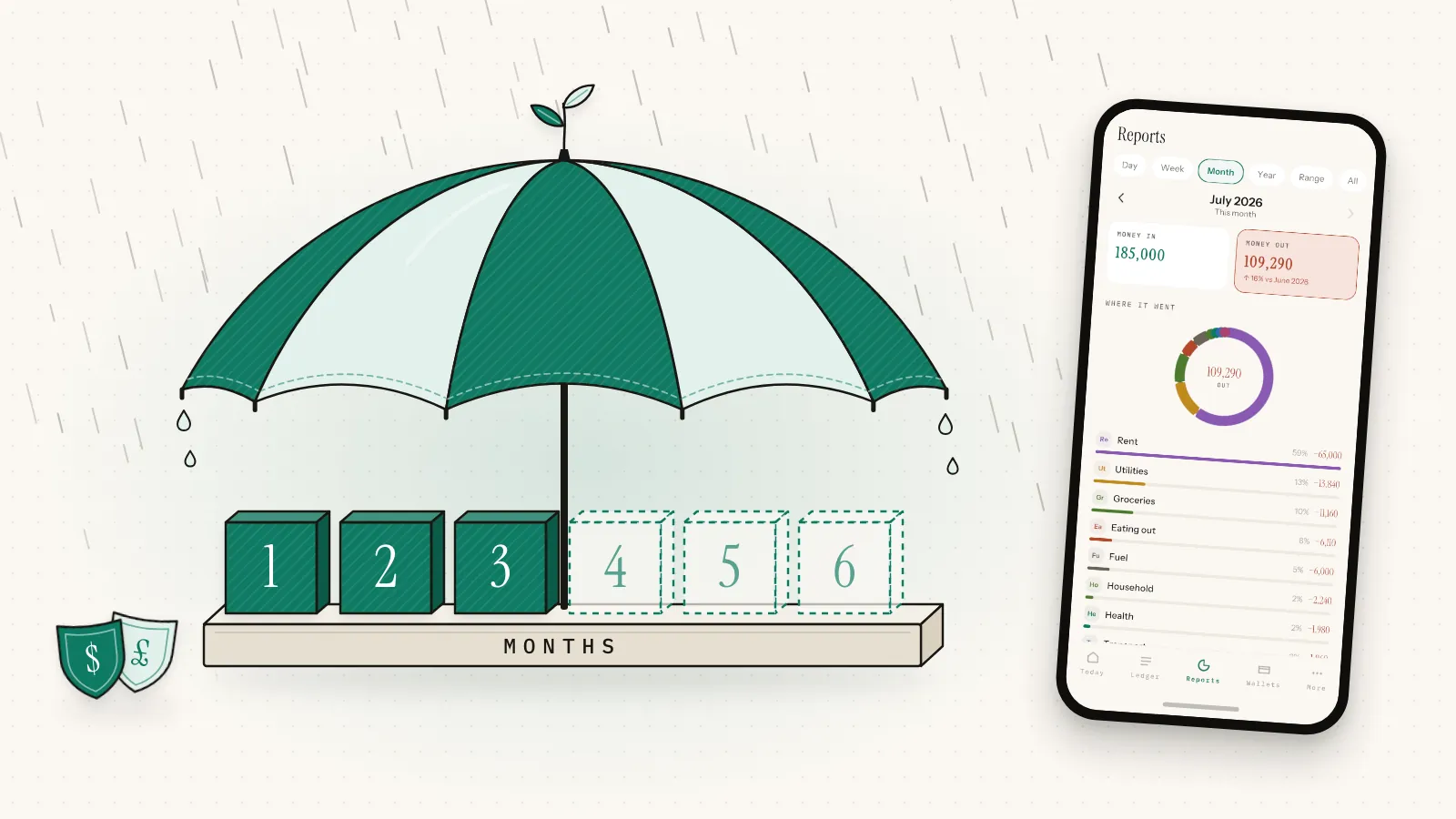
The heating dies in January. The car needs new brakes. A contract ends early. An emergency fund turns moments like these from a crisis into an inconvenience. US and UK guidance agrees on the basics but sizes the fund differently. Here are both views, and how to measure, build and protect yours.
| US | UK | |
|---|---|---|
| How much | Depends on your situation; even a small amount helps (CFPB) | Three to six months' essential outgoings (MoneyHelper) |
| Where | A dedicated bank or credit union account (CFPB) | An instant access savings account (MoneyHelper) |
| Protection | FDIC: $250,000 per depositor, per insured bank, per ownership category | FSCS: £120,000 per person, per authorized firm, since 1 December 2025 |
What is an emergency fund, and what isn't it for?
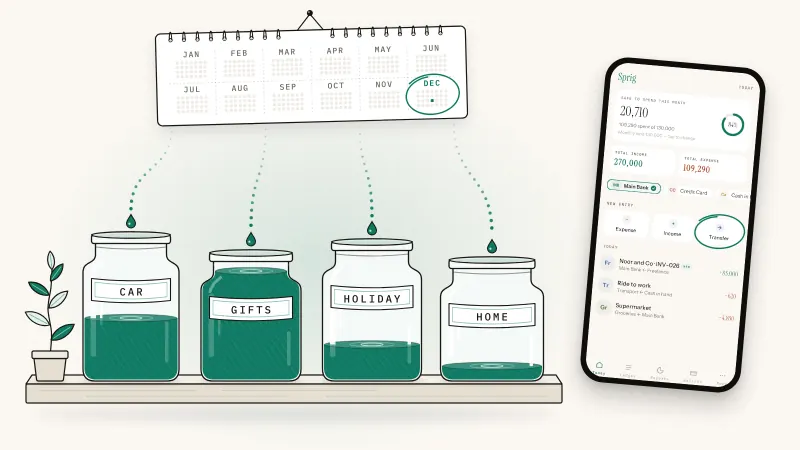
An emergency fund is cash set aside for costs you can't plan for: a car repair, a medical bill, a broken washing machine or a sudden drop in income. It isn't for bills you can see coming, such as insurance renewals, trips or gifts. Those belong in sinking funds, filled month by month.
The US Consumer Financial Protection Bureau (CFPB) gives car repairs, home repairs, medical bills and a loss of income as common examples. It also warns that an emergency paid with a credit card or a loan can cost far more than the original bill once interest and fees are added.
- Sinking fund
- Money saved monthly for a known bill, like annual car insurance. You plan to spend it. Here's how sinking funds cover the bills you can see coming.
- Essential outgoings
- What you'd still pay if your income stopped: housing, utilities, food, transportation, insurance and minimum debt payments.
How much emergency fund do I need?
A common target is three to six months of essential outgoings, MoneyHelper's rule of thumb, kept in an instant access account. The CFPB says the right amount depends on your situation and that even a small sum helps. A sensible path is a first goal of one month's essentials, then three, then six if your situation calls for it.
The CFPB suggests basing your target on the unexpected costs you've actually had. MoneyHelper is the free guidance service from the UK's Money and Pensions Service. Where you land depends on how exposed you are.
| Three months may be enough if… | Aim nearer six, or more, if… |
|---|---|
| Two people in your household earn steady pay | Your household relies on one income |
| Nobody depends on you financially | You support children or other family |
| You're salaried, with paid sick leave | You're self-employed, or paid by commission or by the season |
| You rent and own little that can break | You own a home or an older car |
Self-employed? MoneyHelper's guide for people whose income varies says three months' essential outgoings is good to have, and that even one month's income saved helps. Aiming higher can make sense if your income swings hard. Keep the fund apart from your tax money, keep a business buffer separate too, and see how to budget on an irregular income.
How do you work out your essential monthly costs?
Add up three months of spending on what you'd still pay if your income stopped: housing, utilities, food, transportation, insurance, minimum debt payments and childcare. Divide the total by three to get your monthly essentials, then multiply by your target. Use real records, not guesses, which tend to miss bills that vary.
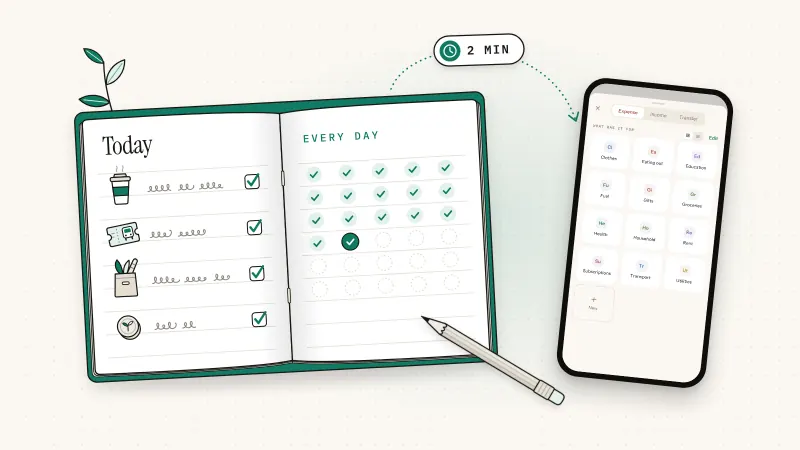
- Pull three months of records. Bank and card statements work, or your spending tracker. No records yet? Track your daily spending for a month first.
- Mark the essentials, including childcare and medicines (in the UK, Council Tax too). Skip what you'd pause, such as eating out and trips.
- Average it. Add the three months and divide by three.
| Essential | July | August | September | Total |
|---|---|---|---|---|
| Rent | 1,400 | 1,400 | 1,400 | 4,200 |
| Utilities and phone | 230 | 260 | 210 | 700 |
| Groceries | 480 | 530 | 490 | 1,500 |
| Transportation | 260 | 300 | 280 | 840 |
| Insurance and minimum debt payments | 180 | 190 | 190 | 560 |
| Total | 2,550 | 2,680 | 2,570 | 7,800 |
That's 7,800 ÷ 3 = 2,600 a month of essentials.
US
In dollars, this example means a $2,600 first goal, $7,800 for three months and $15,600 for six.
UK
MoneyHelper's example: if you spend £1,000 a month on rent or mortgage, food, heating and the other things you can't live without, you might aim for £3,000 to £6,000.
How do you build an emergency fund from zero?
Pick a first goal you can reach in months, not years, and move a fixed amount into a separate savings account automatically on payday. Add windfalls such as a tax refund. The CFPB calls automatic saving one of the easiest ways to stay consistent, and MoneyHelper says smaller regular amounts often work better than occasional big ones.
- Pay yourself first. Set a recurring transfer or standing order for payday. If your employer can split your direct deposit, the CFPB suggests sending part straight to savings.
- Save windfalls. The CFPB notes that a tax refund is one of the largest checks many Americans get all year.
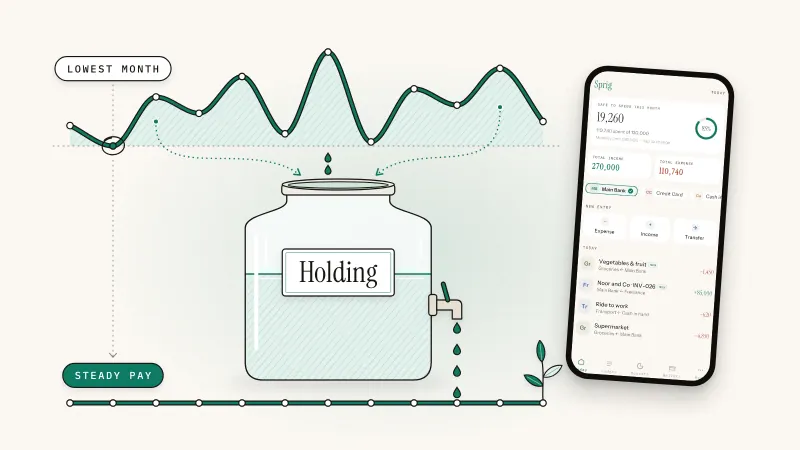
- Use the good weeks. With uneven pay, the CFPB suggests moving a little extra into savings when you have more.
US
For example, $250 a month reaches a $2,600 first goal in 11 months, before interest. Pick an amount your checking account can always cover, so saving never triggers an overdraft fee.
UK
For example, £100 a month reaches a £1,000 first goal in 10 months and £3,000 in 30 months, before interest. Working and claiming Universal Credit? Help to Save pays eligible savers a bonus of 50p for every £1 saved over four years, on £1 to £50 a month.
Should you pay off debt or build an emergency fund first?
MoneyHelper says to clear expensive and priority debts first, such as credit card balances, unauthorized overdrafts, payday loans and mortgage arrears, because that's cheaper in the long run. If you're up to date on your mortgage and any other credit is low cost or well under control, it says adding to your emergency fund is a good idea.
MoneyHelper also says you might decide to save and repay at the same time. One middle path, which is our suggestion rather than an official rule: stay current on housing, bills and minimum payments, build a small starter cushion, clear the most expensive debt, then build to three to six months.
This is general information, not financial advice. If debts feel unmanageable, get free, confidential debt advice first; in the UK, MoneyHelper's debt advice locator lists free services.
Where should you keep your emergency fund?
Keep it in a separate, insured savings account you can reach within a day or so, not in your everyday account and not in investments, which can fall just when you need the cash. In the US that means an FDIC-insured bank or NCUA-insured credit union; in the UK, an instant access account with an FSCS-protected provider.
US
As of October 2026, FDIC insurance covers $250,000 per depositor, per FDIC-insured bank, for each account ownership category, so a joint account is insured separately from your individual ones. It covers deposits, not stocks, bonds, mutual funds or crypto, even when a bank sells them. Saving through an app that isn't a bank? FDIC insurance doesn't cover a non-bank company's failure, so check which insured bank holds your money. The CFPB says credit union accounts are insured in a similar way by the NCUA.
UK
Since 1 December 2025, the FSCS has protected deposits with UK-authorized banks, building societies and credit unions up to £120,000 per person, per authorized firm; before that the limit was £85,000. Brands that share a banking license count as one firm, so use the FSCS protection checker before you split your savings. Joint accounts are covered up to £120,000 per holder, but your share counts toward the same £120,000 as your own accounts with that firm.
Can you keep an emergency fund in a cash ISA?
UK
Yes, if it gives instant access. ISA interest is tax-free, and GOV.UK says you can take money out at any time without losing the tax benefits, though providers may set rules or charges. Unless the ISA is flexible, paying money back in uses more of that year's allowance. The ISA allowance is £20,000 for 2026-27 and isn't changing, but from 6 April 2027 under-65s can put at most £12,000 a year into cash ISAs, under regulations laid before Parliament on 14 September 2026 (see HMRC's policy paper). Outside an ISA, the Personal Savings Allowance covers £1,000 of interest a year for basic-rate taxpayers, £500 for higher-rate and nothing for additional-rate. Savings income tax rates rise from 20%, 40% and 45% to 22%, 42% and 47% on 6 April 2027, set by section 5 of the Finance Act 2026 after being announced at Budget 2025; the Personal Savings Allowance stays the same. Not tax advice; rules change, so check GOV.UK or ask an accountant.
When should you use your emergency fund, and how do you refill it?
Use it for costs that are necessary, urgent and unexpected: a car repair you need to get to work, an urgent dental bill, rent after a lost job. Don't use it for sales or for bills you knew about. After you dip in, restart or raise your automatic transfer until the balance is back where it was.
The CFPB suggests setting your own rules for what counts as an emergency and sticking to them. It also says not to be afraid to use the fund when you need it. Afterward, send the next refund or bonus there, and recheck your target once a year or when your rent, family or work changes.
How to track an emergency fund in Sprig
Sprig is a private, offline double-entry bookkeeping app for iPhone and Android, made by Secundum Reality. It doesn't hold or move your money, but it shows what your essentials really cost and how much you've set aside.
- Measure your essentials. Open Reports, choose Range and tap Last 90 days for spending by category, biggest first. Add up the essential bars and divide by three.
- Add the fund as a wallet. On the Wallets tab, tap Add an account, choose Savings, name it "Emergency fund" and enter what you've already saved as the opening balance. Keep every wallet in the same currency (the default).
- Transfer on payday. Tap Transfer on Today and move money from your bank wallet into Emergency fund. The entry reads, for example, Main Bank → Emergency fund, and because moving money between your own accounts is a transfer, not spending, your reports stay accurate.
- Log the interest as Income, then Interest, then Savings interest, with the fund's wallet selected on Today. In the UK, set a Range starting 6 April and tap Money in to see this tax year's interest.
- Using it? Transfer the money back to your everyday wallet, then log the bill as an expense. It counts once, as spending.
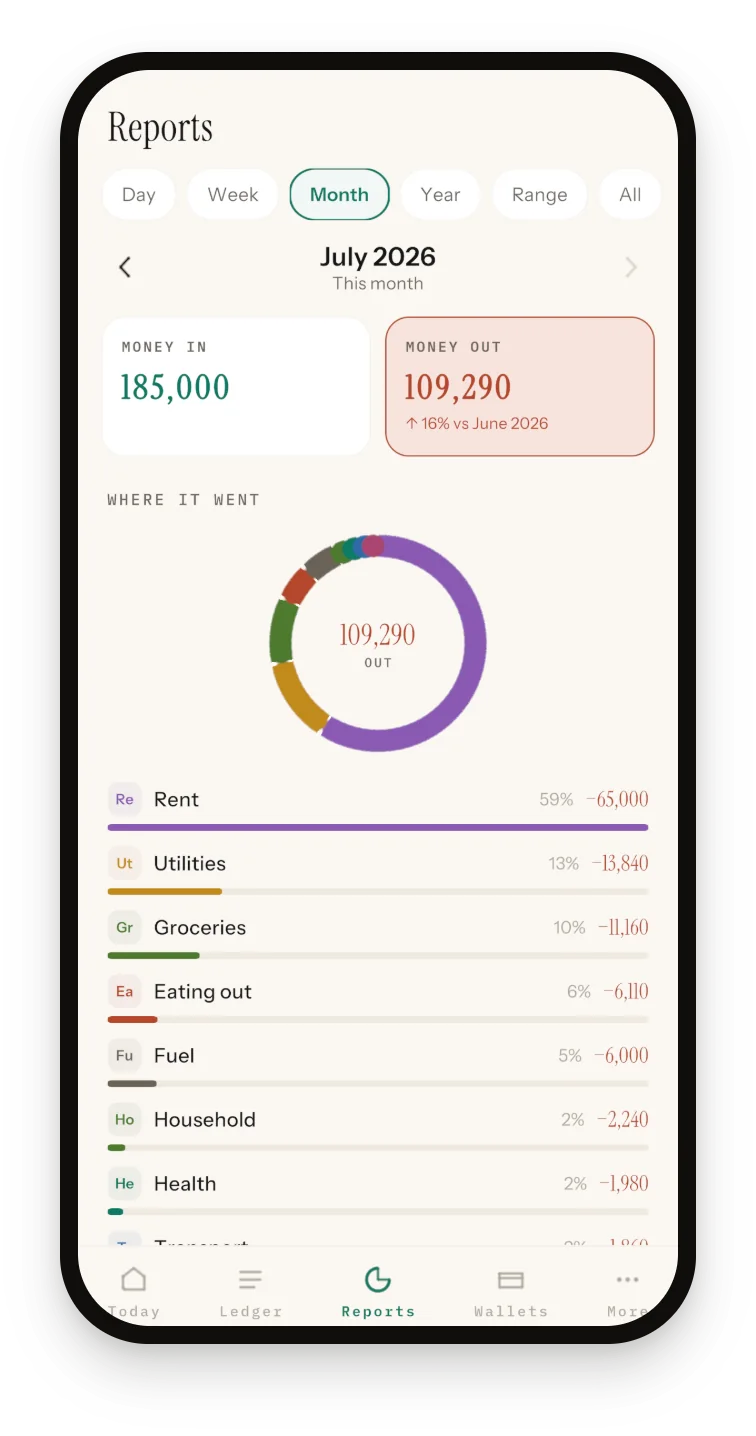
How Sprig helps
Your books stay on your phone: no account, no bank login, no cloud.
- Savings wallets sit beside your bank, card and cash wallets, each with its own balance.
- Transfers never count as income or spending, so a payday move to savings doesn't look like a splurge.
- Safe to spend on Today: tap the card and set a monthly limit of your take-home pay minus your savings transfer.
- Reports for any period, plus CSV export for a spreadsheet.
The honest limits: Sprig has no savings goals or progress bars, can't schedule transfers and sends no reminders, so set up the standing order at your bank and log each transfer as it goes out. There's no bank feed, the trade-off of tracking your spending without a bank link, so check the fund's balance against your bank once a month. Each transfer uses one of the 50 free entries; an optional ad adds 20, up to four a day. Sprig Premium (yearly, from US$9.99; your store shows the local price) removes the limit and the ads. See everything the Sprig offline expense tracker does.
Sprig for iPhone and Android
Keep your books in four taps.
Private, offline double-entry bookkeeping. No account, no bank login, no cloud. Free to start with 50 entries.
Frequently asked questions
Is it better to save 3 months or 6 months of expenses?
Neither is officially right. MoneyHelper's rule of thumb spans three to six months of essential outgoings, and the CFPB says the amount depends on your situation. Three months may do with two steady incomes and no dependents. Aim nearer six if you rely on one income, support a family or work for yourself. Either way, start with one month.
Should an emergency fund cover my expenses or my income?
Base it on essential expenses, not your full income. In a real emergency you'd stop eating out and pause extras, so the fund only needs to cover what you can't avoid: housing, utilities, food, transportation, insurance and minimum debt payments. MoneyHelper frames its rule of thumb in essential outgoings, too.
Can I use a cash ISA for emergency savings in the UK?
Yes, if it allows instant access. ISA interest is tax-free, and GOV.UK says you can withdraw at any time without losing the tax benefits, though providers may set rules or charges. Unless the ISA is flexible, putting money back uses more allowance. From 6 April 2027, under-65s can pay at most £12,000 a year into cash ISAs.
Is my emergency fund insured in the US?
In a deposit account at an FDIC-insured bank, yes: as of October 2026 the FDIC covers $250,000 per depositor, per insured bank, for each account ownership category. The CFPB says credit union accounts are insured in a similar way by the NCUA. Stocks, bonds, mutual funds and crypto aren't covered, even if you bought them through a bank.
Do self-employed people need a bigger emergency fund?
There's no official bigger number. MoneyHelper's guide to irregular incomes says three months' essential outgoings is good to have, and that even a month's income saved helps. If your income swings hard or clients pay late, aiming higher is reasonable. Keep the fund separate from money set aside for tax, which isn't yours to spend.
Is an emergency fund the same as a sinking fund?
No. An emergency fund covers costs you can't predict, such as a repair or a lost job, and you hope not to touch it. A sinking fund is money saved each month for a bill you know is coming, like annual car insurance, and you plan to spend it on schedule. Here's how sinking funds work.
Sources and further reading
- CFPB: An essential guide to building an emergency fund (page modified 29 October 2025)
- FDIC: Understanding deposit insurance (updated 1 April 2024)
- FSCS: Deposit protection limit, £120,000 from 1 December 2025
- MoneyHelper: Emergency savings – how much is enough? (checked via the Internet Archive copy of 20 September 2026)
- HMRC policy paper: Cash Individual Savings Account (ISA) limit reduction (17 September 2026)
- GOV.UK: Tax on savings interest – how much is tax free
Published 3 October 2026. Feature details were checked against Sprig 1.1 for iPhone and Android. This article is general information, not tax or legal advice; rules differ by country, so confirm anything you file with your accountant or tax authority.