Tax time
How Much Tax to Set Aside When Self-Employed in the UK (2026-27)
The popular 25–30% overshoots a normal year for many sole traders and can fall short on the first 31 January. Here are the 2026-27 numbers at three profit levels.
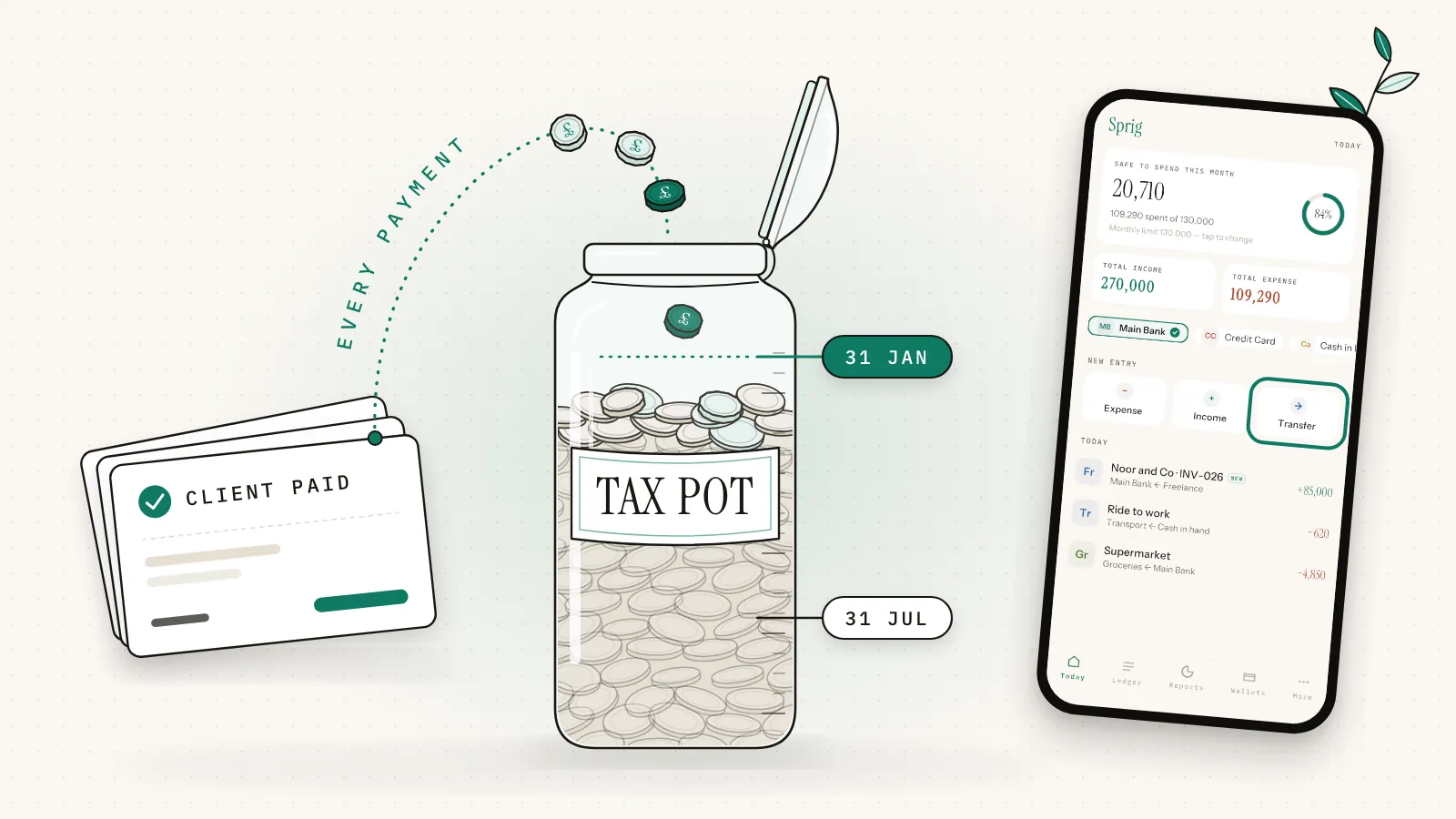
For a UK sole trader outside Scotland with no other income, Income Tax and Class 4 National Insurance on £35,000 of 2026-27 profit come to £5,831.80, or 16.7% of profit. The shock is your first 31 January with payments on account, when HMRC wants that bill plus half again. Here are the numbers, from GOV.UK's rules as of October 2026.
| Item | 2026-27 rule |
|---|---|
| Personal Allowance | £12,570, reduced above £100,000 of adjusted net income |
| Income Tax | 20% on £12,571 to £50,270; 40% to £125,140; 45% above |
| Class 4 National Insurance | 6% on profits over £12,570 up to £50,270; 2% above |
| Class 2 National Insurance | Nothing to pay: treated as paid from £7,105 of profit, voluntary below that |
| Payments on account | Each half of last year's bill, due 31 January and 31 July, unless that bill was under £1,000 or over 80% of your tax was paid outside Self Assessment |
Not tax advice; rules change; check GOV.UK or your accountant.
How much tax should you set aside if you're self-employed in the UK?
Save your expected Income Tax and Class 4 National Insurance: about 9.7% of profit at £20,000, 16.7% at £35,000 and 23.1% at £60,000 in 2026-27, if you have no other income and live outside Scotland. Set it aside from every payment as it arrives, and keep saving after 5 April.
Work from profit, which is turnover minus business costs, and remember that allowable expenses lower your profit.
- Estimate this year's profit. Expected turnover from 6 April 2026 to 5 April 2027, minus allowable expenses.
- Work out the tax with the formula below or HMRC's Self Assessment tax calculator, which covers 2025-26 (same rates) and leaves out payments on account.
- Turn it into a share of each payment. Divide the tax by expected turnover: £42,000 of turnover less £7,000 of costs is £35,000 of profit and £5,831.80 of tax, or 13.9% of each payment.
- Move that share on payday and keep tax money apart from drawings.
- Recheck each quarter. Save 26% of any extra profit, or 42% above £50,270.
| Profit | Income Tax + Class 4 |
|---|---|
| Up to £12,570 | £0 |
| £12,571 to £50,270 | 26% of profit above £12,570 |
| £50,271 to £100,000 | £9,802 plus 42% of profit above £50,270 |
| Over £100,000 | More: the Personal Allowance shrinks, so ask an accountant |
The 26% is 20% Income Tax plus 6% Class 4; the 42% is 40% plus 2%. The 25–30% you'll see on accountancy and finance sites is a commercial rule of thumb, not HMRC guidance; up to about £66,500 of profit, even 25% overshoots a normal year.
Construction
If you're a CIS subcontractor, the 20% a contractor deducts (30% if unregistered) counts as an advance payment toward your tax and National Insurance, so save only the rest.
What tax and National Insurance do sole traders pay in 2026-27?
Outside Scotland, sole traders pay Income Tax at 20% from £12,571 to £50,270, 40% up to £125,140 and 45% above, after a £12,570 Personal Allowance. Class 4 National Insurance is 6% on profits from £12,570 to £50,270 and 2% above. Class 2 is treated as paid from £7,105 of profit and is voluntary below that.
Those are GOV.UK's Income Tax rates and self-employed National Insurance rates for 2026-27. Three details matter:
- The allowance tapers. It falls by £1 for every £2 of adjusted net income above £100,000, reaching zero at £125,140.
- Last year was the same. HMRC's Income Tax and National Insurance tables show the same 2025-26 allowance, bands and Class 4 rates, so the examples fit the bill due 31 January 2027 too.
- Thresholds are frozen. Finance Act 2026 fixes the Personal Allowance and basic-rate limit until 5 April 2031, and the government says the Class 4 limits will stay aligned.
Scotland
In Scotland you pay Scottish Income Tax, with six bands from 19% to 48% in 2026-27, so these Income Tax figures won't match.
Worked examples at £20,000, £35,000 and £60,000 profit
| Profit | Income Tax | Class 4 | Total | % of profit | Per month | First 31 January |
|---|---|---|---|---|---|---|
| £15,000 | £486.00 | £145.80 | £631.80 | 4.2% | £52.65 | £631.80 |
| £20,000 | £1,486.00 | £445.80 | £1,931.80 | 9.7% | £160.98 | £2,897.70 |
| £35,000 | £4,486.00 | £1,345.80 | £5,831.80 | 16.7% | £485.98 | £8,747.70 |
| £60,000 | £11,432.00 | £2,456.60 | £13,888.60 | 23.1% | £1,157.38 | £20,832.90 |
No student loan, Capital Gains Tax or Scottish rates. The last column adds a first payment on account, half the bill: 14.5%, 25.0% and 34.7% of profit. None applies at £15,000 (bill under £1,000).
What are payments on account, and why is the first January so big?
Payments on account are two advance payments toward your next tax bill, each half of the last one, due by 31 January and 31 July, and they include Class 4. In your first year with them, 31 January brings the whole of last year's bill plus the first advance: about 1.5 times a year's tax.
- Payment on account
- An advance payment toward your next tax bill, worked out as half of the last one.
- Balancing payment
- What's still owed for a year after its payments on account, due the next 31 January.
In GOV.UK's example, a £3,000 first bill means £4,500 by 31 January, then £1,500 by 31 July. For a first-timer with £35,000 of 2025-26 profit, that's £8,747.70 by 31 January 2027 and £2,915.90 by 31 July 2027. Both are weekends: unless you pay by Faster Payments or card, the money must reach HMRC by Friday 29 January and Friday 30 July.
Do you need to save 1.5 times your rate? Usually not. If you began at your first payment and kept going after 5 April, by 31 January the pot also holds about ten months of the next year's savings, and with steady profit later years even out. If you started late, divide what's due minus what's saved by the months left: £8,747.70 due with £4,000 saved in early October is about £1,187 a month for four months.
- When they don't apply. Last year's bill was under £1,000, or you paid over 80% of your tax outside Self Assessment, such as through your tax code.
- What they leave out. GOV.UK says the January balancing payment also covers any Capital Gains Tax or student loan you owe, so save for those on top.
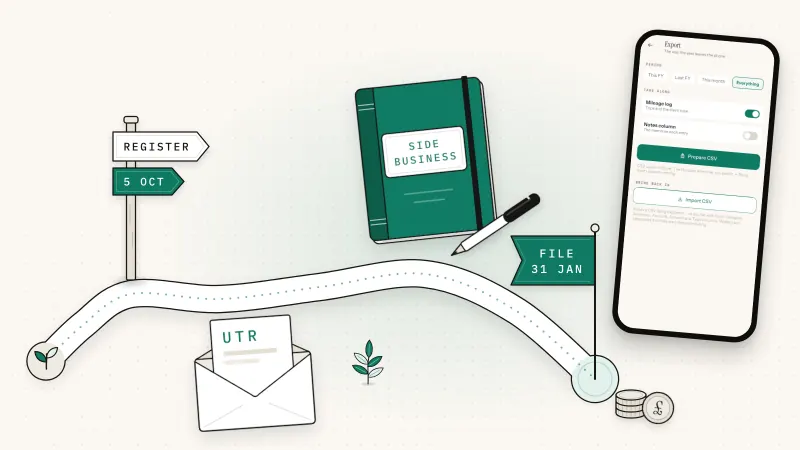
Filing for the first time? See your first Self Assessment, and keep a dated note of each payment so you can list payments on account for your accountant.
Making Tax Digital
Making Tax Digital for Income Tax adds quarterly updates from 6 April 2026 (2024-25 turnover over £50,000) or 6 April 2027 (2025-26 turnover over £30,000), but you still "pay your tax bill as you do now".
Can you reduce payments on account?
Yes, if you expect this year's tax to be lower than last year's: your profits fall, your tax relief goes up, or more tax is deducted at source. Ask HMRC online or on form SA303, by 31 January after the tax year ends. Cut them too far and HMRC charges interest on the difference.
Online, sign in, view your latest return and choose "Reduce payments on account"; by post, send form SA303. Either way, give the amount you expect to make. For the 2026-27 payments the deadline is 31 January 2028, and any shortfall costs interest at base rate plus 4%.
What if you have a job as well?
If your salary already uses your £12,570 Personal Allowance, side profit is taxed at your highest rate: 20%, or 40% once total income passes £50,270. Class 4 applies only to self-employed profits above £12,570. Payments on account don't apply if the bill is under £1,000 or PAYE covered more than 80% of your tax.
For example, a £30,000 salary plus £4,000 of side profit means £800 of Income Tax at 20%, no Class 4 (profit under £12,570), no Class 2 to pay (under £7,105) and no payments on account (bill under £1,000).
File online by 30 December 2026 (for 2025-26) and HMRC can collect a bill under £3,000 through your tax code over 12 months, if you already pay tax through PAYE and don't opt out. So this side trader can save 20% of each side payment, or let their tax code take about £67 a month.
Where should you keep your tax money, and can you pay early?
Keep it in a separate easy-access savings account you never spend from, or send it to HMRC early. A Budget Payment Plan takes weekly or monthly Direct Debits toward your next bill, and you can pay any time through your bank or the HMRC app. Either way, the pot stops looking like spending money.
| Option | How it works | Watch out for |
|---|---|---|
| Separate savings account | Move your share in on payday; pay HMRC from it | Dipping into it for everyday spending |
| Budget Payment Plan | Weekly or monthly Direct Debit toward your next bill; pause for up to 6 months | You must be up to date with your last bill; any shortfall is due at the deadline |
| One-off early payments | Pay by bank or in the HMRC app at any time | A new Direct Debit takes 5 working days |
FSCS protects deposits at UK-authorized banks, building societies and credit unions up to £120,000 per eligible person, per authorized firm, since 1 December 2025; brands sharing a banking license count as one firm.
Paying late costs more: for 2025-26, 5% penalties at 30 days, 6 months and 12 months, plus interest, and a new penalty system phases in from 2026-27. Can't pay in full? Ask HMRC for a payment plan. And build the transfer into a weekly cash flow check.
How Sprig helps you keep a tax pot
Sprig is a private, offline double-entry bookkeeping app for iPhone and Android, made by Secundum Reality. It has no account, bank link or cloud, and it doesn't calculate tax or connect to HMRC.
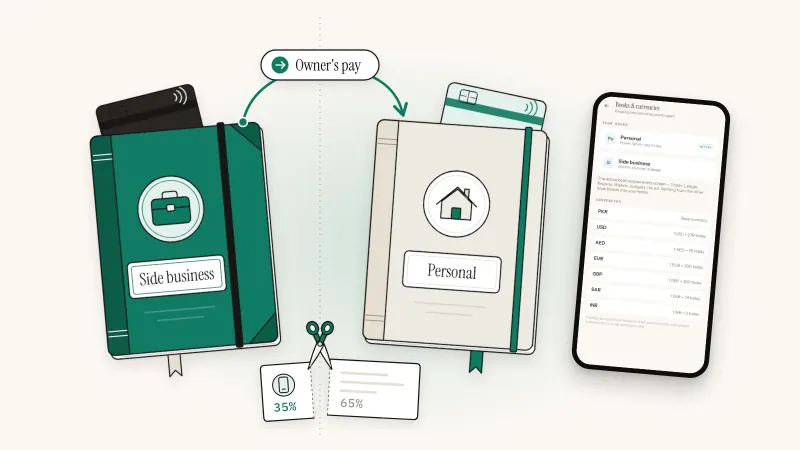
- Open the business book: More → Books & currencies → Side business (Sprig opens on Personal after a restart).
- Add the wallets: Side business starts with none, so Wallets → Add an account: your business bank account first, then a Savings wallet named Tax pot. Keep the default currency, like your other wallets; Sprig shows plain amounts, with no £ sign.
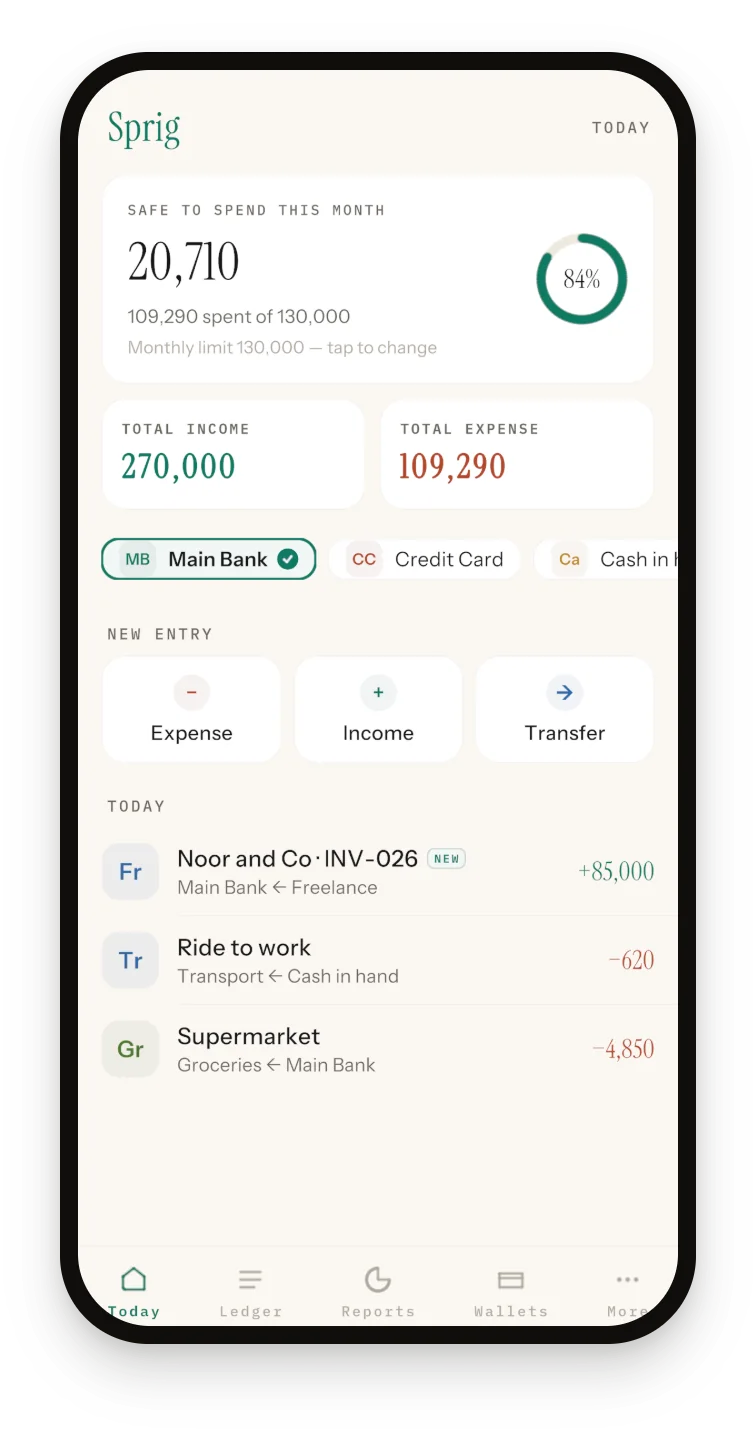
- Log each payment: Income → Freelance → a summary or Skip → amount → Save, or Mark paid on an invoice.
- Move your share: Transfer, out of your business bank wallet into Tax pot. Transfers never count as income or spending.
- Pay HMRC from the pot: an expense from Tax pot under a new category, Tax payments, with a note like "POA1 2026-27".
How Sprig helps
Your pot and your profit on one phone.
- Profit so far: Reports → Range, 6 April to today. Take Money in minus Money out, then add back Tax payments and any owner's draw.
- A full UK tax year, such as 6 April 2025 to 5 April 2026: use Range, or Export → Everything and filter the Date column.
- Custom categories like Tax payments appear in Reports and the CSV.
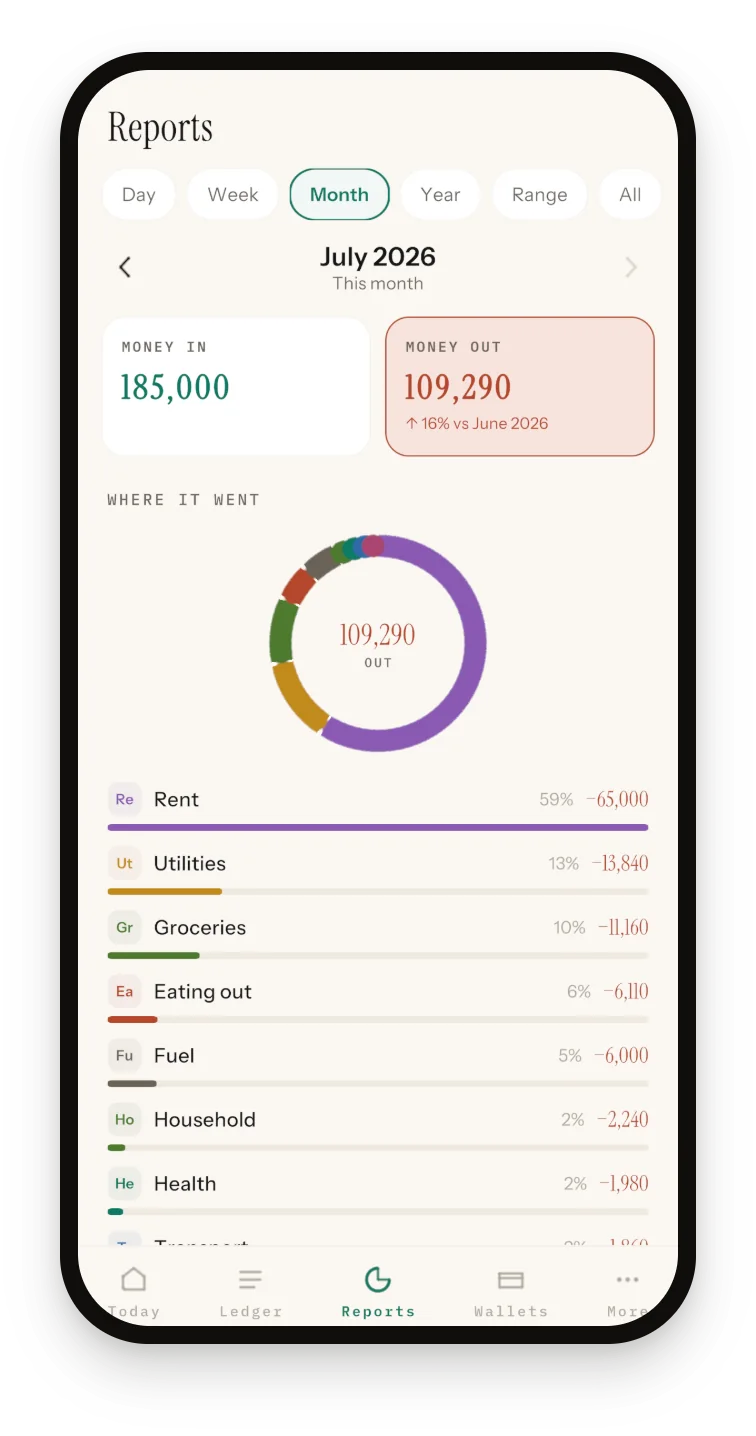
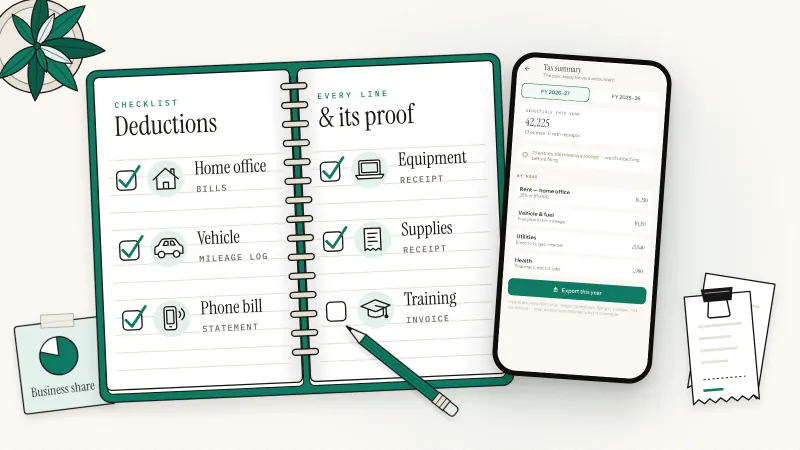
The honest limits. Sprig doesn't work out Income Tax, National Insurance or payments on account, and sends no reminders, so put 31 January and 31 July in your calendar. Its Tax summary, the Range picker's FY chip and the This FY and Last FY exports run July to June, Pakistan's tax year, so skip them here. It isn't Making Tax Digital software, entries are dated the day you log them, and on the free plan each transfer uses one of your 50 entries (plus 20 per optional ad, up to four a day); yearly Premium removes the limit.
See what else the offline bookkeeping app does.
Sprig for iPhone and Android
Keep your books in four taps.
Private, offline double-entry bookkeeping. No account, no bank login, no cloud. Free to start with 50 entries.
Frequently asked questions
What percentage of my income should I save for tax if I'm self-employed in the UK?
Work from profit, not turnover. In 2026-27 a sole trader outside Scotland with no other income owes Income Tax and Class 4 of about 9.7% of a £20,000 profit, 16.7% of £35,000 and 23.1% of £60,000. The 25–30% quoted on many accountancy and finance sites is a commercial rule of thumb, not HMRC guidance, though it helps cover a first January.
Why do I have to pay 150% of my tax bill in January?
Your first payment on account for the next tax year falls due on the same day as the bill for the year just gone. Each payment on account is half of last year's bill, so that January asks for 1.5 times a year's tax. It's a one-off: with steady profit, later years even out.
Do I have to make payments on account?
Only if last year's Self Assessment bill was £1,000 or more and you paid 80% or less of your tax outside Self Assessment, for example through your tax code. Your Self Assessment statement or HMRC online account shows whether they apply and how much each one is.
Can I pay my Self Assessment bill monthly?
Yes. A Budget Payment Plan takes weekly or monthly Direct Debits toward your next bill if you're up to date with your last one, and you can pause it for up to six months. If you can't pay in full, ask HMRC about a payment plan, known as Time to Pay.
Do I pay National Insurance on side income if I'm also employed?
On self-employed profits, only Class 4 is compulsory, and only above £12,570: 6% up to £50,270 and 2% above in 2026-27. Class 2 is treated as paid from £7,105 of profit; below that it's voluntary, at £3.65 a week. So £4,000 of side profit on top of a salary carries no National Insurance.
Sources and further reading
- GOV.UK: Income Tax rates and Personal Allowances (2026 to 2027)
- GOV.UK: Self-employed National Insurance rates
- GOV.UK: Understand your Self Assessment tax bill: payments on account
- GOV.UK: Pay your Self Assessment tax bill (deadlines, Budget Payment Plan, tax code)
- HMRC: Claim to reduce payments on account (SA303)
- GOV.UK: Self Assessment tax return deadlines
Published 3 October 2026. Feature details were checked against Sprig 1.1 for iPhone and Android. This article is general information, not tax or legal advice; rules differ by country, so confirm anything you file with your accountant or tax authority.