Tax time
Your First Self Assessment Tax Return as a Sole Trader (2025-26)
Registration for 2025-26 closes on Monday 5 October 2026, and the return and bill are due by 31 January 2027. Here's the full path for first-time sole traders, late registrants included.
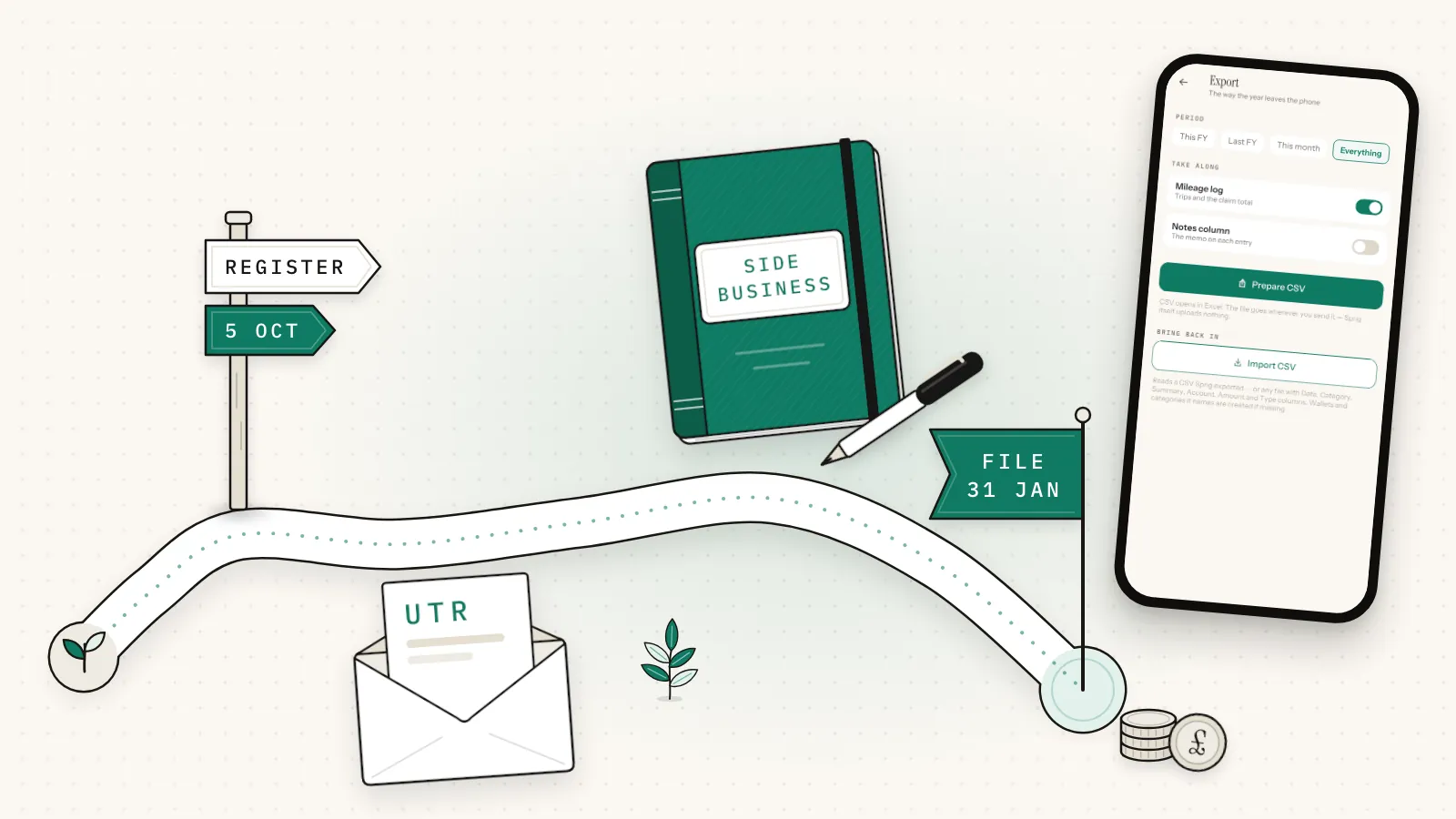
Your first Self Assessment tax return is more checklist than puzzle: tell HMRC you're self-employed, get your Unique Taxpayer Reference (UTR), total a year of takings and costs, then file and pay. This guide covers 2025-26 (6 April 2025 to 5 April 2026) for UK sole traders, including side traders with a job; Scotland's Income Tax rates differ.
| What | Deadline |
|---|---|
| Register with HMRC | Monday 5 October 2026 |
| Paper return (HMRC must receive it) | Saturday 31 October 2026 |
| Online return, to pay through your tax code | Wednesday 30 December 2026 |
| Online return and payment | 11:59pm, Sunday 31 January 2027 |
| Second payment on account, if due | Saturday 31 July 2027 |
When a payment deadline falls on a weekend, money sent other than by Faster Payments or card must reach HMRC on the last working day before: Friday 29 January 2027 (GOV.UK: deadlines; GOV.UK: pay your bill). Not tax advice: rules change, so check with an accountant or tax adviser if unsure.
Do you need to register for Self Assessment?
Yes, if your 2025-26 self-employment income was more than £1,000 before expenses. Up to £1,000 of gross trading income is covered by the trading allowance, so at £1,000 or less you usually needn't tell HMRC, though some people register anyway to claim relief for a loss or protect benefits.
"Before expenses" catches people out. For example, £1,400 of sales with £600 of costs is over the line, though you only made £800 (GOV.UK: who must send a tax return). Three more rules from GOV.UK:
- Register anyway to claim relief for a loss, pay voluntary Class 2 National Insurance, or claim Tax-Free Childcare or Maternity Allowance (trading allowance guidance).
- No allowance at all in a year with any trading income from your (or your spouse's or civil partner's) employer, or from a company or partnership connected to you.
- Already in Self Assessment, say for rental income? You still register as a sole trader, so HMRC records your Class 2 National Insurance.
Unsure? GOV.UK's tax return checker covers 2025-26.
How do you register, and what if you miss 5 October?
Register online as a sole trader by Monday 5 October 2026. Missed it? Register anyway: HMRC will send a letter or email with a filing deadline 3 months from its date. Payment is still due by 31 January 2027, and a failure-to-notify penalty is possible if it isn't paid by then.
- Register as a sole trader. The 5 October 2026 deadline applies if you've never sent a return, or didn't need to for 2024-25.
- Wait for your UTR, a 10-digit number that usually arrives by post around 15 days after you register, longer if you live overseas (GOV.UK: find your UTR).
- Pay by 31 January 2027, even if HMRC's letter gives you longer to file.
Missed 5 October?
The "failure to notify" penalty is based on whatever is still unpaid after 31 January (GOV.UK: penalties), so estimate your bill early.
What numbers go on your first Self Assessment tax return as a sole trader?
Three figures for 6 April 2025 to 5 April 2026: turnover (everything the business took in), allowable expenses, and the profit or loss between them. The return also asks for your other income, such as wages, and your start date if you began trading after 5 April 2025.
- Cash basis
- The default for sole traders since 2024-25: income counts when received and costs when paid, so an invoice paid on 6 April 2026 belongs to 2026-27 (GOV.UK: cash basis).
- Allowable expenses
- Business costs only; drawings and personal spending don't count.
- Trading allowance
- Up to £1,000 you can deduct instead of actual expenses, never as well.
For example, on £6,000 of turnover with £400 of costs, the allowance leaves £5,000 of taxable profit against £5,600 with actual costs. With £1,800 of costs, actual costs win: £4,200.
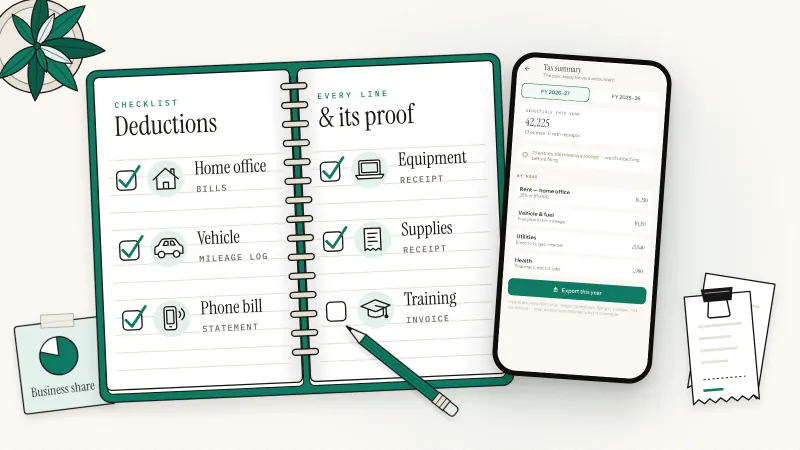
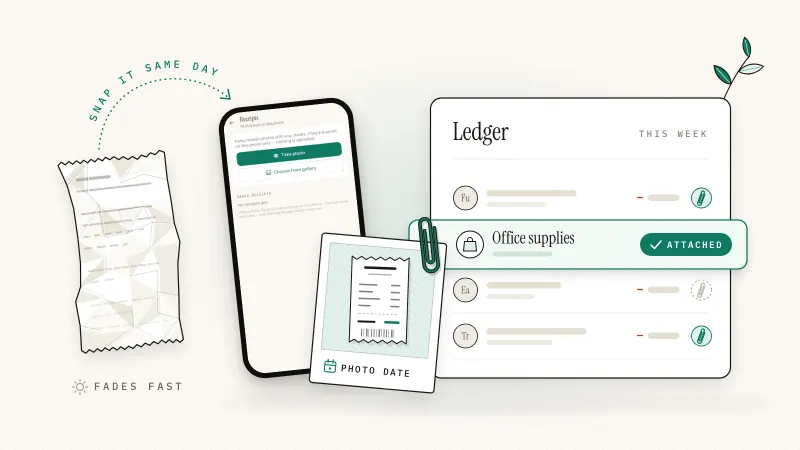
You don't send receipts with the return, but you must keep records for at least 5 years after the 31 January deadline: for 2025-26, until at least the end of January 2032 (GOV.UK: records). See how long to keep business records, the allowable expenses checklist and how to keep receipt photos with your books.
Short or full self-employment pages: which do you fill in?
Use the short pages, SA103S, if your affairs are simple and your 2025-26 turnover was under £90,000, scaled up to a full year if you started mid-year. You may then enter expenses as one total in box 20. At £90,000 or more, or with an accounting period that needs adjusting, use the full pages, SA103F.
For example, £50,000 in six months points to about £100,000 over a year, so you'd use the full pages.
| Box | What goes in it |
|---|---|
| 5Q, 5 | Did the business start after 5 April 2025? If so, when |
| 7 | The date your books run to, such as 05 04 2026; before 31 March 2026 (unless you stopped trading) or after 5 April 2026 means the full pages |
| 9 | Turnover: takings, fees, sales or money earned |
| 10.1 | Trading income allowance, instead of expenses |
| 11 to 19 | Expenses by type, such as car, van and travel (box 12) |
| 20 | Total expenses, which can be your only expense figure under £90,000 |
Claim the allowance in box 10.1 and you leave boxes 11 to 20 blank. Box numbers come from HMRC's SA103S form and notes.
How is your first tax bill worked out?
Income Tax applies above the £12,570 Personal Allowance, and Class 4 National Insurance to self-employed profit over £12,570. On a first return, 31 January usually also brings a first payment on account toward next year: half the bill again, unless the bill was under £1,000 or over 80% of your tax was collected at source.
| Tax | Charged on | Rate |
|---|---|---|
| Income Tax | £12,571 to £50,270 | 20% |
| Income Tax | £50,271 to £125,140 | 40% |
| Income Tax | Over £125,140 | 45% |
| Class 4 National Insurance | Profit over £12,570 up to £50,270 | 6% |
| Class 4 National Insurance | Profit over £50,270 | 2% |
| Class 2 National Insurance | Profit of £6,845 or more | Treated as paid |
Bands assume the standard Personal Allowance, which shrinks once income passes £100,000 (GOV.UK: Income Tax rates; HMRC: National Insurance rates).
Scotland
Scottish Income Tax has its own bands and rates (GOV.UK), so these Income Tax figures don't apply in Scotland.
| £20,000 profit, no other income | £4,000 side profit, £30,000 salary | |
|---|---|---|
| Income Tax | £1,486.00 | £800.00 |
| Class 4 National Insurance | £445.80 | £0 |
| 2025-26 bill | £1,931.80 | £800.00 |
| First payment on account | £965.90 | None: bill under £1,000 |
| Due by 31 January 2027 | £2,897.70 | £800.00, or via your tax code if you file online by 30 December |
For example only: rates outside Scotland, standard Personal Allowance, no reliefs or student loan; the salary's tax is already paid through PAYE. HMRC's tax calculator estimates 2025-26 Income Tax and Class 4 but doesn't deduct tax already paid through PAYE.
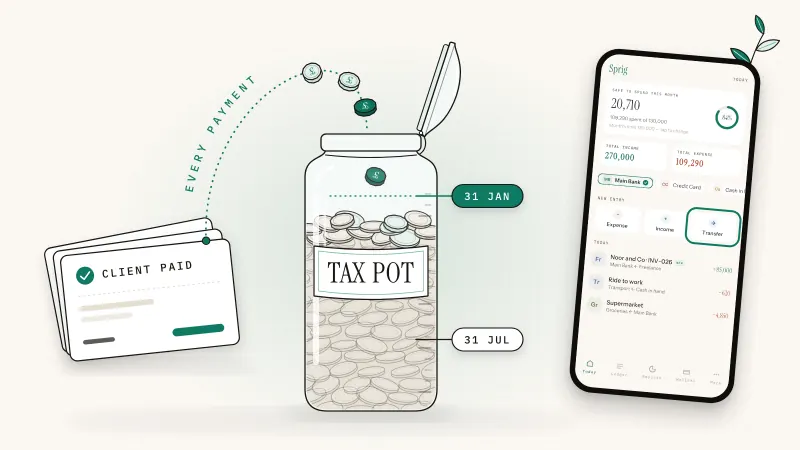
Payments on account are advance payments toward next year's bill, each normally half of the last one, due 31 January and 31 July. Having made none, your first January covers the whole 2025-26 bill plus the first one for 2026-27: in GOV.UK's example, a £3,000 bill means £4,500 by 31 January. Here's how much tax to set aside as a UK sole trader.
How do you pay, and what if you can't pay in full?
Pay through your bank, by debit card or by Direct Debit, quoting your UTR followed by K. Already on PAYE and owe under £3,000? File online by 30 December 2026 and HMRC can collect it through your tax code over 12 months. If you can't pay, ask HMRC for a payment plan.
- Timing: Faster Payments arrive the same or next day; a first Direct Debit takes 5 working days. Personal credit cards aren't accepted (GOV.UK: pay your bill).
- Spreading it: you can pay in parts before the deadline, and a Budget Payment Plan takes weekly or monthly Direct Debits toward your next bill.
- Can't pay? HMRC may agree a payment plan, also known as Time to Pay. Late payment interest is the Bank of England base rate plus 4% (HMRC interest rates).
What are the Self Assessment late filing penalties for 2025-26?
Miss the 31 January 2027 deadline and the penalty is £100 straight away. After 3 months, £10 a day is added, up to £900. At 6 months and again at 12, it's 5% of the tax due or £300, whichever is greater. Paying late adds 5% of the unpaid tax at 30 days, 6 months and 12 months, plus interest.
GOV.UK's penalties page has an estimator, and you can appeal with a reasonable excuse. Registered late? File by the date in HMRC's letter. A new regime with points for late returns is coming: GOV.UK says "from April 2027, the new penalties will apply to everyone who submits a personal Self Assessment tax return" (GOV.UK: new penalties).
What changes after your first return?
If payments on account apply, the second is due 31 July 2027. If your 2025-26 turnover was over £30,000, Making Tax Digital for Income Tax applies from 6 April 2027. And from April 2027, new penalties apply to everyone who files a personal Self Assessment return.
Making Tax Digital (MTD) means digital records and quarterly updates from compatible software, due 7 August, 7 November, 7 February and 7 May; the final return is still due 31 January. The test uses qualifying income, meaning self-employment and property income before expenses, and over £20,000 in 2026-27 brings MTD from 6 April 2028 (GOV.UK: when you need MTD).
First-year catch: HMRC annualizes a part year, so six months of trading counts double: £16,000 taken between 6 October 2025 and 5 April 2026, for example, counts as £32,000, which means MTD from April 2027 (GOV.UK: qualifying income). HMRC writes to people who must join, but checking is your job. Spreadsheets can work with bridging software; here's how a CSV fits into Making Tax Digital.
How Sprig helps you pull your 2025-26 numbers
Sprig is a private, offline double-entry bookkeeping app for iPhone and Android, made by Secundum Reality. It has no account, bank link or cloud. Kept your 2025-26 business money in its Side business book? Your main figures are a report away.
- Open Side business under More → Books & currencies. Sprig opens on Personal after a restart, so check which book is open.
- Set the UK tax year. In Reports, tap Range and pick 6 April 2025 to 5 April 2026. Money in is your starting point for turnover (box 9) and Money out for expenses; take out anything that isn't takings or an allowable cost, such as money you paid in yourself, drawings or tax paid to HMRC. Category bars, biggest first, give each category's total.
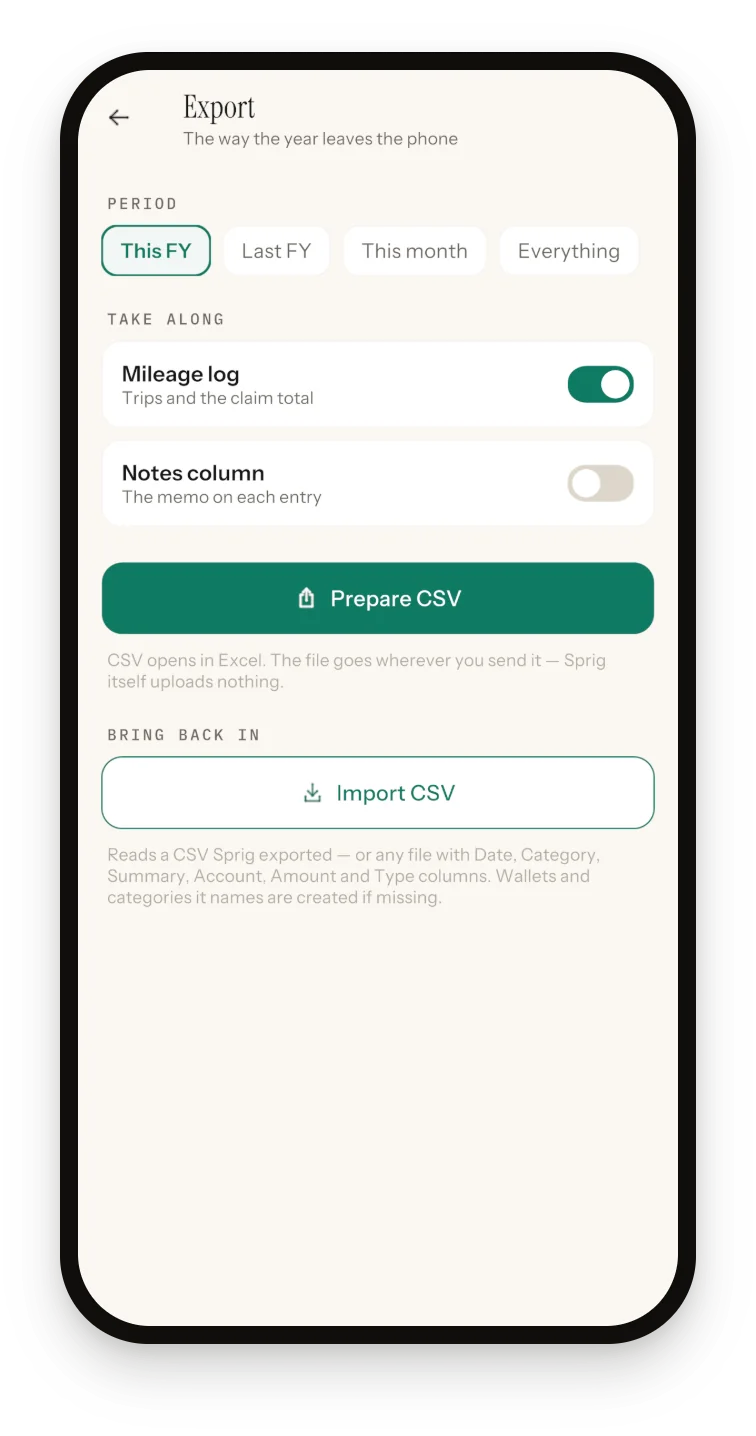
- Export a copy. Use Export → Everything with the Mileage log switch off, then filter the Date column from 2025-04-06 to 2026-04-05 in Excel or Google Sheets. Columns: Date, Category, Summary, Account, Amount and Type.
How Sprig helps
Set it up once and next year's return is mostly reading totals.
- Form-shaped categories: name Side business categories after SA103S boxes, such as "Phone & office costs" (up to 24 characters).
- Cash-basis income: tap Mark paid when a client pays, and Sprig writes the income entry that day.
- Older entries: typed entries take today's date, so add past costs from receipt photos, which keep the photo's date, or by CSV import with dates like 2026-03-14. Imports don't use free entries.
What Sprig won't do: its Tax summary and the This FY and Last FY exports run July to June, Pakistan's tax year, so ignore them for a UK return. It doesn't calculate tax, isn't Making Tax Digital software and doesn't connect to HMRC; check with your bridging-software provider or accountant before relying on a Sprig CSV. The CSV leaves out receipt photos. Amounts are plain numbers with no currency symbol; keep every wallet in the same currency (the default). Every feature is free for 50 entries, plus 20 per optional ad; Premium is yearly. More about Sprig, the offline bookkeeping app.
Sprig for iPhone and Android
Keep your books in four taps.
Private, offline double-entry bookkeeping. No account, no bank login, no cloud. Free to start with 50 entries.
Frequently asked questions
When is the deadline to register for Self Assessment for 2025-26?
Monday 5 October 2026, if you've never sent a return or didn't need to for 2024-25. Registering later still works: HMRC's letter gives you 3 months from its date to file. Payment stays due by 31 January 2027, and a failure-to-notify penalty can apply if it's late.
How long does it take to get a UTR number?
GOV.UK says your Unique Taxpayer Reference usually arrives by post around 15 days after you register, longer if you live overseas. It's a 10-digit number that later also shows in your Personal Tax Account and the HMRC app. To pay your bill, quote it followed by K.
Do I need to register for Self Assessment if I earned less than £1,000?
Usually not: the trading allowance covers up to £1,000 of gross self-employment income a year. You must still tell HMRC if you can't use the allowance, for example for income from your employer. Some people register anyway to claim relief for a loss, pay voluntary Class 2 National Insurance or claim Tax-Free Childcare.
Why is my first Self Assessment bill so high?
It usually includes a payment toward next year. If your 2025-26 bill is £1,000 or more and no more than 80% of your tax was collected at source, you also pay half of it in advance by 31 January. In GOV.UK's example, a £3,000 bill means £4,500. Here's how much tax to set aside.
Can I use the SA103S short self-employment pages?
Yes, if your affairs are simple and your 2025-26 turnover was under £90,000, scaled up to a full year if you started mid-year; you may then enter expenses as one total in box 20. Use the full pages, SA103F, at £90,000 or more, or if your books end before 31 March 2026 or after 5 April 2026.
Do I need Making Tax Digital for my first tax return?
No. You file the 2025-26 return the usual way by 31 January 2027. Making Tax Digital for Income Tax starts from 6 April 2027 if your 2025-26 turnover, plus any property income, was over £30,000, and HMRC annualizes a part-year first year, doubling six months of trading. HMRC writes to people who must join, but checking is your job.
Sources and further reading
- GOV.UK: Self Assessment tax returns, deadlines for 2025-26
- GOV.UK: Self Assessment tax returns, penalties
- GOV.UK: Understand your Self Assessment tax bill, payments on account
- GOV.UK: Tax-free allowances on property and trading income
- HMRC: Self-employment (short) SA103S form and notes for 2025-26
- GOV.UK: Find out if and when you need to use Making Tax Digital for Income Tax
Published 3 October 2026. Feature details were checked against Sprig 1.1 for iPhone and Android. This article is general information, not tax or legal advice; rules differ by country, so confirm anything you file with your accountant or tax authority.