 Last Charge
For parents
Puzzle games for kids that build problem-solving skills, by age
Puzzle games sorted by age group, with each one's App Store and Google Play rating, price and the kind of thinking it asks for, plus an honest look at what the research shows.
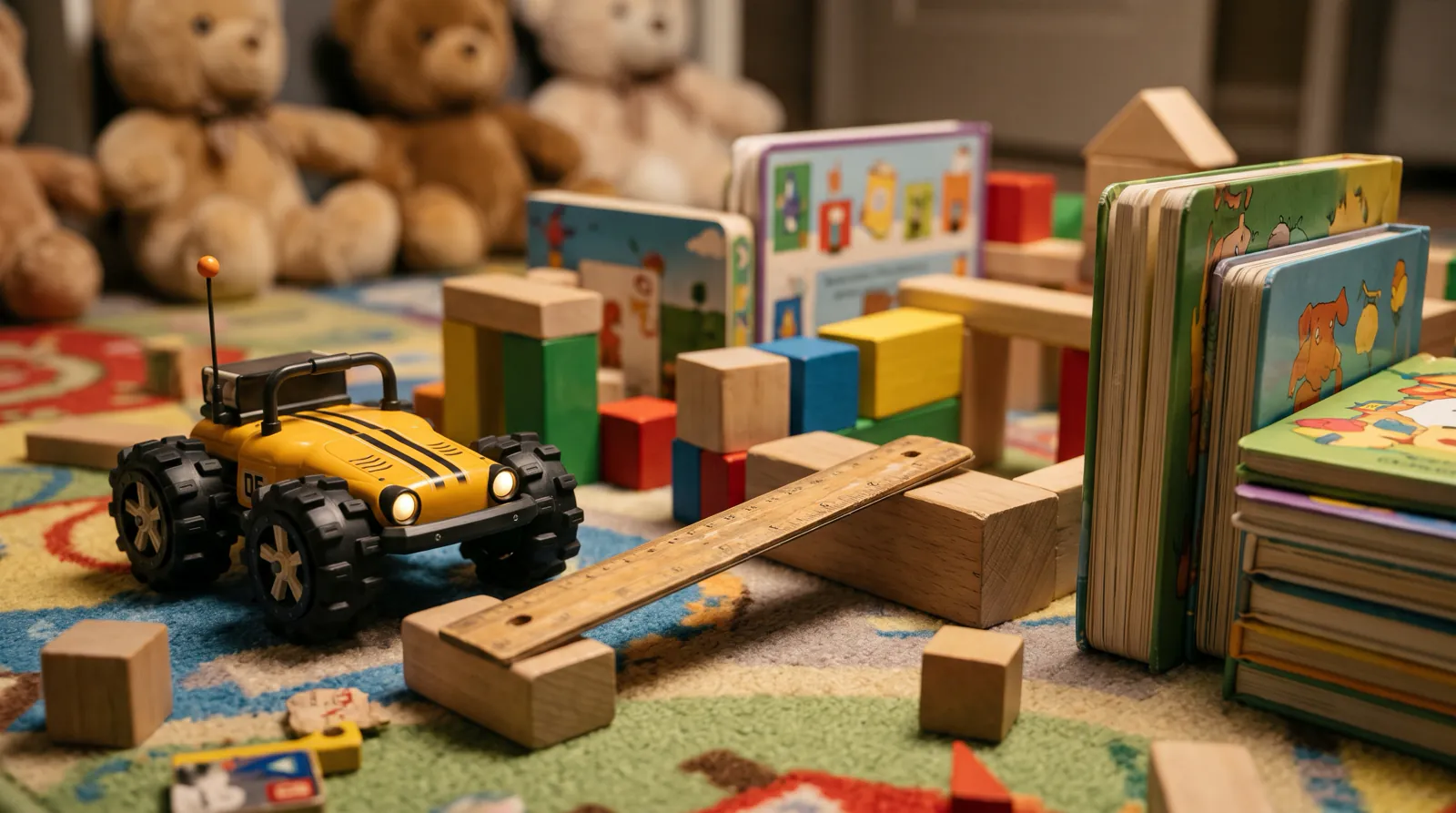
Puzzle games for kids that build problem-solving skills give a child one clear goal and leave the rules for them to work out by trying, with failure that costs almost nothing. By age, we'd start with Thinkrolls Space, Lightbot Jr, Cut the Rope and Where's My Water? 2 at about 6 to 8; Monument Valley, Mekorama, Lightbot, The Gardens Between and World of Goo 2 at 9 to 12; and Human Resource Machine and Baba Is You from 13.
One game here is ours: Last Charge, the toy car physics puzzle game by Secundum Reality. We make it, so it isn't ranked (nothing here is); it's in the 9 to 12 group because it's rated 9+ on the App Store and we know exactly what it asks of a player.
Ratings, prices and developers come from the US App Store and Google Play pages, checked on . They can change with updates.
Do puzzle games really build problem-solving skills?
Puzzle games give children plenty of practice at the thinking each one asks for. Whether that practice carries over to schoolwork or everyday problems is much less clear. The studies linking games with better problem solving are mostly correlations, and a large review of brain-training programs found little evidence of benefits beyond the trained tasks.
One long-running study followed 1,492 students through four years of high school. Those who played more strategy and role-playing games rated their own problem solving higher over time, and that went with better grades (Adachi and Willoughby, 2013). It was observational, so it can't show the games caused the change; the skill measure was self-rated, and puzzle games weren't studied.
A study of 847 four- to seven-year-olds found that children whose parents reported frequent play with puzzles, blocks and board games scored higher on a block-design test of spatial skill (Jirout and Newcombe, 2015). That was physical play, and again a correlation: the authors call for research into whether the play causes the difference.
A 2016 review by Simons and colleagues of the studies that brain-training companies cite found good evidence that training improves the trained task, less for closely related tasks, and little for distant tasks or everyday thinking. It covered brain-training programs, not children's puzzle games. So expect your child to get better at the kinds of puzzles they play. Our guide to whether puzzle games are good for kids covers the rest of the evidence.
What kinds of thinking do puzzle games ask for?
Most puzzle games lean on one or two kinds of thinking: spatial (seeing how shapes and paths fit), logic (working out a rule), sequencing (putting steps in order) or cause and effect (predicting what an action will do). Some add planning, where moves or energy run out. Knowing which kind your child enjoys makes the next game easier to pick.
- Spatial
- Monument Valley and Mekorama: the path only appears from the right angle.
- Logic
- Thinkrolls Space and Baba Is You: work out the rule, then use it on purpose.
- Sequencing
- Lightbot and Human Resource Machine: write the steps, run them, fix the one that failed.
- Cause and effect
- Cut the Rope, Where's My Water? 2 and The Gardens Between: predict how ropes, water or time will behave.
- Planning
- Spending something limited in a sensible order. In Last Charge it's the toy car's battery.
Which puzzle games suit kids aged 6 to 8?
At 6 to 8, look for short levels, free retries and a goal your child can see. Thinkrolls Space and Lightbot Jr are listed on the App Store as made for ages 6 to 8. Cut the Rope and Where's My Water? 2 are rated 4+ and Everyone, but both are free games that sell extras inside.
Thinkrolls Space
From Avokiddo, $5.99 on both stores; App Store 4+ (made for ages 6 to 8), Google Play Everyone. Your child rolls a little character through more than 200 mazes on seven planets, working out which objects help and which block the way, then moving them to reach a key and open the gate. The listing promises two difficulty modes and unlimited retries with no penalty.
Lightbot Jr
SpriteBox's Lightbot Jr is $2.99 on iPhone and iPad only (we couldn't find any Lightbot game on Google Play), rated 4+ and made for ages 6 to 8. You line up commands for a little robot, run them, and when the robot goes wrong you find the step that caused it. It has 42 levels and was last updated in January 2016, so check it runs on your device.
Cut the Rope
ZeptoLab's game (Cut the Rope: Physics Puzzle on the App Store) is free on both stores with ads and in-game purchases, rated 4+ and Everyone. You cut ropes so a swinging piece of candy drops to Om Nom, a little monster with a sweet tooth, which takes watching the swing and cutting at the right moment. The App Store page sells packs of solutions, so turn on purchase approval first.
Where's My Water? 2
The sequel to Disney's Where's My Water?, now published by Kongregate: free with in-game purchases, with ads on Google Play, rated 4+ and Everyone. Your child digs through dirt to guide water or steam to Swampy and his friends, watches where it really flows, and digs again.
Which puzzle games suit kids aged 9 to 12?
From about 9, children can take on puzzles that explain nothing up front. Monument Valley, Mekorama and The Gardens Between are rated 4+ and Everyone. Lightbot and World of Goo 2 are both listed on the App Store as made for ages 9 to 11, though World of Goo 2 is rated 9+ there for infrequent cartoon or fantasy violence.
Monument Valley
ustwo games sells it for $3.99 on both stores, rated 4+ and Everyone. You guide a silent princess, Ida, through buildings of impossible geometry, turning and sliding parts until a path that looked broken joins up. Eight extra chapters are sold separately, and Monument Valley 2 is also $3.99 with the same ratings.
Mekorama
In Fancade's Mekorama, a tiny robot stumbles home through 50 mechanical dioramas, and you turn each little world around until you can see a route. It's free with in-game purchases (Google Play also lists ads), rated 4+ and Everyone, and a diorama maker lets kids build their own.
Lightbot: Programming Puzzles
SpriteBox's main Lightbot game is $2.99 on iPhone and iPad, rated 4+ and made for ages 9 to 11. You program a robot to light up tiles, and across 50 levels the puzzles bring in procedures, loops and conditionals. Lightbot: Code Hour is a free 20-level taster with nothing to buy.
The Gardens Between
By The Voxel Agents, $4.99 on both stores, rated 4+ and Everyone. Two best friends climb dreamlike island gardens while you move time forward and backward, so every puzzle is cause and effect you can rewind. Its Google Play listing says there's no text, no time pressure and nothing to buy inside.
World of Goo 2
From 2D BOY, $9.99 on both stores. App Store 9+ for infrequent cartoon or fantasy violence (made for ages 9 to 11); Google Play Everyone, with violent references. You build bridges and towers from Goo Balls and route flowing liquid, planning around structures that sag and fall.
Where Last Charge fits
Last Charge is a story-driven 3D physics puzzle game for Android and iPhone, made by Secundum Reality. Your child drives Watt, a small yellow toy RC car, through a dark house during a storm to get the power back on. It's rated 9+ on the App Store, and we wouldn't give it to a younger child: the rooms are dark, lightning flashes, and in the living room a robot vacuum called Grumble charges at Watt when it sees the headlights. There's no blood, no weapons and no fighting.
The battery is what makes a child plan. Every level starts at 60%, and driving, headlights and boosts all cost charge. In Last Charge, standing still with the headlights off costs no battery, so stopping to think is free. Power banks along the route top the battery up and save progress, so each room turns into working out how to reach the next bank with charge to spare.
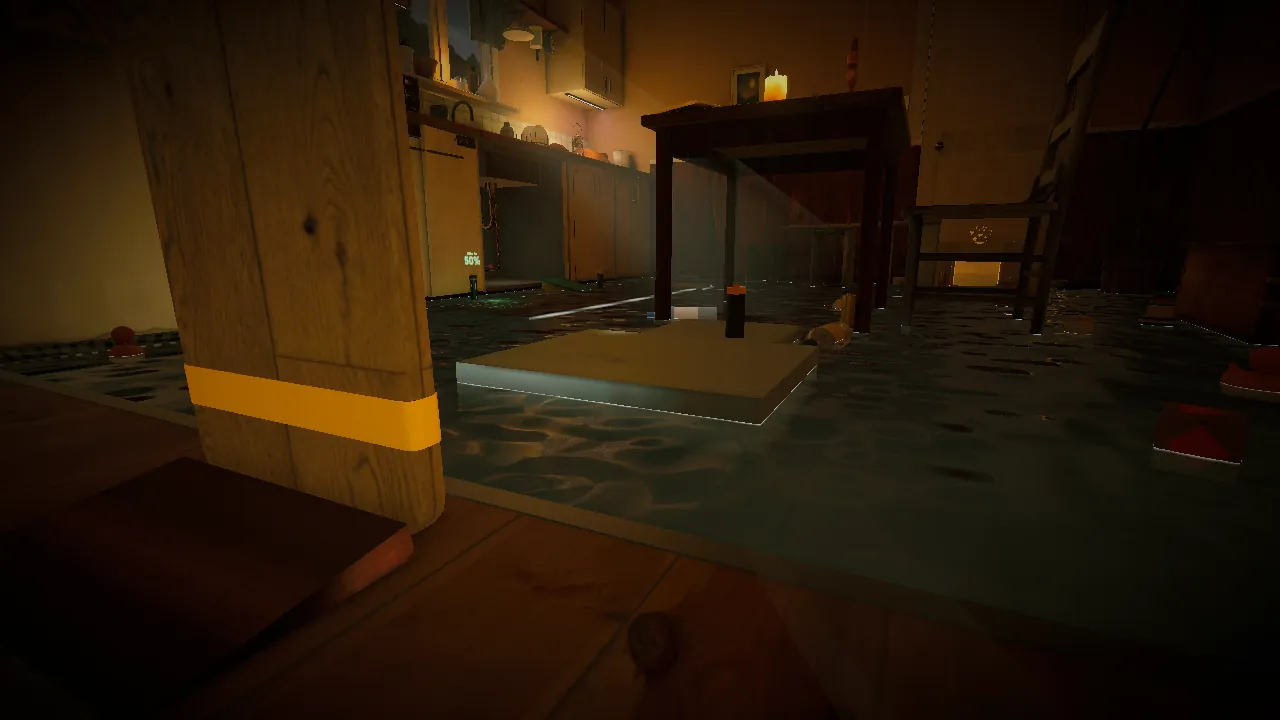
Cause and effect is in every room. In the flooded kitchen, ram the chopping board on the edge of the dry step and it falls flat onto a storage box in the water, making a bridge. A failed idea gets two or three words of feedback, such as "Too gentle" when Watt hits a switch too slowly, and an empty battery just sends Watt back to the last power bank. There are no lives and no timer.
There are no hints either: each room states one goal, once, and the exit is visible from the start (we explain why in puzzle games with no hints). Last Charge is single player, with no chat, no account and nothing to buy, and it's free to play. The game page shows how to play.
Which puzzle games suit teenagers?
For 13 and up, choose puzzles that stretch adults too. Human Resource Machine and its sequel, 7 Billion Humans, turn programming into office-job puzzles, and Baba Is You lets you rewrite the rules of each level. They're in this group for difficulty: Baba Is You is rated 4+ and Everyone, while the other two carry cartoon or fantasy violence labels.
Human Resource Machine and 7 Billion Humans
From Tomorrow Corporation, $4.99 each on both stores. Your boss gives you a job, and you automate it by handing a little office worker a list of instructions, which is programming with the jargon stripped out; the listing says you don't need to have programmed before. Both are 9+ on the App Store for infrequent cartoon or fantasy violence; on Google Play, Human Resource Machine is Everyone 10+ (fantasy violence) and 7 Billion Humans is Everyone (mild fantasy violence).
Baba Is You
By Hempuli, $6.99 on both stores, rated 4+ and Everyone. The rules of every level are word blocks you can push around, so each puzzle is working out which rule to change, whether that means turning yourself into a rock or changing what counts as the goal.
How do I choose a puzzle game for my child?
Read the store rating and its descriptors first, plus the App Store's "Made for Ages" range where a game has one. Then check what happens when your child gets stuck and how the game makes money. Play the first few levels together and notice which kind of thinking your child enjoys most.
- On the App Store, games in the Kids category show "Made for Ages" under the rating, such as 6 to 8 for Thinkrolls Space or 9 to 11 for Lightbot.
- Find out what happens when your child is stuck. Some games sell hints or whole solutions, and some have none at all.
- Check how you pay: once up front, free with ads and purchases, or a subscription such as Google Play Pass.
- Play the first ten minutes together, with your child holding the device.
- Follow what they enjoy. A child who loves Cut the Rope may like our physics games for kids; one who takes to Lightbot will find more coding picks in STEM games for kids.
To avoid violence labels altogether, see non-violent games for kids. Older players who want harder physics can try our physics puzzle games for mobile.
All the games at a glance
| Game | Developer | App Store age | Google Play rating | Price model | Type of thinking |
|---|---|---|---|---|---|
| Thinkrolls Space | Avokiddo | 4+ (made for 6 to 8) | Everyone | $5.99 | Logic, cause and effect |
| Lightbot Jr | SpriteBox | 4+ (made for 6 to 8) | Not on Google Play | $2.99 | Sequencing |
| Cut the Rope | ZeptoLab | 4+ | Everyone | Free, ads and purchases | Cause and effect, timing |
| Where's My Water? 2 | Kongregate | 4+ | Everyone | Free, purchases; ads on Google Play | Cause and effect |
| Monument Valley | ustwo games | 4+ | Everyone | $3.99, extra chapters sold separately | Spatial |
| Mekorama | Fancade | 4+ | Everyone | Free, purchases; ads on Google Play | Spatial |
| Lightbot: Programming Puzzles | SpriteBox | 4+ (made for 9 to 11) | Not on Google Play | $2.99 | Sequencing, logic |
| The Gardens Between | The Voxel Agents | 4+ | Everyone | $4.99 | Cause and effect |
| World of Goo 2 | 2D BOY | 9+ (made for 9 to 11) | Everyone, violent references | $9.99 | Cause and effect, planning |
| Human Resource Machine | Tomorrow Corporation | 9+ | Everyone 10+ | $4.99 | Sequencing, logic |
| 7 Billion Humans | Tomorrow Corporation | 9+ | Everyone | $4.99 | Sequencing, logic |
| Baba Is You | Hempuli | 4+ | Everyone | $6.99 | Logic |
Last Charge (ours, rated 9+ on the App Store) isn't in the table; the section above covers what it asks of a player.
Frequently asked questions
What is a good problem-solving game for a 7-year-old?
Thinkrolls Space is a good start. The App Store lists it as made for ages 6 to 8, it's rated 4+ and Everyone, and it costs $5.99 on iPhone, iPad and Android, with unlimited retries. On iPhone or iPad, Lightbot Jr ($2.99, also made for 6 to 8) is about putting steps in order. Cut the Rope is free but shows ads and sells solutions.
Are brain games good for kids?
The evidence is cautious. A large 2016 review of the studies that brain-training companies cite found that training improves the trained task, helps closely related tasks less, and shows little evidence of improving distant tasks or everyday thinking. It looked at brain-training programs, not children's puzzle games, so pick a puzzle game because your child enjoys the thinking it asks for.
What are good logic games for kids on iPhone and Android?
Thinkrolls Space, Monument Valley, Mekorama, The Gardens Between and Baba Is You are on both stores, rated 4+ on the App Store and Everyone on Google Play. Thinkrolls Space suits about 6 to 8, and Baba Is You suits older kids and teens. Lightbot, a coding puzzle game, is only on iPhone and iPad.
Are there puzzle games for kids with nothing to buy inside?
Yes, mostly the paid ones. The Gardens Between's Google Play listing says there's nothing to buy inside, and Thinkrolls Space, Lightbot Jr and Baba Is You list no in-game purchases on their store pages. Lightbot: Code Hour is free on iPhone and iPad with nothing to buy. The free games here, such as Cut the Rope and Mekorama, all sell something.
What does a child practice in Last Charge?
Mostly planning and cause and effect. In Last Charge every level starts with the battery at 60%, driving, headlights and boosts cost charge, and standing still with the lights off is free. Each room is a physics puzzle, such as ramming a chopping board over to make a bridge, and there are no hints. Last Charge is rated 9+ on the App Store.
Sources
- PubMed: Adachi & Willoughby (2013), strategic video games, self-reported problem solving and grades, J Youth Adolesc
- PubMed: Jirout & Newcombe (2015), Building blocks for developing spatial skills, Psychological Science
- APS Observer: Blocks and puzzles may help children learn spatial skills
- PubMed: Simons et al. (2016), Do "brain-training" programs work?, Psychological Science in the Public Interest
- Apple Developer: Age ratings values and definitions
- Apple Developer: Set an app age rating (Made for Kids age ranges)
- App Store: Thinkrolls Space
- Google Play: Thinkrolls Space
- App Store: Lightbot Jr
- App Store: Cut the Rope: Physics Puzzle
- Google Play: Cut the Rope
- App Store: Where's My Water? 2
- Google Play: Where's My Water? 2
- App Store: Monument Valley
- Google Play: Monument Valley
- App Store: Monument Valley 2
- Google Play: Monument Valley 2
- App Store: Mekorama
- Google Play: Mekorama
- App Store: Lightbot: Programming Puzzles
- App Store: Lightbot: Code Hour
- App Store: The Gardens Between
- Google Play: The Gardens Between
- App Store: World of Goo 2
- Google Play: World of Goo 2
- App Store: Human Resource Machine
- Google Play: Human Resource Machine
- App Store: 7 Billion Humans
- Google Play: 7 Billion Humans
- App Store: Baba Is You
- Google Play: Baba Is You