 Last Charge
For parents
Non-violent games for kids 9 and up: what the store labels say
How to read the violence labels on the App Store and Google Play, then eight phone games for kids 9 and up that carry none on either store.

Non-violent games for kids are games whose store labels list no violence at all: 4+ on the App Store, and Everyone on Google Play with no violence descriptor beside it. For kids 9 and up, Monument Valley, Mekorama, Baba Is You, The Gardens Between, Mini Metro, Unpacking, Florence and Alto's Odyssey all pass that test on both stores.
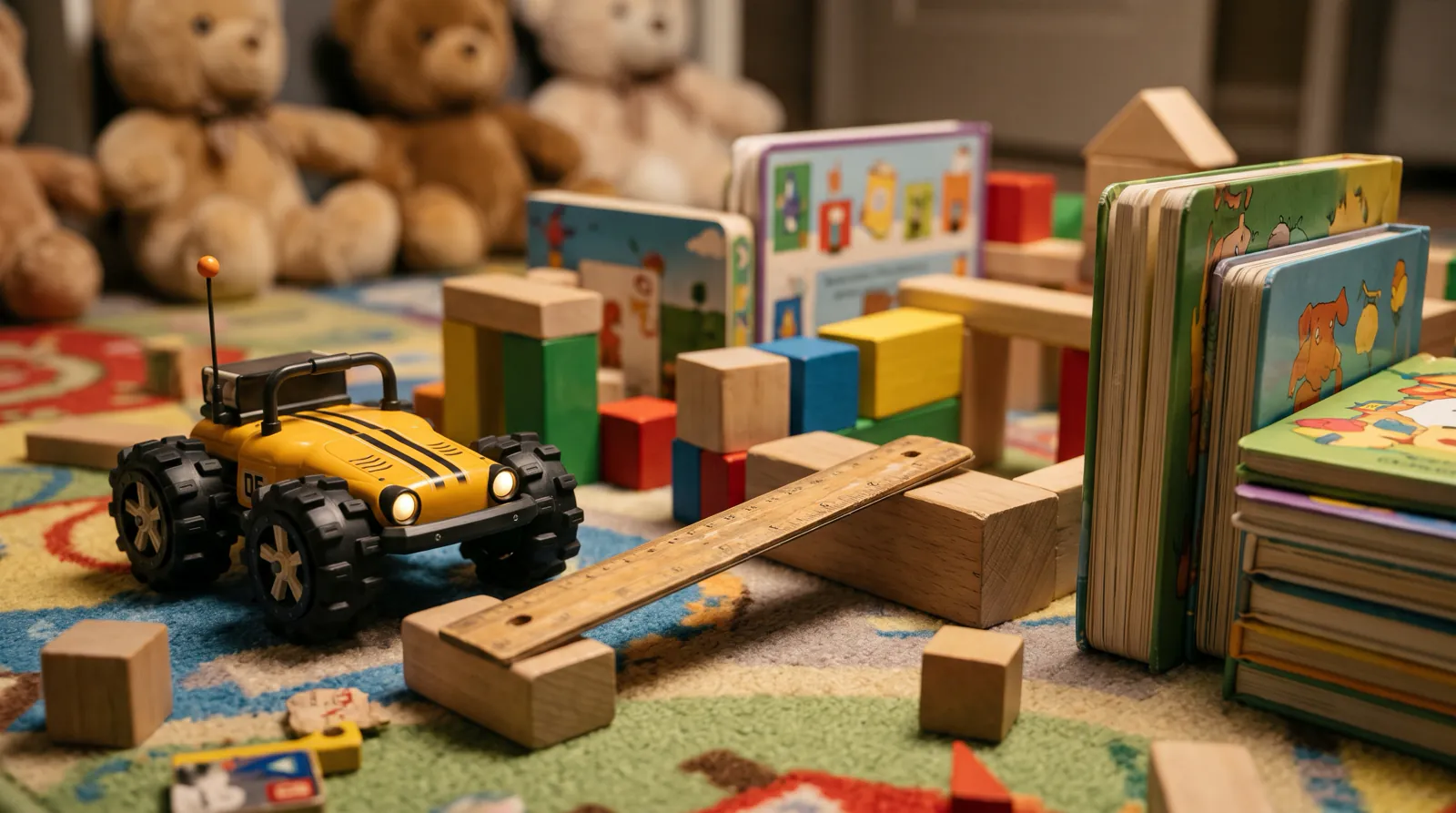
One game in this guide is ours: Last Charge, the toy car physics puzzle game by Secundum Reality. We make it, so it isn't ranked here; it's included because it's a puzzle game rated 9+ with no fighting, weapons or blood, and we can tell you exactly what's in it. If your child enjoys a little fright, our guide to spooky games for kids that aren't too scary covers that side.
Ratings and prices come from the US App Store and Google Play pages, checked on . They can change with updates.
What counts as violence on the App Store?
Apple's age ratings have four violence descriptors: cartoon or fantasy violence, realistic violence, prolonged graphic or sadistic realistic violence, and guns or other weapons. Even infrequent cartoon violence or weapons puts a game at 9+, so a game rated 4+ on the App Store carries no violence descriptor at all.
- Cartoon or Fantasy Violence
- Exaggerated or fantastical conflict or harm that's easy to tell apart from real life. Infrequent means 9+; frequent means 13+.
- Guns or Other Weapons
- Showing or mentioning guns, weapons or other objects that can hurt someone. Infrequent means 9+; frequent means 13+.
- Realistic Violence
- Aggressive conflict or harm involving people in lifelike situations. Infrequent means 13+; frequent means 18+.
- Prolonged Graphic or Sadistic Realistic Violence
- Long, detailed, realistic violence. Any amount leaves an app unrated, and unrated apps can't be published on the App Store.
The developer answers Apple's age-rating questionnaire, and the rating is calculated from those answers. Each descriptor then appears in the Age Rating section of the store page, marked Infrequent or Frequent. A 9+ rating doesn't always mean violence: infrequent horror or fear themes, or loot boxes, also put a game at 9+, so open the section and read the lines. Games in Apple's Kids category show a "Made for Ages" range there as well, such as 6 to 8 or 9 to 11.
What do Google Play's violence labels mean?
Google Play's ratings come from the International Age Rating Coalition (IARC): the developer fills in a questionnaire, and IARC assigns an age rating, content descriptors and interactive elements for each region. In the US you see ESRB labels. Everyone can still include minimal cartoon or fantasy violence, so read the descriptors beside the rating.
- Everyone
- Generally suitable for all ages, though it may contain minimal cartoon, fantasy or mild violence.
- Everyone 10+
- Generally suitable for ages 10 and up, with more cartoon, fantasy or mild violence allowed.
- Teen
- Generally suitable for ages 13 and up. It can include violence and minimal blood.
- Mild
- In front of a descriptor, it means low frequency, intensity or severity.
- Fantasy Violence
- Violent actions of a fantasy kind, easy to tell apart from real life.
- Violent References
- Mentions of violent acts.
On a Google Play page the rating sits near the top and again at the bottom, with its descriptors and interactive elements on the same line, such as "Everyone 10+ Fantasy Violence" or "Everyone In-Game Purchases". Interactive elements like In-Game Purchases and Users Interact are about money and contact, not content. The ESRB notes that games rated through IARC don't come with its written rating summaries, so the label won't tell you what the violence actually is.
Why does one game get different violence labels on each store?
Each store works out its rating from the developer's answers to a different questionnaire, so the same game can come out differently. World of Goo Remastered is 4+ on the App Store but lists Mild Fantasy Violence on Google Play, and Human Resource Machine is 9+ on one store and Everyone 10+ on the other. Check the store your child uses.
| Game | App Store | Google Play |
|---|---|---|
| World of Goo Remastered (Netflix) | 4+, no descriptors | Everyone, Mild Fantasy Violence |
| World of Goo 2 (2D BOY) | 9+, infrequent cartoon or fantasy violence | Everyone, Violent References |
| Human Resource Machine (Tomorrow Corporation) | 9+, infrequent cartoon or fantasy violence | Everyone 10+, Fantasy Violence |
| 7 Billion Humans (Tomorrow Corporation) | 9+, infrequent cartoon or fantasy violence | Everyone, Mild Fantasy Violence |
All four are puzzle games about building or programming, and none of the labels say what the violence is. If a label like this is all that's stopping you, a trailer or a few minutes of someone else playing will show whether it matters to your child. World of Goo 2 and Human Resource Machine are both in our age-by-age list of puzzle games that build problem-solving skills.
Which non-violent games suit kids 9 and up?
These eight are rated 4+ on the App Store and Everyone on Google Play, with no violence descriptor on either: Monument Valley, Mekorama, Baba Is You, The Gardens Between, Mini Metro, Unpacking, Florence and Alto's Odyssey. Most cost a few dollars up front. Mekorama is free with in-game purchases, and so is Alto's Odyssey on Google Play.
Monument Valley
From ustwo games, $3.99 on both stores, with eight extra chapters sold separately. You turn and slide impossible buildings until a broken-looking path joins up, guiding a silent princess and outsmarting the mysterious Crow People. Monument Valley 2 is also $3.99 and also 4+ and Everyone with no descriptors.
Mekorama
Fancade's Mekorama is free with in-game purchases, and Google Play also lists ads. A tiny robot stumbles home through 50 mechanical dioramas, and you turn each one around to find the route. There's a diorama maker for kids who would rather build levels.
Baba Is You
By Hempuli, $6.99 on both stores. The rules of each level are word blocks your child can push around, so they can turn themselves into a rock or change what counts as winning. It suits older kids who like logic puzzles.
The Gardens Between
By The Voxel Agents, $4.99 on both stores. Two best friends climb dreamlike island gardens while you move time forward and backward. The story is about friendship and memory, and the Google Play listing says the game has no text.
Mini Metro
Dinosaur Polo Club's Mini Metro is a paid game on both stores ($3.99 on the App Store). Your child draws subway lines between stations and redraws them as the city grows, deciding where to use limited resources. Its Google Play listing says there's no advertising and nothing to buy inside.
Unpacking
Balor Games publishes Unpacking on phones for $9.99 on both stores. You unpack a woman's belongings into each new home over eight house moves, fitting things where they belong, and learn about her life from what she brings and what she leaves behind. There are no timers or scores.
Florence
From Annapurna Interactive, $2.99 on both stores. It's an interactive story about 25-year-old Florence Yeoh's first love, told through small mini-games, from flirting and arguing to growing apart. Nothing violent happens, but it's a story about a relationship ending, so it suits kids who are ready for that kind of story.
Alto's Odyssey
By Snowman. On the App Store it's $4.99, sold as a premium game without advertising or in-app purchases; on Google Play it's free with ads and in-game purchases, or included with Google Play Pass. Your child sandboards across an endless desert, chaining tricks and escaping mischievous lemurs, and Zen Mode takes the scores away.
Where Last Charge fits
Last Charge is a story-driven 3D physics puzzle game for Android and iPhone, made by Secundum Reality. You drive Watt, a small yellow toy RC car, through a dark house in a storm to get the power back on, with one battery to manage. It's rated 9+ on the App Store, and we don't recommend it for children under 9.
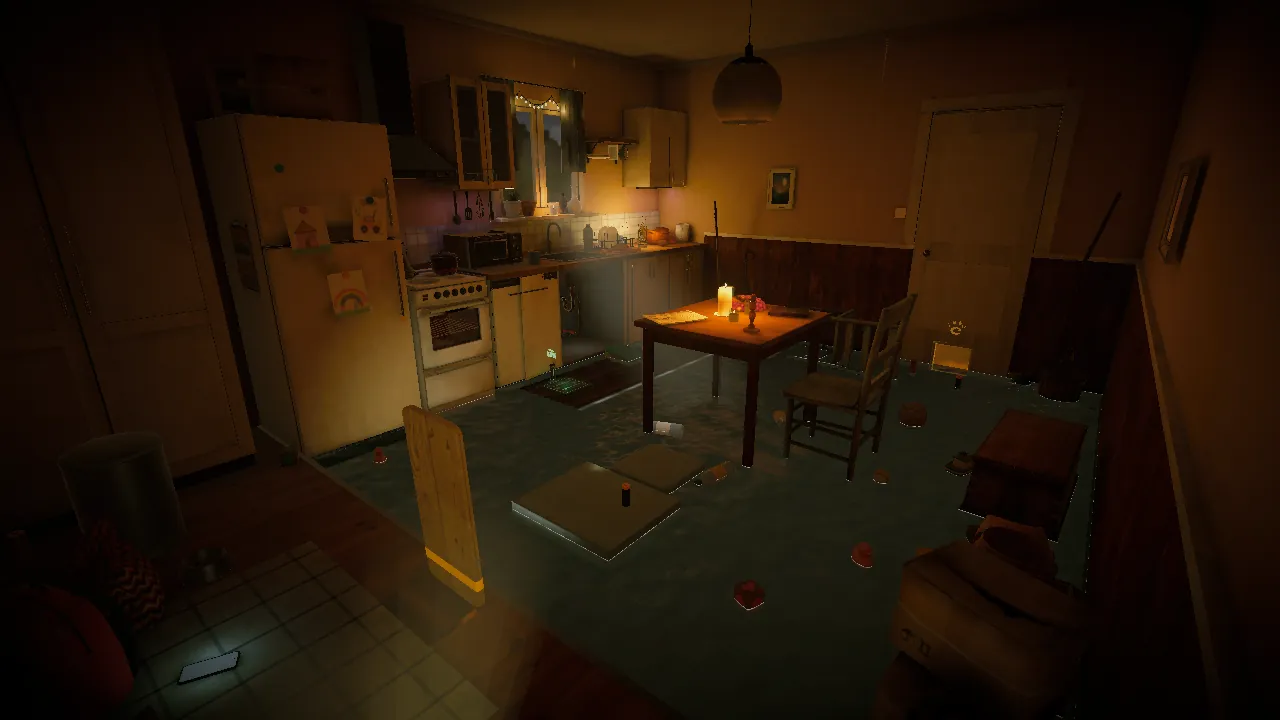
The rooms are dark and the storm rumbles. Lightning flashes every 10 to 20 seconds in the dark rooms, and no setting turns the flashes off, so take care if your child is sensitive to flashing light. In the living room, Grumble, a robot vacuum, patrols the rug and charges at Watt if it sees Watt's headlights. If Grumble catches Watt, or Watt drives into deep water, the screen fades and Watt starts again at the last power bank. Nothing gets hurt, and no people or animals appear on screen.
Last Charge is single player, with no chat, no account and nothing to buy, and it's free to play. On Android it uses Google Play Games for achievements and a fastest-time leaderboard on each level, which can show your child's Play Games gamer name and best times to other players; none of that exists on iPhone and iPad. Our Last Charge parents' guide covers the rest, from the controls to how tense it gets, and the game page introduces Watt and Grumble.
What else should I check besides violence?
Look at who your child can talk to and what the game sells. Apple allows messaging, user-generated content and advertising even at 4+, and Google Play lists interactive elements such as Users Interact and In-Game Purchases beside the rating. A game with no violence can still frighten, and horror themes alone can make an App Store game 9+.
- On the App Store, open the Age Rating section and read every line. It also lists things like Contains Advertising and User-Generated Content, and Brain It On!'s page shows both.
- On Google Play, read the line beside the rating at the bottom of the page. Toca Boca World, for example, shows "In-Game Purchases (Includes Random Items)", which means your child won't know exactly what some purchases contain until they've paid.
- Watch a trailer and a few minutes of someone else playing, since the labels don't describe what happens.
- Turn on purchase approval and content limits before you hand the device over: Screen Time and Ask to Buy on iPhone and iPad, and parental controls in the Google Play settings.
For games where fear is the issue rather than fighting, our list of spooky games for kids sorts them by how frightening the store labels say they are.
All the games at a glance
| Game | Developer | App Store | Google Play | How you pay |
|---|---|---|---|---|
| Monument Valley | ustwo games | 4+ | Everyone | $3.99, extra chapters sold separately |
| Monument Valley 2 | ustwo games | 4+ | Everyone | $3.99 |
| Mekorama | Fancade | 4+ | Everyone | Free, in-game purchases; ads on Google Play |
| Baba Is You | Hempuli | 4+ | Everyone | $6.99 |
| The Gardens Between | The Voxel Agents | 4+ | Everyone | $4.99 |
| Mini Metro | Dinosaur Polo Club | 4+ | Everyone | Paid; $3.99 on the App Store |
| Unpacking | Balor Games | 4+ | Everyone | $9.99 |
| Florence | Annapurna Interactive | 4+ | Everyone | $2.99 |
| Alto's Odyssey | Snowman | 4+ | Everyone | $4.99 on the App Store; free with ads and purchases on Google Play |
Last Charge (ours, rated 9+ on the App Store) isn't in the table; the section above says what's in it.
Frequently asked questions
What are good non-violent games for a 10-year-old?
Monument Valley ($3.99), The Gardens Between ($4.99), Mini Metro (paid) and Mekorama (free with in-game purchases) are all rated 4+ on the App Store and Everyone on Google Play, with no violence descriptor on either. A logic fan might like Baba Is You, and a child who wants speed can try Alto's Odyssey, a sandboarding game. Play the first ten minutes together to see what clicks.
Does Everyone on Google Play mean a game has no violence?
Not always. In the US, Google Play shows ESRB labels, and the ESRB says Everyone may contain minimal cartoon, fantasy or mild violence. Read the words beside the rating: World of Goo Remastered shows Everyone with Mild Fantasy Violence, and 7 Billion Humans shows the same. A game with Everyone and no descriptor at all has nothing violent declared.
Is Monument Valley violent?
No. Monument Valley is rated 4+ on the App Store and Everyone on Google Play, with no content descriptors on either store. You guide a silent princess through impossible buildings, turning and sliding parts until a path joins up, and outsmart the Crow People along the way. It costs $3.99, with eight extra chapters sold separately, and Monument Valley 2 has the same ratings.
Is Last Charge violent?
Last Charge has no fighting, no weapons and no blood, and no people or animals appear on screen. The tension comes from dark rooms, lightning flashes and Grumble, a robot vacuum that charges at the toy car's headlights in the living room. If it catches Watt, the screen fades and Watt starts again at the last power bank. Last Charge is rated 9+ on the App Store.
Are there non-violent games for kids with nothing to buy inside?
Yes, if you pay up front. Mini Metro's and The Gardens Between's Google Play listings both say there's nothing to buy inside, and Alto's Odyssey on the App Store says the same. Baba Is You, Unpacking and Florence are single purchases with no in-game purchases on their store pages. Monument Valley sells extra chapters, and Mekorama is free with purchases.
Sources
- Apple Developer: Age ratings values and definitions
- Apple Developer: Set an app age rating
- IARC: How IARC works
- ESRB ratings guide (categories, content descriptors, interactive elements)
- ESRB: Ratings process (IARC-rated games have no rating summaries)
- App Store: Monument Valley
- Google Play: Monument Valley
- App Store: Monument Valley 2
- Google Play: Monument Valley 2
- App Store: Mekorama
- Google Play: Mekorama
- App Store: Baba Is You
- Google Play: Baba Is You
- App Store: The Gardens Between
- Google Play: The Gardens Between
- App Store: Mini Metro
- Google Play: Mini Metro
- App Store: Unpacking
- Google Play: Unpacking
- App Store: Florence
- Google Play: Florence
- App Store: Alto's Odyssey
- Google Play: Alto's Odyssey
- App Store: World of Goo Remastered
- Google Play: World of Goo Remastered
- App Store: World of Goo 2
- Google Play: World of Goo 2
- App Store: Human Resource Machine
- Google Play: Human Resource Machine
- App Store: 7 Billion Humans
- Google Play: 7 Billion Humans
- App Store: Brain It On! (age rating lists advertising and user-generated content)
- Google Play: Toca Boca World (In-Game Purchases, Includes Random Items)