 Last Charge
For parents
Easy physics experiments for kids at home, inspired by Last Charge
Six kitchen-table experiments with water, foil, string and a flashlight, each matched to a room in Last Charge where Watt, a toy car, runs into the same idea.
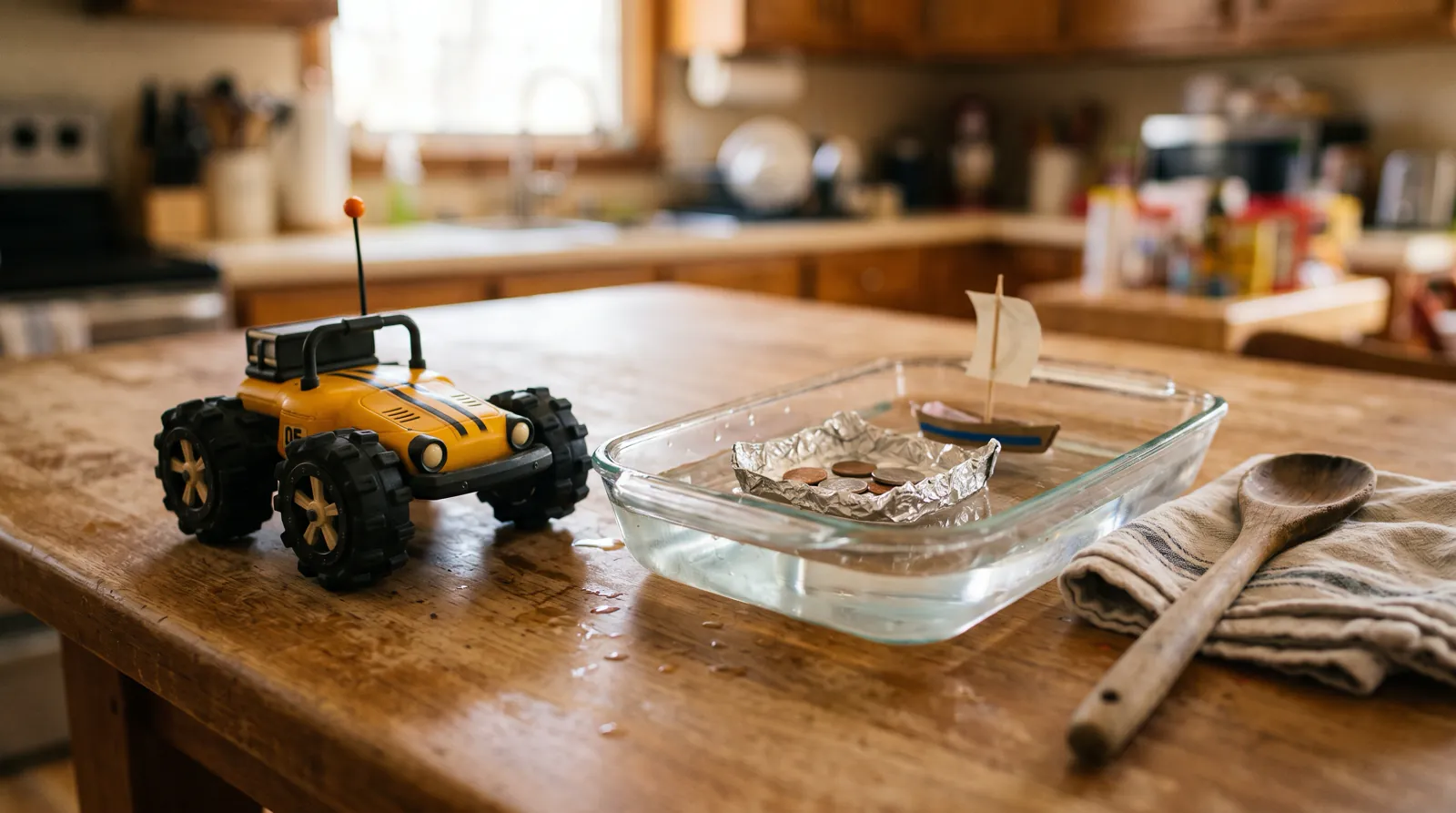
Easy physics experiments for kids at home need little more than a bowl of water, kitchen foil, string and a flashlight. The six here cover floating, shadows, friction, counterweights, sails and siphons, each with what you need, the steps and the science.
Each one matches a moment in Last Charge, the toy car physics puzzle game by Secundum Reality, where Watt, a small yellow toy RC car, runs into the same idea. We make Last Charge, so it's the game we know best, but none of the experiments needs it.
The six experiments at a glance
| Experiment | The idea | Room in Last Charge |
|---|---|---|
| Foil boat | Floating | Kitchen (Level 1, High Tide) |
| Flashlight and shadows | Light travels in straight lines | Living room (Level 2, Lights Out) |
| Ramp race | Friction | Garage (Level 3, The Breaker) |
| Counterweight lift | Pulleys and counterweights | Garage (Level 3, The Breaker) |
| Paper sail | Wind pushing on a sail | Garden (Level 4, Windfall) |
| Two-bowl siphon | Siphons | Garden (Level 4, Windfall) |
What safety rules go with these experiments?
Do every experiment with an adult nearby. All six use cold water or ordinary household things, with nothing hot, sharp or plugged in. Keep the water experiments well away from sockets, chargers and phones, and wipe up spills so nobody slips. Electricity is never an experiment here, only a conversation.
Water and plugs never mix
Level 3 of Last Charge, The Breaker, opens with rain blowing in under the garage door and a plug standing in the puddle, with the caption "Water in a plug trips the power!" Use it to talk about the rule, and never to test it. Energy Safe Victoria, an Australian state safety body, says "Water and electricity do not mix", and that you should never touch anything electrical with wet hands or bare feet, or use an electrical appliance near water.
If your child sees a cable or a plug lying in water at home, they should leave it alone and fetch an adult.
How many coins can a foil boat hold?
A boat folded from kitchen foil floats on a bowl of water and carries coins, even though one coin dropped in on its own sinks at once. Add coins one at a time until the boat goes under, then fold a second boat in a different shape and see which one carries more.
You need two squares of kitchen foil the same size (about 20 cm across), a bowl or sink of water and a pile of coins.
- Ask your child to guess whether a coin will float or sink, then drop one in.
- Fold up the edges of one foil square into a boat with a flat bottom and no holes.
- Float it and add coins one at a time, spread over the bottom, until water comes over the side. Count them.
- Fold the second square into a different shape, wider and flatter or narrower and taller, and test it the same way.
The coin that sank alone floats in the boat. Scientific American's version of this activity, written with Science Buddies, explains that floating depends on an object's density compared with the water's. A boat's density counts the hull, the air inside it and the cargo together, so it floats until the load tips that average past the water's, and the hull's shape sets how much room it has inside.
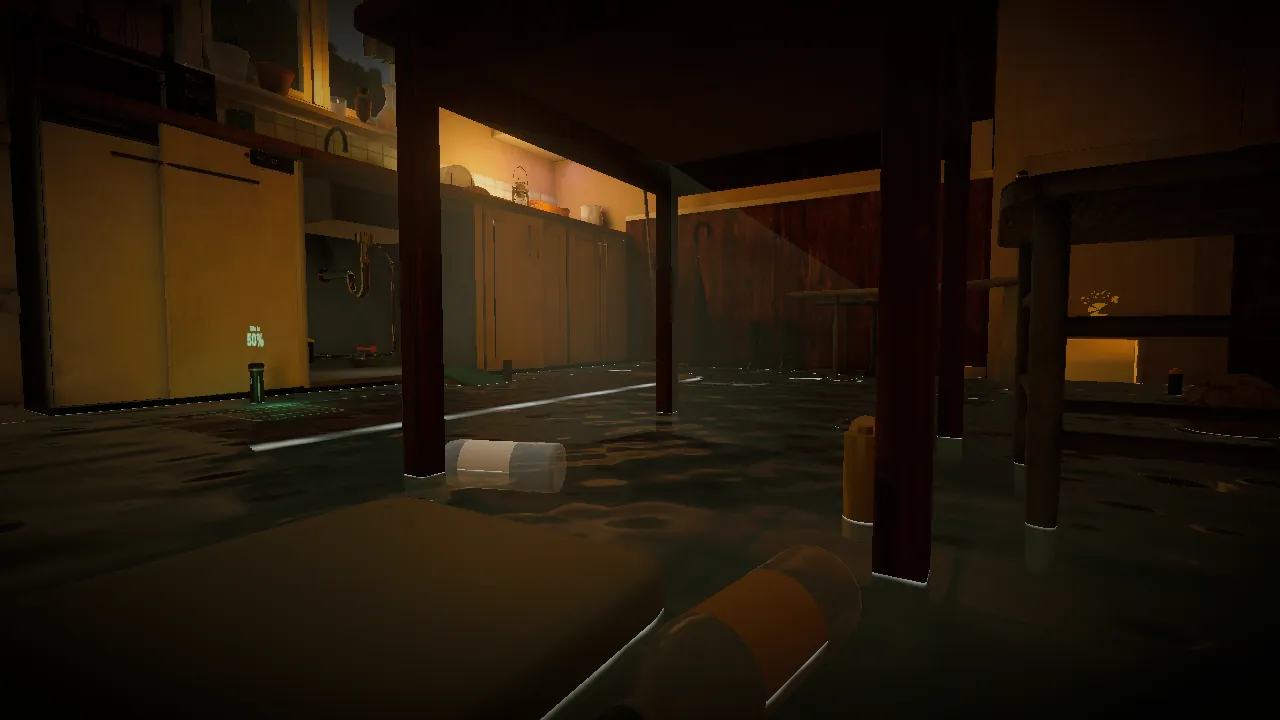
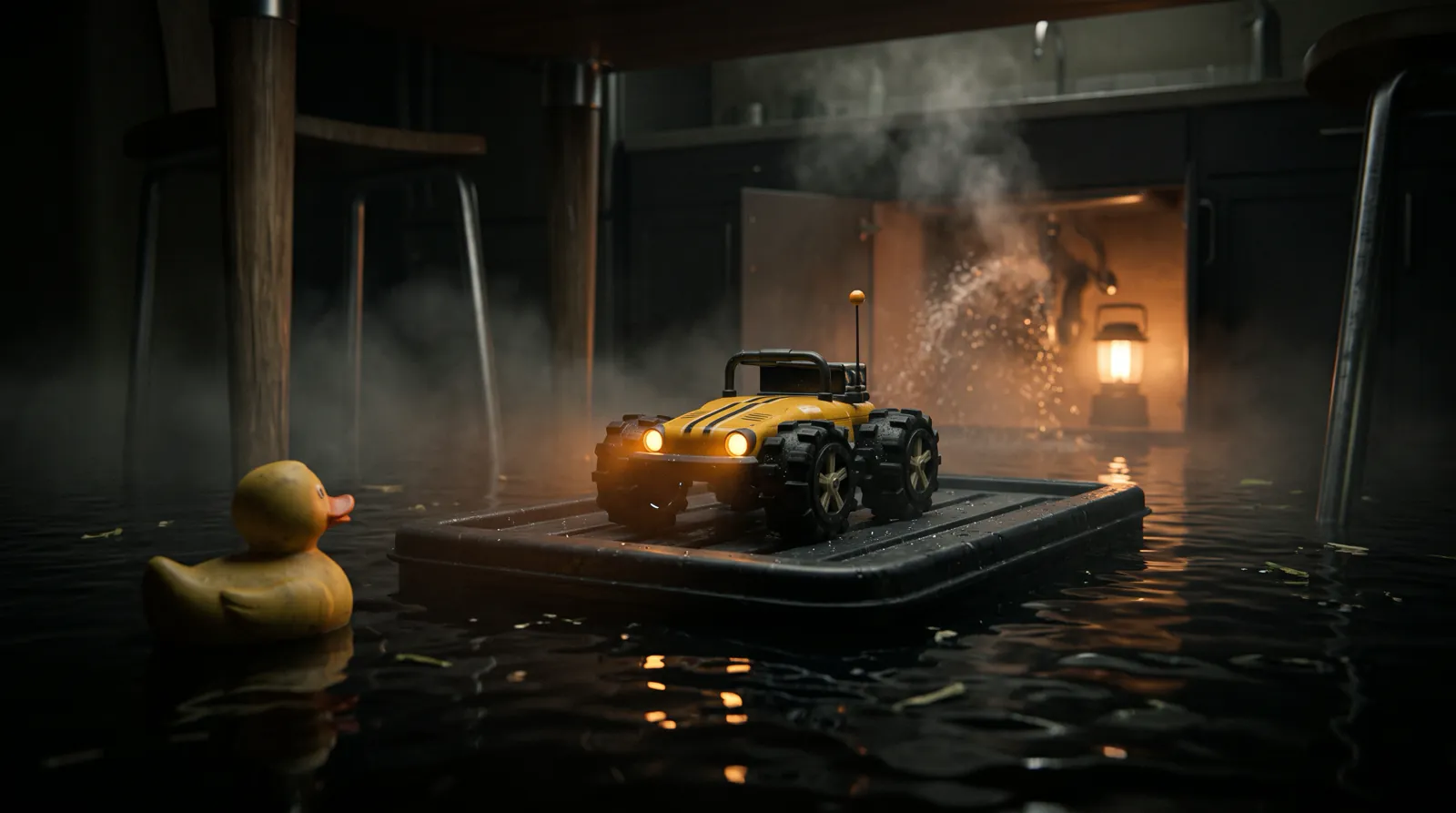
In Level 1 of Last Charge, High Tide, the kitchen floor is under 6 cm of water, enough to short Watt out, so Watt crosses on a floating lid. It sets off only once Watt stops in the middle and keeps still, and the current carries it under the table toward the sink. Ask your child what would happen with every coin piled on one edge, and try it. The Level 1 walkthrough has the whole crossing.
What can a flashlight beam see in the dark?
A flashlight lights only what it has a straight, clear line to. Put a cushion between the flashlight and a toy and the toy sits in the cushion's shadow, however bright the beam is. Try it in a dim room, with the floor cleared so nobody trips.
You need a flashlight, a small toy to play a robot vacuum (a round box works) and a cushion.
- Put the toy on the floor on the far side of the room.
- Kneel, hold the flashlight low, about where a toy car's headlights would be, and shine it at the toy.
- Stand the cushion on the floor between the flashlight and the toy.
- Move the flashlight sideways until the toy is lit again.
The beam never bends around the cushion. The Ontario Science Centre explains that light travels in a straight path and can't pass through solid objects, so the dark area behind one is a shadow. Never shine the flashlight into anyone's eyes.
In Level 2 of Last Charge, Lights Out, the dark living room, Grumble the robot vacuum works by the same rule. It notices only Watt's headlights, inside a cone in front of it 2.5 meters long and 70 degrees wide or when the beam points almost straight at it, and furniture in between hides Watt. With the headlights off, it can't see Watt at all. How to get past Grumble has the rest.
Why does a toy car stop sooner on a towel?
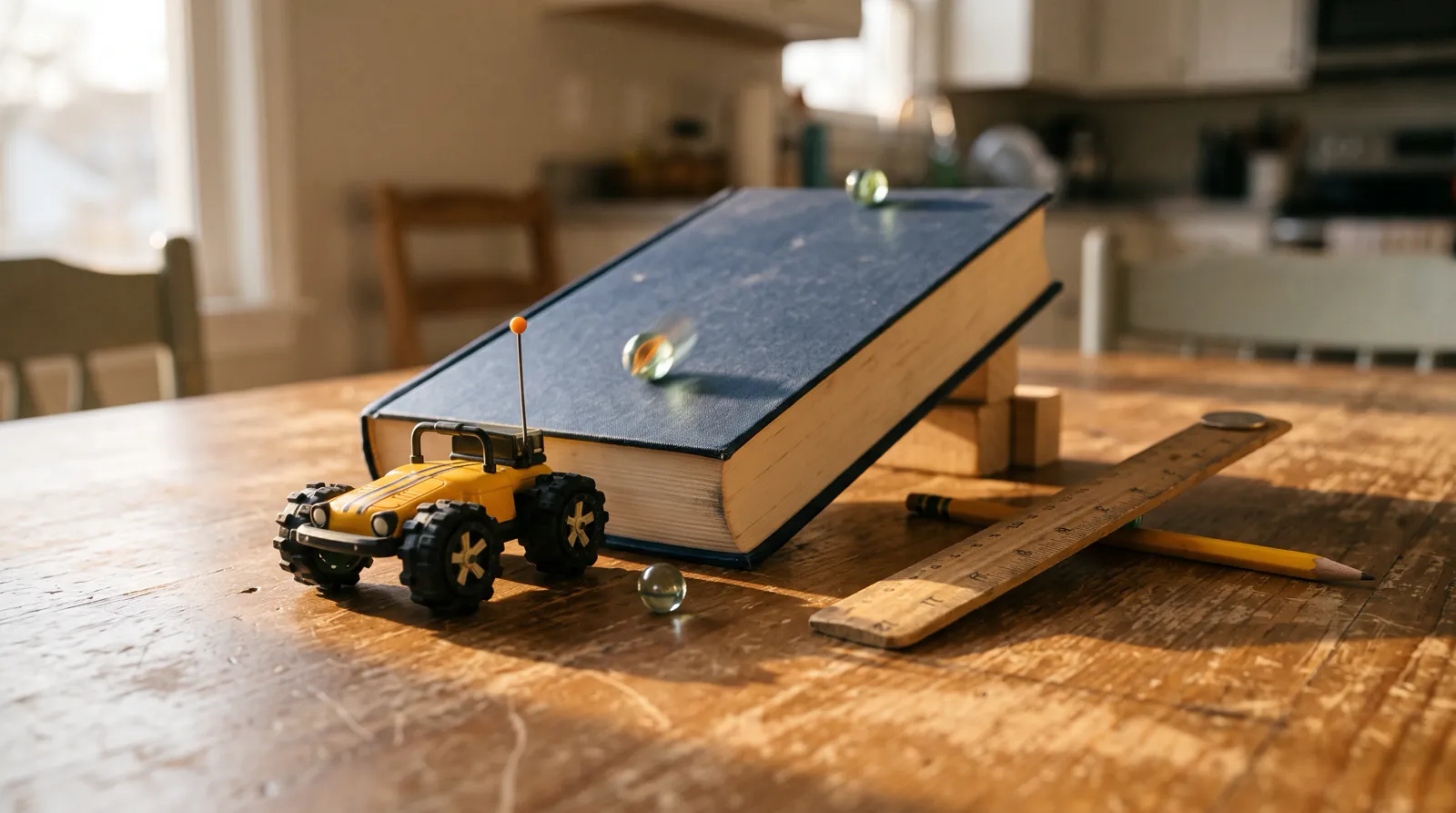
A toy car rolling off a ramp stops sooner on a towel than on a smooth floor because the towel gives more friction, the force that slows things down when one surface moves over another. Let the car go from the same spot each time, measure how far it rolls, and compare the two surfaces.
You need a stiff board or a baking sheet, a few books, a toy car, a dish towel and a tape measure.
- Prop one end of the board on the books to make a ramp down to the floor.
- Ask your child to guess which surface will let the car roll farther.
- Let the car go from the same mark at the top, without pushing, and measure how far it rolls past the bottom. Do it three times.
- Spread the towel flat at the foot of the ramp and do three more runs.
PBS KIDS for Parents has a version of this test called Friction Racing, which starts with that guess. It calls friction a natural, unseen force that slows things down, and a rolling thing slows sooner on a rough surface than on a smooth one.
In Level 3 of Last Charge, The Breaker, Watt has to push a tin of nails onto the end of a board to weigh it down. Along a shiny oil trail the tin glides, and on the dry mat it won't budge. The Level 3 walkthrough explains why the board needs the weight.
How does a counterweight lift a toy car?
Hang two small buckets from one string looped over a broom handle, put a toy car in the bottom bucket and fill the top one with coins while you hold it still. Let go, and once the coin bucket is heavier it drops and the car rises, the way an elevator's counterweight works.
You need a broom, two chairs of the same height, about 2 meters of string, two small buckets with handles (sandbox buckets work), a toy car and a handful of coins.
- Lay the broom handle across the backs of the two chairs.
- Tie a bucket to each end of the string and hang it over the handle, with one bucket on the floor and the other up near the handle.
- Put the car in the bucket on the floor. Hold the top bucket still and drop coins into it.
- Let go. If nothing moves, add more coins and try again. Keep faces clear of the buckets.
TeachEngineering's Powerful Pulleys lesson, from the University of Colorado Boulder, describes a pulley as a simple machine that redirects force: you pull down on the rope to raise the object. Its example is an elevator, whose cable runs over a pulley to a counterweight that keeps the car balanced.
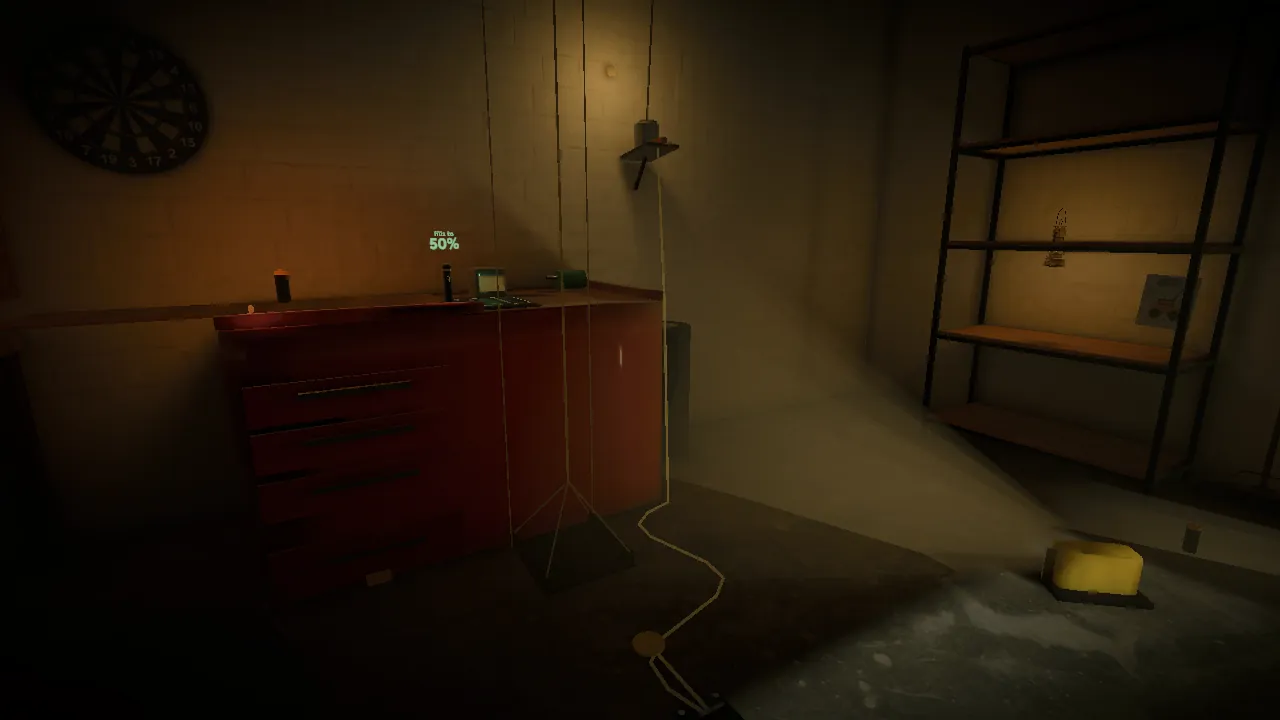
Last Charge's garage has a hoist built this way: a seed tray on ropes beside the red tool chest, balanced by a counterweight tin that a peg holds in place. Watt hooks the loop on the peg's string and drives forward into the tray. The peg pops, the tin drops onto old tires, and the tray lifts Watt 85 cm to the top of the chest. A toy car can't push anything heavy, so the garage lets stored weight do the work.
Does a bigger sail make a boat go faster?
Usually, yes. Make a boat from a plastic lid, a straw mast and a paper sail, and blow it across a pan of water. A sail twice the size catches about twice the push from the same breath, so it tends to cross faster. Hold a box between you and the sail and the boat barely moves.
You need a baking pan with a few centimeters of water, a plastic tub lid, two straws, some play dough, tape, and two pieces of paper, one twice the size of the other. Use your breath, not an electric fan.
- Press the play dough onto the middle of the lid, stand one straw up in it as a mast and tape on the small sail.
- Put the boat at one end of the pan. Blow through the other straw from the same distance each time, and count how long the boat takes to reach the far end.
- Swap in the big sail and do it again.
- Hold a small box upright between your straw and the sail, and blow once more.
NASA's Glenn Research Center explains that the push of moving air on an object (drag) is directly proportional to the area facing it, so doubling the area doubles the push, and that it depends on the square of the air's speed. Behind the box, little of your breath reaches the sail.
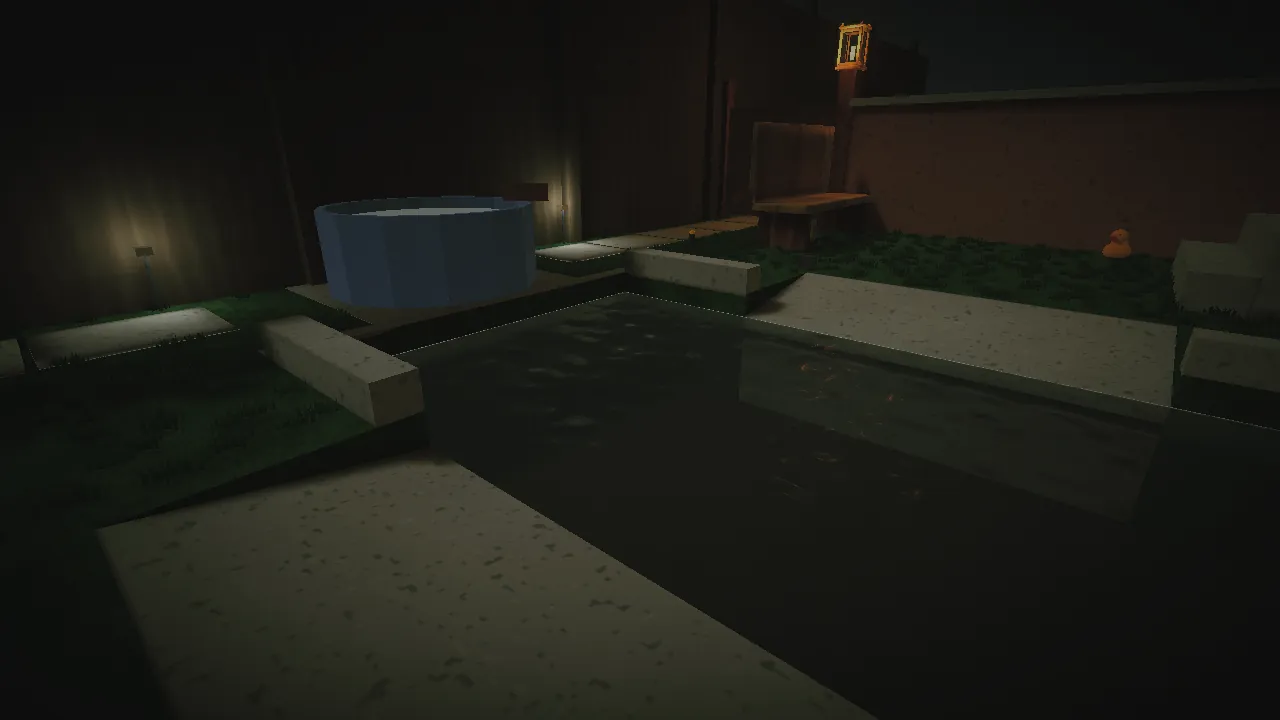
In Level 4 of Last Charge, Windfall, the wind comes in 3-second gusts from the street toward the gate, with a 12-second lull between them. It never pushes Watt, only things that catch it, such as carrier bags. To cross the pond, Watt sends a foam sledge down to the water's edge, takes a bag to the calm spot at the top of the ramp and rolls down into the sledge. One gust fills the bag like a sail and carries them across. A propped fence panel shelters a bay tree on wheels, much like your box, until Watt knocks out its prop. The Level 4 walkthrough covers the garden.
How do you make water climb out of a bowl?
Use a siphon: a tube full of water with one end in a raised bowl and the other in a lower one. The water climbs over the rim and runs down into the lower bowl, and it keeps going as long as the outlet stays below the water level in the top bowl. Nobody has to suck on the tube.
You need two bowls, a stack of books, a baking pan or the sink to catch drips, about 1 meter of clear aquarium tubing and food coloring if you like.
- Fill one bowl with water, add the coloring and stand it on the books. Put the empty bowl lower down, in the pan or the sink.
- Push the whole tube under the water in the top bowl and wait until the bubbles stop.
- Pinch one end shut, keep the other end under water, and lift the pinched end over the rim and down into the empty bowl.
- Let go and watch the water run.
- While it flows, raise the lower bowl on a book or two. Then lift the outlet end above the water in the top bowl.
The flow slows as the lower bowl comes up and stops when the levels are even, or when the outlet rises above the top bowl's water. Simon Fraser University's physics department explains that a siphon works as long as the outlet is lower than the water level in the upper container, and a University of Kentucky physics course adds that a bigger height difference between the two levels gives a faster flow.
The garden in Last Charge has a siphon too: an orange tube on the back-door steps that can empty the paddling pool blocking the tree. When Watt lets its end go on the landing ramp, it slides to the water's edge, the lowest point, and the pool empties in about 25 seconds. Left on the lawn it takes about a minute, and on the bottom step the siphon stalls.
Where Last Charge fits
Last Charge is a story-driven 3D physics puzzle game for Android and iPhone, made by Secundum Reality. The player drives Watt through four rooms so far, on a battery that starts every level at 60%. The game doesn't explain the physics and gives no hints: each room states one goal and leaves the rest to you. It's rated 9+ on the App Store, and we don't recommend it for children under 9; the Last Charge parents' guide describes what's in it, and the four rooms are on the game page.
For more of these ideas on a screen, see physics games for kids and STEM games for kids.
Frequently asked questions
What is the easiest physics experiment to do at home?
A foil boat is hard to beat. Fold a square of kitchen foil into a flat-bottomed boat, float it in a bowl of water and add coins one at a time until it sinks. One coin sinks on its own, but the boat carries a pile of them, because its density counts the foil, the air inside and the coins together.
How do you start a siphon without sucking on the tube?
Fill the tube under water. Push the whole tube into the raised bowl until the bubbles stop, pinch one end shut, keep the other end under water, and move the pinched end down into a lower bowl. When you let go, the water climbs over the rim and runs down, and it keeps flowing while the outlet stays below the top bowl's water level.
How do you make a simple pulley at home?
Lay a broom handle across the backs of two chairs and hang a string over it with a small bucket tied to each end. Pulling one side down lifts the other, because a pulley changes the direction of a force. Put a toy car in one bucket and add coins to the other: once the coin side is heavier, it drops and lifts the car.
Can kids do water experiments near plugs or chargers?
No. Keep every water experiment well away from sockets, chargers, extension cords and phones, and wipe up spills before anyone touches anything electrical. Energy Safe Victoria's advice is that water and electricity do not mix, and that you should never touch anything electrical with wet hands or bare feet. Talk about electricity; never experiment with it.
What does a flashlight shadow experiment show?
It shows that light travels in straight lines. Shine a flashlight at a toy in a dim room, then stand a cushion in between: the toy goes dark, because light can't pass through the cushion or bend around it. In Last Charge, Grumble the robot vacuum works the same way and only spots Watt's headlights with a clear line of sight.
Sources
- Scientific American (with Science Buddies): Shipping Science: Building a Boat That Can Carry Cargo
- Ontario Science Centre: Summer Rays and Shadow Play
- PBS KIDS for Parents: Friction Racing
- TeachEngineering (University of Colorado Boulder): Powerful Pulleys
- NASA Glenn Research Center: Size Effects on Drag
- NASA Glenn Research Center: Drag Equation
- Simon Fraser University, Department of Physics: The Siphon
- University of Kentucky Physics and Astronomy (Straley and Shafer): Siphons
- Energy Safe Victoria: Using electricity safely